On this page · 8 sections7 min read
What a doula does
A doula provides nonclinical support around pregnancy, birth, or the postpartum period. California’s DHCS description identifies emotional, physical, and informational support as part of the role. A doula is not a substitute for the clinician responsible for medical assessment and care.
Birth and postpartum work create different schedules and client needs. Birth support may involve being available around an unpredictable event, while postpartum work can involve planned visits and support with the family’s transition. Choose which service you want to learn before comparing a birth workshop with a postpartum course.
A useful first exercise is explaining the role to a prospective client. Describe how you help the person ask questions and communicate preferences while preserving their decision-making. Avoid suggesting that you control clinical outcomes or speak in place of the client without their agreement.

Do you need a license or certification?
Do not assume that the US has one universal doula license or one certificate accepted in every setting. Private certification, state recognition, hospital access, and eligibility for public-program reimbursement are separate questions. Check the jurisdiction and payment arrangement in which you intend to work.
DONA International offers a birth-doula certification process that begins with approved training and includes additional requirements. Completing a workshop should not be described as automatically completing the entire credential. Review the DONA certification pathway if that is the credential you want, and ask whether the exact workshop supports it.
Medicaid participation requires its own investigation. California’s Medi-Cal program describes enrolled doulas, covered services, and managed-care arrangements, with resources addressing provider enrollment and billing. That is a payer pathway, not evidence that every private doula certificate automatically permits reimbursement. California DHCS doula benefit
Scope remains important regardless of who pays. Review the standards of the organization whose credential you seek and the rules of the facility where you will work. A doula certificate should not be used to imply authority to perform examinations, make diagnoses, or direct medical treatment.
This selection also includes material that is not clearly a complete professional doula pathway. Body Ready Method’s products described here are prenatal, birth-preparation, and postpartum resources, and a related placenta or essential-oil course should not be treated as equivalent to birth-doula certification. Read the exact product description instead of relying on category placement.
Step-by-step: how to become a doula
- Choose birth, postpartum, or a defined combination. Think through the actual availability you can offer, including travel and backup arrangements. A course can fit your calendar while the eventual work does not, so investigate both before enrolling.
- Identify the credential and payment route. Ask prospective clients, agencies, and facilities what qualifications they expect. If you want Medicaid work, consult the state program’s provider requirements before choosing a school based only on a certification label.
- Review the complete training pathway. Find out what happens after classroom instruction: assessments, reading, practical experience, documentation, or other steps may be part of the chosen certification. Do not equate workshop attendance with final credential approval.
- Practice nonclinical support and communication. Rehearse listening to a client’s preferences, helping formulate questions, and responding when plans change. Ask an instructor to identify moments when your own preferences begin to replace the client’s choices.
- Arrange mentoring and experience responsibly. Clarify who supervises or reviews your learning and how clients are informed of your status. Keep privacy and consent central when collecting any documentation required by the program.
- Build a workable service agreement. Specify the kind of support, availability, communication arrangements, fees, cancellation terms, and backup coverage. Discuss what happens if you cannot attend rather than leaving the family to discover that uncertainty during labor.
- Prepare for the intended facility or home setting. Ask about access policies, documentation, and communication with the care team. If billing a public program, complete its enrollment and administrative requirements separately from private certification.
A practical rehearsal should include a change of plan. Have a partner play a client who receives unexpected information and wants help preparing questions for the clinician. Your task is to support understanding and autonomy without interpreting the medical information beyond your role or pressuring the client toward a preferred decision.
For postpartum work, write a sample visit plan around the family’s priorities and the boundaries of your service. Identify which requests fit the engagement and which call for another professional. This makes the difference between supportive presence and clinical care easier to explain before a real family needs help.
How long it takes and what it costs
The strongest directly comparable tuition figures are within Doula School International: its listed birth-doula options run from $595 self-directed to $649 live virtual or in person. Other category entries include consumer resources, incomplete prices, or separate specialties. Combining all those figures into one professional-training range would mislead a beginner.
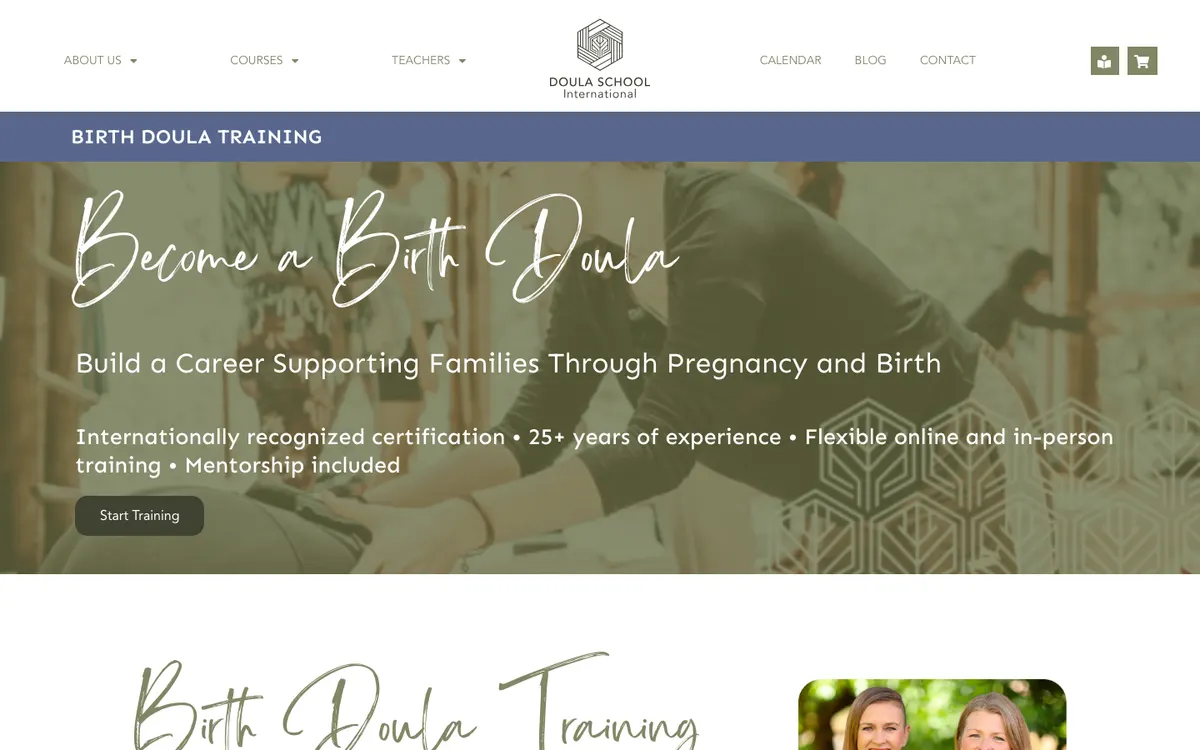
Doula School International Birth Doula Training charges $649 for in-person or live virtual birth-doula training and $595 for self-directed study, plus applicable taxes. Postpartum training uses the same tiers; a birth + postpartum bundle starts at $1,200, and full Childbirth Educator certification is $999. The program is 50+ hours, with in-person instruction over 3 days, or 2 days for postpartum; self-paced learners can begin anytime.
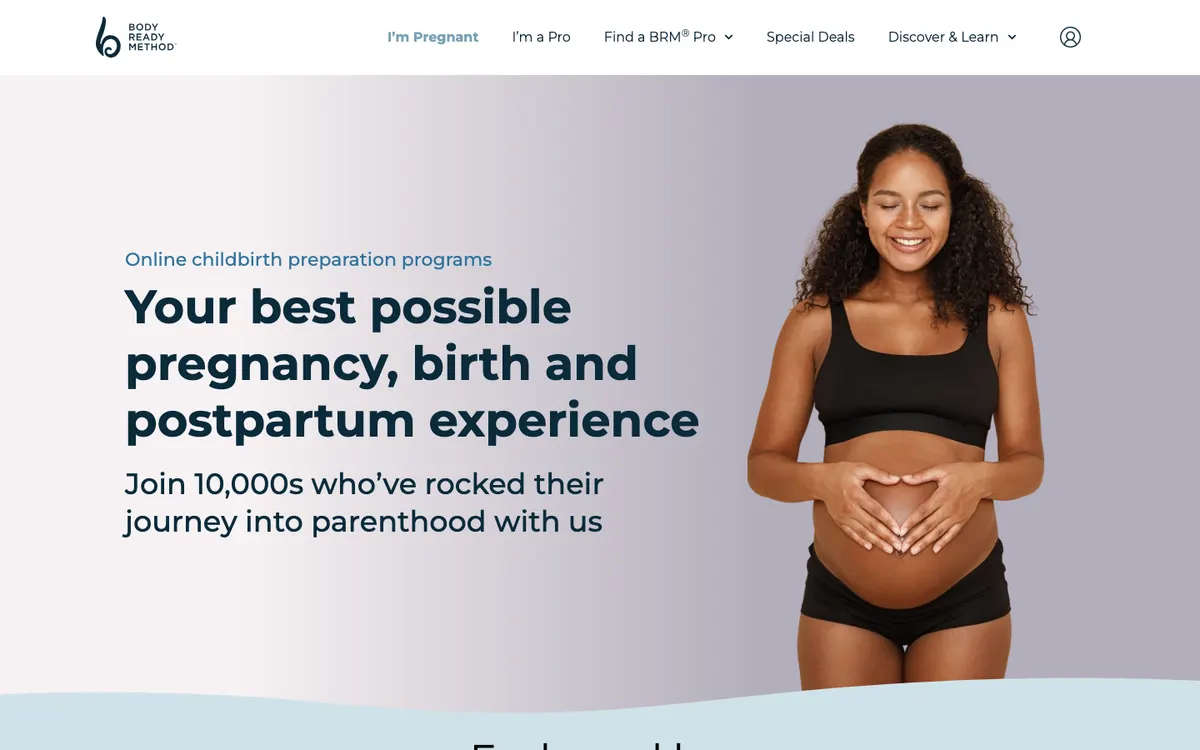
Body Ready Method Prenatal, Birth & Postpartum Programs prices Body Ready Prenatal at $197, Birth Prep at $127, and Postpartum at $87. All three together cost $297 versus $411 separately. These are self-paced online resources, and the site says purchasers retain program access and future updates.
Madriella Doula Network Birth Doula Certification uses an online modular curriculum; its advanced Fertility Doula course is 18 hours. Birth-doula tuition is not confirmed here, so request a written quote for that course rather than using a specialty course to estimate either its price or duration.
Brilliant Birth Academy Postpartum Doula Certification has 10 self-paced online curriculum modules. Its page describes one-time “launch pricing” without a visible amount in the available text. Related courses have separate prices: Placenta Encapsulator is normally $497, and Essential Oils Birth Consultant is advertised at $79, usually $197.
For Held by the Village: Village Tender Training for Birth Workers, both tuition and the completion timetable need confirmation. Request a written quote and a full schedule for Village Tender Training before fitting it into your birth-work plans.
A short classroom workshop may be one component of a longer certification process. Ask for the full completion checklist and the deadline for submitting evidence before planning a launch date. If practical requirements depend on access to clients or births, classroom speed does not control the whole timeline.
Budget for the realities of the service as well as tuition. Travel, backup arrangements, childcare during on-call work, and credential or program fees can affect feasibility, but obtain actual quotes rather than relying on a universal startup estimate. For payer-funded work, learn the documentation and payment process before projecting cash flow.
Best online programs for aspiring doulas
These ranked offerings include professional doula education and resources for expectant or new parents. Check the intended audience before using price or duration to narrow your shortlist.
- Doula School International Birth Doula Training offers birth and postpartum training in self-directed, virtual, and in-person formats.
- Body Ready Method Prenatal, Birth & Postpartum Programs lists prenatal and postpartum consumer resources that should not be treated as a complete professional doula certification.
- Madriella Doula Network Birth Doula Certification describes an online modular doula curriculum whose tuition needs a direct quote.
- Brilliant Birth Academy Postpartum Doula Certification lists a self-paced postpartum course whose full tuition remains unconfirmed.
- Held by the Village: Village Tender Training for Birth Workers has incomplete program details requiring direct confirmation before enrollment.
The Doula Certification comparison links to reviews that distinguish birth and postpartum training from consumer preparation resources.
Top programs compared
The 4 highest-scored online doula certification programs in our ranking, side by side.
Swipe sideways to compare all 4 programs →
| Criterion | ||||
|---|---|---|---|---|
| Our score | 8.9/10 | 8.3/10 | 8.1/10 | 7.8/10 |
| Price | $595 – $1,200 | $87 – $297 | — | — |
| Format | Hybrid | Self-paced | Self-paced | Self-paced |
| Duration | 50+ hour program; in-person course over 3 days (2 days for… | Self-paced online programs; site states purchasers keep access to the… | Online modular curriculum; advanced Fertility Doula course is 18 hours | Self-paced online course with 10 curriculum modules |
| Accreditation | States its programs are internationally accredited (accrediting body not named on the… | — | Describes itself as an accredited doula certification course (accrediting body not named… | — |
| Best for | Aspiring doulas who want to choose between self-paced, live-virtual or in-person training… | Expecting parents who want guided exercise-based preparation for pregnancy, birth and… | Aspiring doulas who want an online, membership-based certification with a broad catalog… | Birth workers who want a self-paced postpartum doula certificate with business training… |
| Full review | Doula School International (Doula Training Canada) review | Body Ready Method (BRM) review | Madriella Doula Network review | Brilliant Birth Academy review |




Scores from our editorial method. See the full ranking of 5 programs.
Common mistakes to avoid
Do not buy a birth-preparation resource for expectant parents expecting it to certify you professionally. A course can be useful background without meeting a certifying organization’s requirements. Ask who the intended learner is and what credential, if any, is awarded.
Avoid assuming that private certification guarantees hospital access or Medicaid enrollment. Each decision has its own authority and documentation. Resolve those requirements for the location where you plan to serve clients before advertising availability.
Do not promise a particular kind of birth or a clinical outcome. Your service is support within an uncertain process. Explain how you will remain useful when preferences or circumstances change instead of tying the offer to an outcome you do not control.
FAQ
Does a DONA workshop automatically complete certification?
The DONA pathway includes a broader certification process. Confirm the current checklist and what the specific workshop contributes.
Does a doula certificate make me a medical professional?
No such authority follows from these courses. DHCS describes doulas as nonclinical support professionals within its benefit.
Will any listed course qualify me to bill Medi-Cal?
Do not assume so. Consult the enrollment resources on the DHCS doula-services page and verify the exact pathway before choosing training.
Are all category entries full doula certifications?
No. The Body Ready Method listing describes consumer preparation products, while other entries describe professional courses or have incomplete details. Compare the product, not just its category.