On this page · 8 sections7 min read
What a sound healer does
“Sound healer” is a commercial and practitioner label used for varied sound-based experiences, including vocal practice, instruments, and facilitated listening. The category does not describe one standardized healthcare occupation. NCCIH’s music-and-health overview distinguishes music-based activities from the credentialed profession of music therapy, a distinction that matters before choosing training.
Define the actual service rather than relying on the label. A group listening session, a mantra-based class, and professional clinical music therapy involve different goals and preparation. Heart of Sound, for example, concerns a teacher-training approach, while other entries are memberships, business resources, or a directory.
A useful starting exercise is writing a participant description of the session. State what sounds or activities are involved, how participation works, and how a person can decline or leave. Avoid promising a particular emotional or medical outcome simply because the service is marketed with the word healing.

Do you need a license or certification?
The NCCIH and AMTA sources cited here do not establish a nationwide government license specifically named sound healer. That does not mean every sound-related service or health claim is unrestricted. Check the rules for the actual activities you plan to offer and do not imply that a private certificate grants medical or mental health authority.
Music therapy is a separate profession. The American Music Therapy Association describes approved academic education, clinical training, board certification, and state-specific recognition or licensing arrangements. A sound-bath workshop or private teacher certificate should not be represented as equivalent to that pathway. AMTA professional requirements
NCCIH explains that research on music-based interventions is varied and often preliminary. Its overview does not establish that every commercial sound-healing method treats disease. Keep claims proportionate to the evidence and distinguish participant experience from a verified clinical effect. NCCIH evidence overview
Ask who issues the course credential and what assessment supports it. A membership, directory listing, or downloadable business guide may have value for a specific purpose without assessing facilitation competence. Do not treat a paid listing as a professional qualification merely because it appears in a certification category.
Sound exposure and participant reactions also require responsible planning. NCCIH notes that excessive volume can harm hearing and that music can evoke distressing reactions for some people. Training should address participant choice and appropriate limits; this guide does not supply a universal exposure protocol for all instruments and settings.
Step-by-step: how to become a sound healer
- Choose and describe the actual modality. Decide whether your goal is vocal teaching, facilitated listening, or another clearly defined nonclinical activity. If your goal is music therapy, investigate that separate professional pathway rather than buying an unrelated private certificate.
- Examine the claims and scope. Ask what the provider teaches graduates to say about benefits and what evidence supports those statements. Be prepared to omit disease-treatment claims that the course cannot substantiate or that exceed your professional authority.
- Compare practical teaching and supervision. Find out whether an instructor observes your facilitation and evaluates participant communication. A library of recordings can support personal practice without showing how you respond to a real group.
- Learn the instruments or vocal practices deliberately. Choose equipment only after understanding the method and the learning requirements. Practice control and consistency instead of assuming that a large collection of instruments makes a session more professional.
- Prepare consent and participation choices. Explain the experience without pressuring people to tolerate uncomfortable sound or an unwanted activity. Rehearse how a participant can stop, change position, or step away without becoming the focus of the group.
- Test the venue and session structure. Consider room acoustics, setup, accessibility, and the actual listening experience at different positions. For remote delivery, check what the platform and participant equipment do to the sound rather than assuming the recording reproduces the room experience.
- Have your initial scope assessed. Seek feedback on a practice session and refine the description, pacing, and operational plan. Keep a record of what you learned and avoid presenting an anecdotal response as proof of a medical result.
A useful rehearsal includes a participant who dislikes a sound or wants to leave early. Practice responding without explaining away the reaction or insisting that discomfort is necessary. A facilitator’s competence includes respecting a different experience from the one anticipated in the lesson plan.
Also rehearse the language used after the session. Invite feedback without suggesting the answer or interpreting every sensation as healing. This helps keep the interaction grounded in the participant’s own account rather than the facilitator’s preferred narrative.
How long it takes and what it costs
These offers do not form a single professional-training price range. Heart of Sound’s online teacher training costs $3,895, while The Mind Orchestra sells a membership and coaching in pounds. Jenna Newbery’s downloads and the Sound Healers directory listing are separate kinds of purchases, not equivalent teacher qualifications.
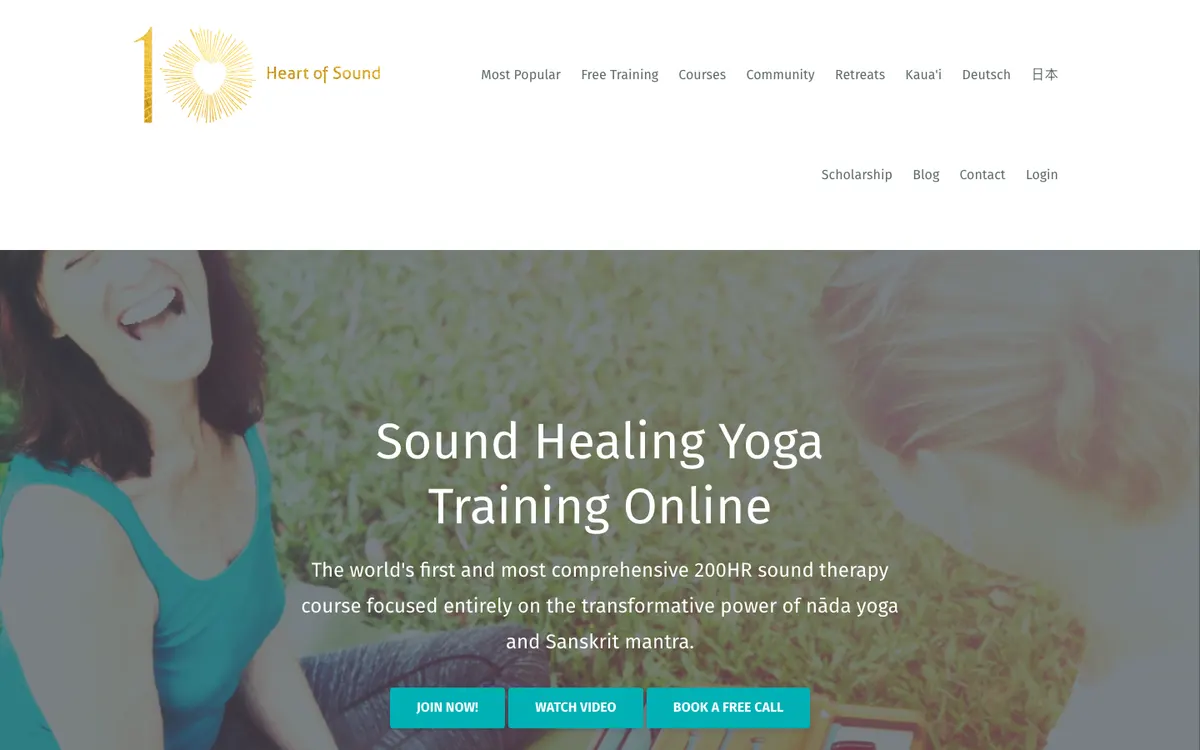
Heart of Sound 200-Hour Nada Yoga & Mantra Teacher Training (Online) costs $3,895 once or 10 monthly payments of $436. The online program combines video material with 2-hour live supervised sessions. Separate 2-week in-person retreats include a 14-day Maui option at $3,700 with lodging or $2,650 without.
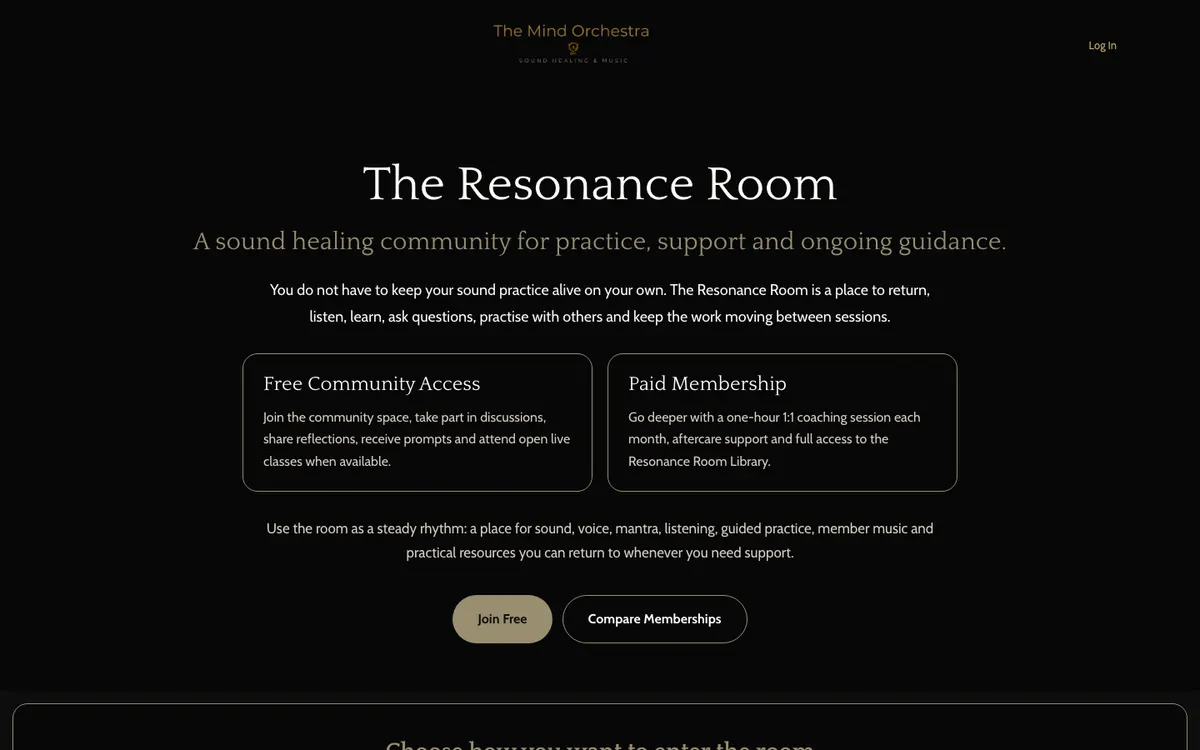
The Mind Orchestra Sound Healing Coaching and The Resonance Room Membership offers a free tier and paid Resonance Room access at £27/month or £270/year. Its 1:1 sound-healing coaching packages cost £99 for 3 sessions, £222 for 5, or £444 for 10. Choose between recurring membership and a defined session package according to the support you want.
Jenna Newbery (The Geometry of Sound) Breathwork and Sound Healing Self-Study Guides sells downloadable breathwork business guides at $17 each. The six-guide Breathwork Practitioner Business Bundle costs $79.95, and royalty-free healing music tracks start at $4.95. These are self-study resources, so check their scope before comparing them with supervised training.
Sound Healers Directory Featured Listing (not a course) charges $290/year for a featured listing, while standard submissions undergo an inclusion review. There is no confirmed completion timetable here: the described purchase is directory exposure rather than a course with an instructional schedule.
A 200-hour label describes the training’s stated scope, not a universal government requirement for sound facilitation. Membership access likewise does not create a completion timeline or an assessed qualification. Ask for the exact curriculum, practical evaluation, and credential before using hours or price to compare programs.
Budget separately for any equipment, venue, permissions for recorded music, and ongoing supervision after obtaining the relevant terms. Do not assume a royalty-free track permits every conceivable commercial use; read its actual license. Get actual equipment and business-service quotes before building a budget; the information here does not establish those costs.
Best online programs for aspiring sound healers
The category ranking below includes teacher training, coaching, self-study resources, and a directory. Read the product type carefully before treating any of these as a route to assessed facilitation skills.
- Heart of Sound 200-Hour Nada Yoga & Mantra Teacher Training (Online) offers online teacher training with recorded material and live supervised sessions.
- The Mind Orchestra Sound Healing Coaching and The Resonance Room Membership offers a membership and coaching packages rather than a clearly equivalent full teacher-training pathway.
- Jenna Newbery (The Geometry of Sound) Breathwork and Sound Healing Self-Study Guides sells business guides and audio resources that are not documented as a complete sound-healing certification.
- Sound Healers Directory Featured Listing (not a course) is a practitioner-directory listing service rather than an established training alternative.
Consult the Sound Healing Certification comparison for reviews explaining what each of these very different purchases provides.
Top programs compared
The 4 highest-scored online sound healing certification programs in our ranking, side by side.
Swipe sideways to compare all 4 programs →
| Criterion | ||||
|---|---|---|---|---|
| Our score | 8.6/10 | 7.8/10 | 7.6/10 | 7.0/10 |
| Price | $2,650 – $4,360 | — | $4.95 – $79.95 | $290 |
| Format | Hybrid | Live online | Self-paced | — |
| Duration | Online program with recorded material and 2-hour live supervised… | Monthly or annual membership; coaching packages of 3 to 10 sessions | Self-study downloads | — |
| Accreditation | Yoga Alliance qualified 200-hour teacher training (per the school); Yoga Alliance path… | — | — | — |
| Free trial | — | Free Resonance Room tier and free discovery call | 7-day free trial offered for her meditation sessions (via a… | — |
| Best for | Students who want an in-depth, music-based sound healing training rooted in Indian nada… | People exploring sound healing, voice and mantra for personal practice who want community… | Breathwork and sound healing practitioners looking for low-cost self-study guides on… | Sound healing practitioners and teachers who want to be listed in a worldwide directory;… |
| Full review | The Heart of Sound (Inde) review | The Mind Orchestra review | Jenna Newbery review | Sound Healers (soundhealers.net) review |




Scores from our editorial method. See the full ranking of 4 programs.
Common mistakes to avoid
Do not confuse a directory listing with training or certification. Sound Healers’ stated price is for a featured listing. Paying to appear in a directory does not, by itself, demonstrate assessed competence or government recognition.
Avoid representing a sound-healing certificate as music-therapy qualification. The latter has a distinct academic and clinical pathway, and state requirements may apply. Use the exact title you have earned and explain the actual service you provide.
Do not buy instruments before deciding which method and setting you will use. Training may emphasize voice or a particular practice rather than the equipment visible in promotional images. Ask for the required materials list and start with the skills the course actually assesses.
FAQ
Is sound healing the same as music therapy?
No. AMTA’s requirements describe a separate professional education and credentialing pathway. A private sound certificate should not be presented as equivalent.
Does research on music prove every sound-healing claim?
No. NCCIH describes varying evidence and important limitations. Evaluate the particular claim and intervention rather than generalizing from the word music.
Is the Sound Healers fee tuition?
The Sound Healers review describes a fee for a featured directory listing. That purchase is not established as a complete instructional program.
Which listed option is explicitly teacher training?
The Heart of Sound entry describes an online teacher-training program with live supervised components. Compare its exact scope with your goal rather than assuming every category entry is equivalent.