On this page · 8 sections6 min read
What an illustrator does
An illustrator creates images that communicate a brief, story, or concept. O*NET’s fine-artist profile includes developing visual elements, consulting clients and art directors, and maintaining a portfolio. Illustration is one part of that broader occupation, and the work can involve both traditional materials and digital tools. O*NET.
Drawing skill is a foundation, but a professional assignment also introduces audience, format, revisions, and delivery. A course centered on anatomy may strengthen figure work without teaching a publishing workflow or client communication. Choose an initial market and build samples that show you can answer its kinds of briefs.

Do you need a license or certification?
The listed art courses offer instruction or completion certificates rather than a government illustrator license. The fine-artist profile cited below does not identify a universal certification requirement for US illustrators. Employers and clients can still set their own portfolio, education, or technical expectations, so evaluate actual assignments and job descriptions.
A teacher-signed course certificate can document participation, but it does not prove that a client has assessed your work or that you own rights to every reference used in a class. Keep your portfolio clear about what is original, what is a study, and what was produced from an instructor’s demonstration.
Commercial work also requires clarity about usage and permissions. Ask the client how the image will be used, what files are needed, and who supplies reference material. Resolve unclear contract language before accepting the assignment rather than assuming a course certificate establishes all the rights involved.
Step-by-step: how to become an illustrator
- Choose a target illustration context. Editorial, children’s publishing, concept development, and product-related work can demand different samples. Select a manageable first direction so your portfolio has a recognizable purpose.
- Study the relevant fundamentals. Work on shape, value, perspective, composition, and anatomy where needed. Use a course to address an identifiable weakness instead of collecting unrelated drawing demonstrations.
- Practice from a written brief. Define the audience, message, format, and constraints before drawing. Explore several concepts so the final image reflects a decision rather than the first attractive idea.
- Seek critique and revise. Ask whether the image communicates the intended message at the size and context in which it will be seen. Revise a composition problem before spending more time rendering small details.
- Build a coherent sample set. Show work that matches the assignments you want and label practice projects honestly. A smaller set of relevant, finished pieces is easier to assess than a large collection of unrelated studies.
- Prepare a delivery process. Agree on approvals, revision stages, final formats, and usage. Keep layered or original files organized so you can make agreed changes without rebuilding the project from scratch.
Turn a drawing exercise into an illustration brief
Take a subject from a fundamentals lesson and give it a communication problem. Instead of drawing an isolated figure only for anatomy practice, place the figure in an image that must express a clear action or mood. Keep the brief narrow enough that you can assess whether the composition succeeds.
Review the image as a thumbnail and at its intended delivery size. If the focal point disappears or the action becomes unclear, adjust the major shapes and values before adding detail. This tests communication rather than simply the amount of time spent polishing.
Ask a reviewer to describe what they think the image says before explaining your intention. Compare their interpretation with your brief, and document the revision that follows. That process can become a useful portfolio case study without inventing a client commission or a commercial result.
Compare critique with catalog size
Ask whether the class you are considering includes individual feedback or only access to demonstrations. A large catalog can be economical for exploration, while a focused workshop may be more useful when you need an experienced person to identify a recurring composition or anatomy problem. Choose according to the gap in your work.
Review subscription renewal terms alongside the projects you intend to complete. A promotional first year can become an expensive habit if you continue browsing without finishing independent images. Decide what work would make the subscription useful before committing to a longer term.
For a sample commission, write an approval sequence that separates concept selection from final rendering. This gives you practice responding to feedback before the image becomes costly to change. Include the agreed delivery format and explain what additional revisions would require a new discussion.
When evaluating a finished sample, ask whether it works for its intended use without your explanation beside it. An editorial image, a book illustration, and a character study can succeed for different reasons. Show the brief to a reviewer after their initial reaction, then compare that reaction with your intention and decide whether the next revision should change concept, composition, or execution.
How long it takes and what it costs
The catalog mixes individual courses and memberships. Current Proko prices are unavailable here, while Domestika Plus and Online Art Lessons publish subscription terms. Domestika’s first-year promotion and later renewal are different amounts, so compare the cost over the period you actually intend to remain subscribed.
A six-week workshop, a self-paced course, and a continuing library membership are not equivalent completion timelines. Add time for independent briefs and revision to your study plan. Materials, a tablet if needed, software, printing, or portfolio presentation should be budgeted according to your chosen medium rather than treated as universal requirements.
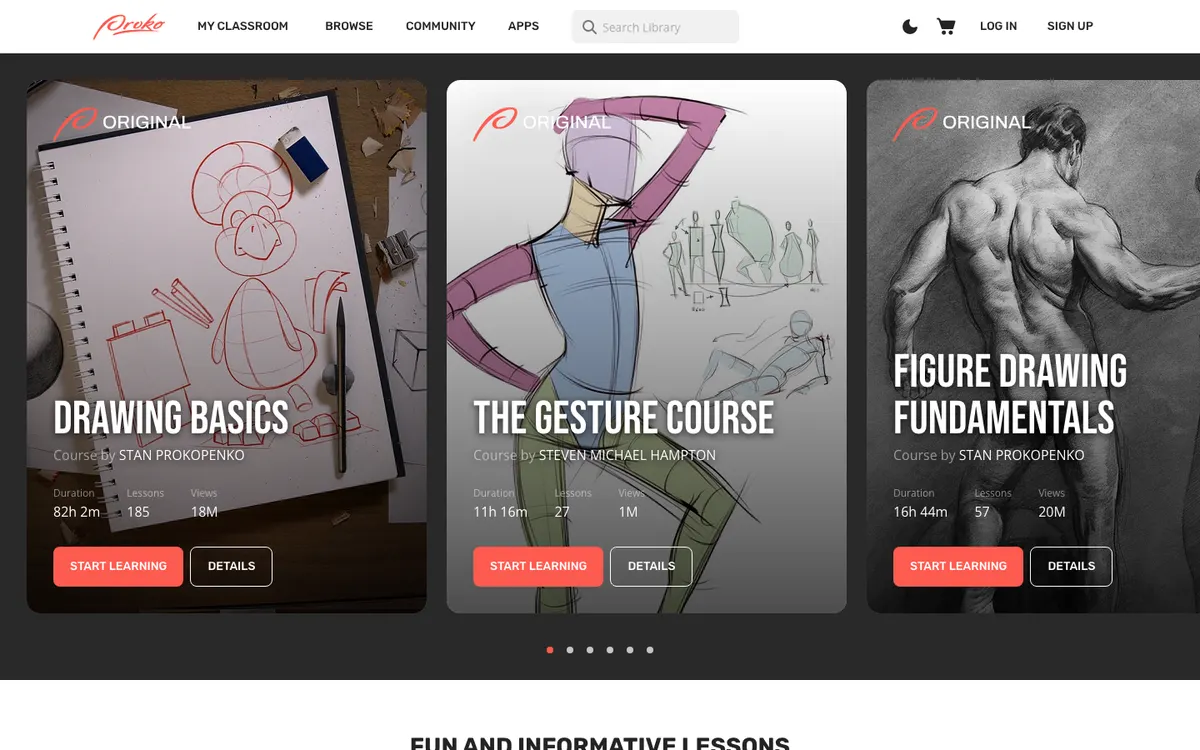
Proko Drawing Courses. Proko offers self-paced drawing courses and occasional six-week live workshops with critiques. A usable current tuition quote is unavailable. Ask for the price of the specific subject or workshop you want, including whether individual criticism is part of that purchase.
Domestika Courses & Domestika Plus. Plus is advertised at $13.79 per month billed yearly, with a $164.50 first-year total and a $329 renewal, or at $33.90 with monthly billing. Confirm the billed total because the displayed annual and monthly figures need careful comparison. Individual courses are also sold separately. The videos are self-paced, with more than 100 new courses added weekly.
Online Art Lessons (Paint Basket) Membership. Membership costs $19 per month or $149 per year and includes more than 12 in-depth courses. Weigh the access period against the drawing and painting projects you intend to finish, leaving time to apply lessons in independent work.
Best online programs for aspiring illustrators
- Proko Drawing Courses focuses on rigorous figure, anatomy, and portrait drawing instruction for artists developing those fundamentals.
- Domestika Courses & Domestika Plus offers affordable illustration, design, and craft courses taught by working artists for creative hobbyists and professionals.
- Online Art Lessons (Paint Basket) Membership provides gentle, self-paced drawing and painting classes suited to hobby painters who prefer a relaxed approach.
The Drawing & Painting comparison links to reviews that distinguish focused drawing instruction from broader creative memberships.
Top programs compared
The 3 highest-scored online drawing & painting programs in our ranking, side by side.

Swipe sideways to compare all 3 programs →
| Criterion | |||
|---|---|---|---|
| Our score | 8.9/10 | 8.8/10 | 8.3/10 |
| Price | — | $13.79 – $329 | $19 – $149 |
| Format | Self-paced | Subscription | Subscription |
| Duration | Self-paced courses; occasional 6-week live workshops with critiques. | Self-paced video courses; 100+ new courses added weekly. | Membership; 12+ in-depth courses. |
| Free trial | Free tutorials on the site. | — | — |
| Best for | Artists who want rigorous figure, anatomy and portrait drawing instruction. | Creative hobbyists and professionals who want affordable illustration, design and craft… | Relaxed hobby painters who want gentle, self-paced drawing and painting classes. |
| Full review | Proko review | Domestika review | Online Art Lessons (Paint Basket) review |

Scores from our editorial method. See the full ranking of 3 programs.
Common mistakes to avoid
Do not confuse hobby painting membership with a complete professional illustration pathway. It may be an enjoyable way to develop technique while leaving briefing, revision, and delivery skills to be learned elsewhere.
Avoid selecting a program solely by its certificate or library size. Look at critique opportunities and the specific fundamentals you need. Also avoid presenting a close copy of an instructor’s work as an original commercial sample; explain the study context and build independent pieces.
FAQ
Does a course certificate replace a portfolio?
No. Maintaining a portfolio is part of the broader artistic work described by ONET. Clients need to see the kind of images you can produce.
Which listed provider emphasizes anatomy and figure drawing?
The Proko review describes that focus, along with other drawing instruction and selected critique workshops.
Is Domestika's first-year price the renewal price?
The Domestika review distinguishes the first-year charge from the renewal amount. Recheck the chosen plan before subscribing.
Are all options aimed at professional illustrators?
No. The drawing and painting category includes hobby-oriented learning as well as courses that can support professional skill development.