8.7/10Editorial score
- Price
- $107.40/yr or $299.99 lifetime
- Best for
- Self-learners who want an affordable, structured app.
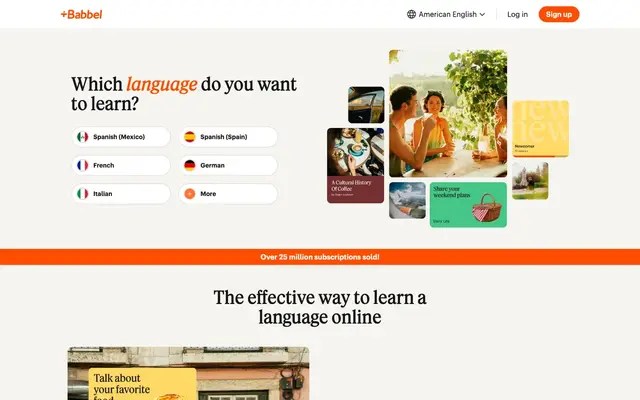
It is a tie at 8.7/10, because they solve different problems. Babbel is the cheaper, more flexible way to build vocabulary and grammar on your own; Lingoda puts you in live classes with a teacher, which is what gets most people speaking.
Choose Babbel if…you want to study alone in short sessions whenever you have ten minutes, need grammar explained clearly, and want the lowest cost ($107.40 a year or $299.99 for life, as of October 2026).
 Choose Lingoda if…
you need to speak with real people, want a teacher correcting you in every session, and can commit to booked 60-minute classes on a CEFR-aligned path.
What tips the choicewhether your bottleneck is knowledge or speaking. If you lack vocabulary and grammar, Babbel builds them cheaply. If you know enough but freeze in conversation, Lingoda's live classes are worth the higher price and the fixed schedule.
We may earn a commission when you buy through links on this page. Our rankings are based on our editorial criteria; some partners may be featured more prominently. Affiliate disclosure.
| Criterion | Babbel | Lingoda |
|---|---|---|
| Editorial scoreWeighted average of our five criteria | 8.7/10 | 8.7/10 |
| PriceAs published on the official site | 12 months: $107.40 billed yearly ($8.95 a month); Lifetime: $299.99 one-time (as of October 13, 2026) | Group classes (3–5 students): 5 classes €59.99, 12 classes €93.99, 20 classes €161.99, 40 classes €246.99 per four weeks; private classes from €169.99 for 5 (euro prices shown October 13, 2026; USD available) |
| Payment plansHow the cost can be spread | Yearly billing, one-time lifetime purchase; other durations listed under "Show all plans". Auto-renewal can be cancelled anytime | Plan renews every four weeks; unused class credits roll over; cancel, pause or change anytime |
| FormatHow you study | App | Live online |
| DurationTime to finish or access period | Subscription (1 to 12 months, auto-renewing) or lifetime access; short, self-paced lessons on web and mobile | Ongoing classes; Sprint is a 2-month intensive. |
| Free trialWays to test before paying | Not published | 7-day free trial: 3 group classes or 1 private class |
| Refund policyYour way out if it is not a fit | No money-back guarantee shown on the US pricing page; Babbel's terms describe a 14-day statutory right of withdrawal | Cancel within 14 days of subscribing for a refund, minus any classes taken |
| Best forWho it suits | Adults who want short, structured lessons with clear grammar explanations, for travel, work or a move abroad. | Learners with a concrete level goal (a move, a job, an exam) who want live small-group or private classes and a structured curriculum. |
“Not published” means the provider did not state it or we could not confirm it. Program data checked October 5, 2026. Comparison updated October 13, 2026.
Babbel: Structured conversation-based lessons. · Lingoda: CEFR-aligned live curriculum.
Babbel: Major language-learning company. · Lingoda: Established live-class language school.
Babbel: About $8.95/month on annual plan. · Lingoda: Free trial and 15% offer; prices unverified.
Babbel: App-based. · Lingoda: Book class slots around your schedule.
Babbel: No tutor in the app plan. · Lingoda: Certified teachers in every class.
Scores out of 10 from our published method; the overall score is the weighted average.
Babbel costs a fraction of Lingoda, because an app is cheaper than a teacher. When we checked on October 13, 2026, Babbel’s 12-month plan cost $107.40, billed every 12 months and advertised as $8.95 a month, and lifetime access cost $299.99 once. Both include all 14 of Babbel’s languages.
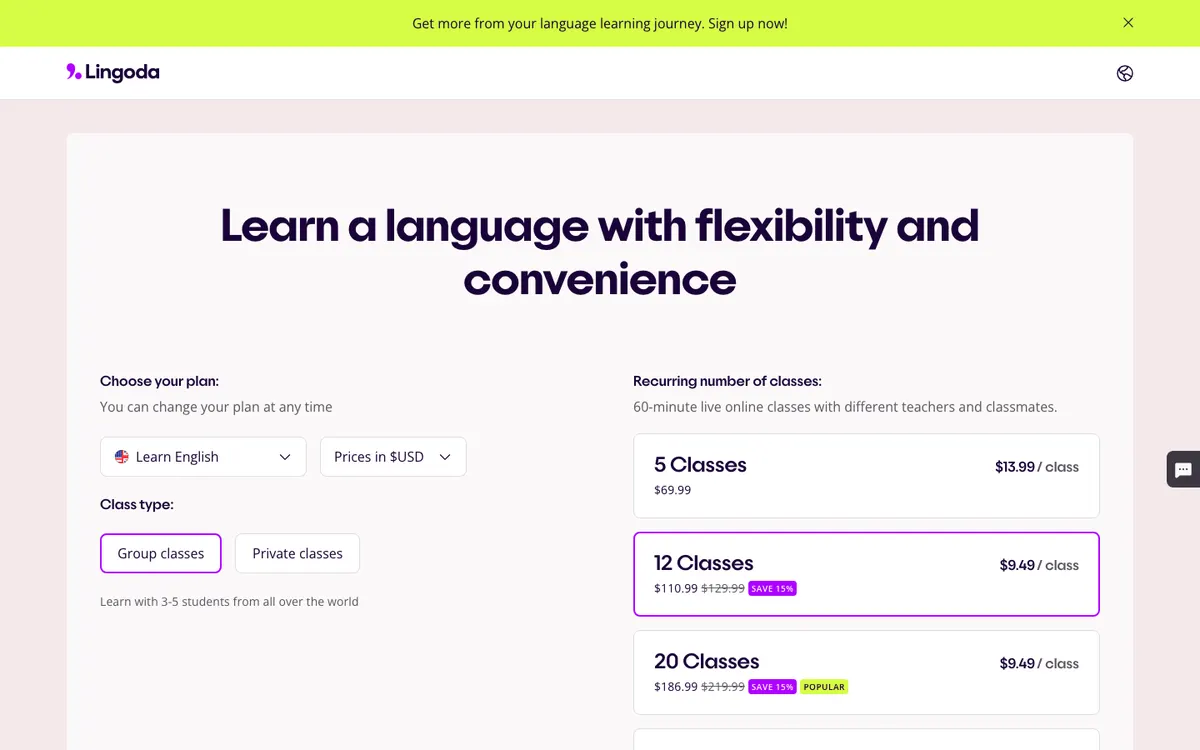
Lingoda’s pricing page showed euro prices when we loaded it (a USD option is available). Group classes of 3 to 5 students cost €59.99 for 5 classes, €93.99 for 12, €161.99 for 20 and €246.99 for 40, every four weeks, the larger plans shown with 15% off. Private classes ran from €169.99 for 5 to €709.99 for 40.
| Over a year | Babbel | Lingoda (12 group classes every 4 weeks) |
|---|---|---|
| What you pay | $107.40 | 13 × €93.99 = €1,221.87 |
| What you get | Unlimited app lessons, 14 languages | About 156 live 60-minute classes in one language |
The comparison is not like for like, and that is the point: Babbel sells content, Lingoda sells teacher time. Even Lingoda’s smallest group plan, 5 classes for €59.99 every four weeks, adds up to about €780 over a year, several times Babbel’s yearly price.
WinnerBabbel, for a far lower cost.
Both are structured and both score 8.9/10 on curriculum and on credibility.
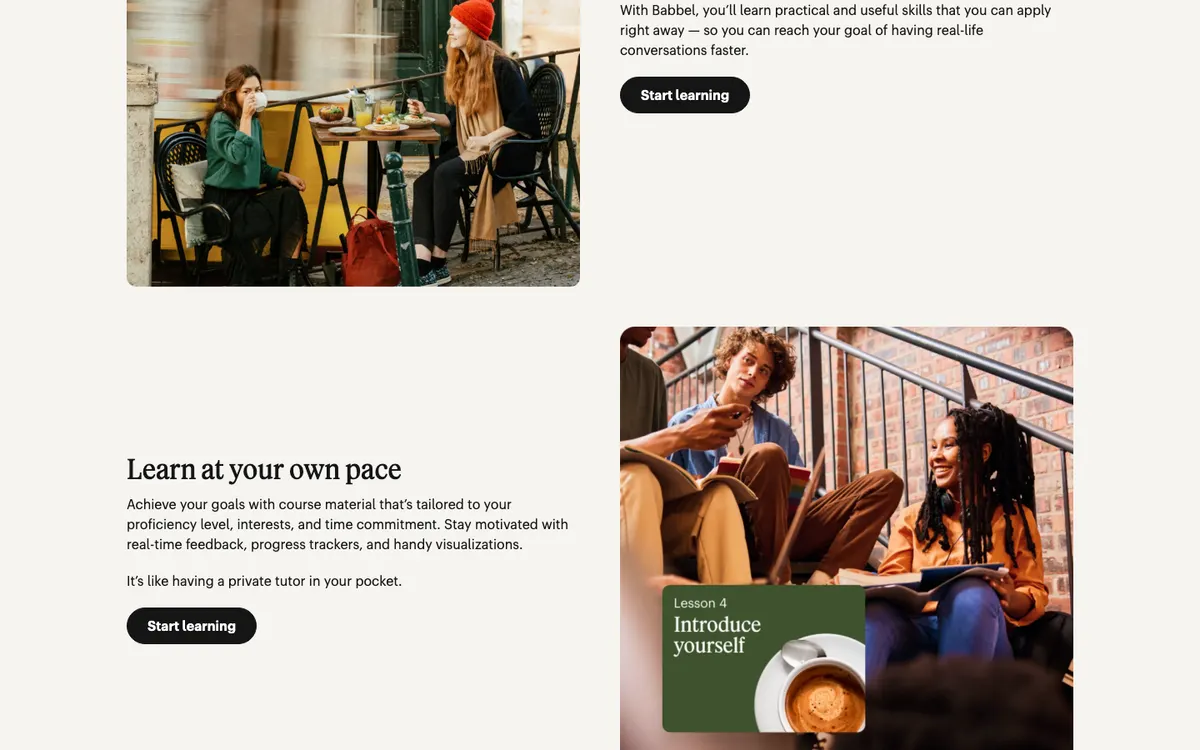
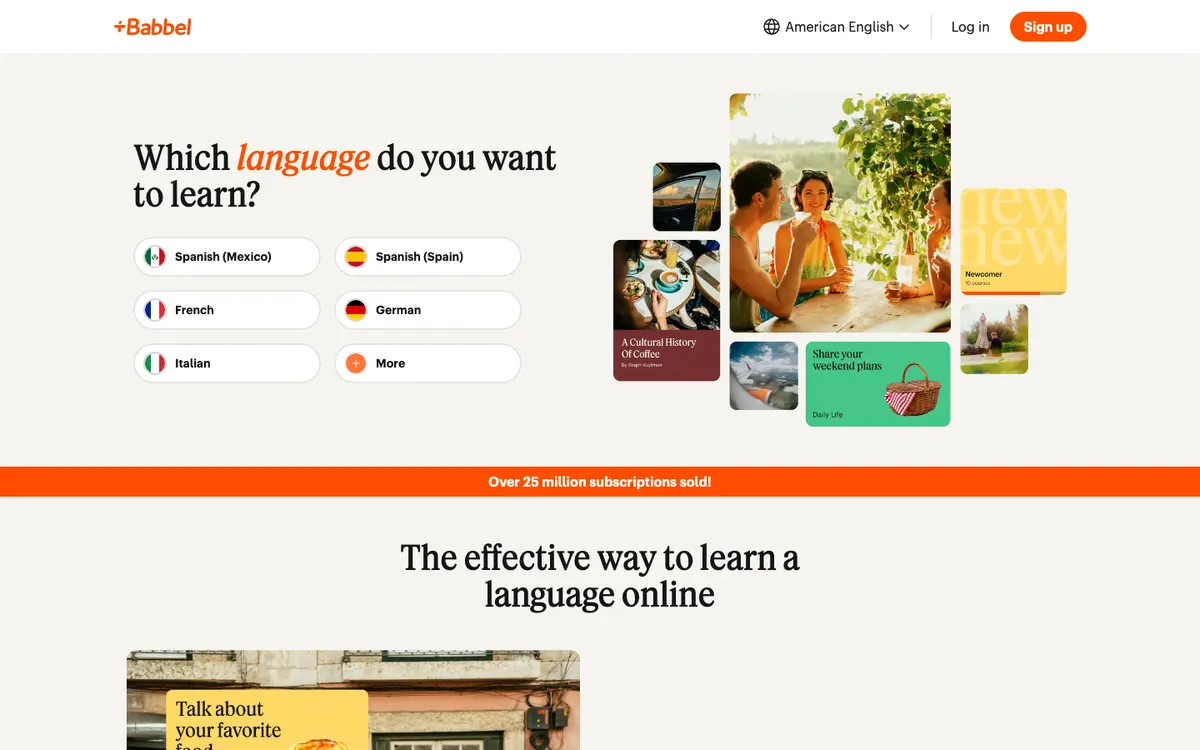
Babbel’s lessons are built around everyday conversations, with grammar “clearly explained”, interactive speaking practice and personalized review. Lingoda’s curriculum is built in-house around the CEFR levels, combining live classes with practice lessons and, the pricing page says, 100+ hours of AI-powered self-study material. One level is about 50 classes, and you get a certificate when you finish it.
Coverage differs too. Lingoda’s language menu, when we checked it on October 5, 2026, listed English and German up to C1, French and Spanish up to B2 and Italian up to A2. Babbel’s pricing page lists 14 languages but does not state the level each one reaches.
Neither gives you an official language qualification. Lingoda’s CEFR alignment helps you aim at a level, but if a university or visa office needs proof, you will still sit an external exam.
WinnerTie.
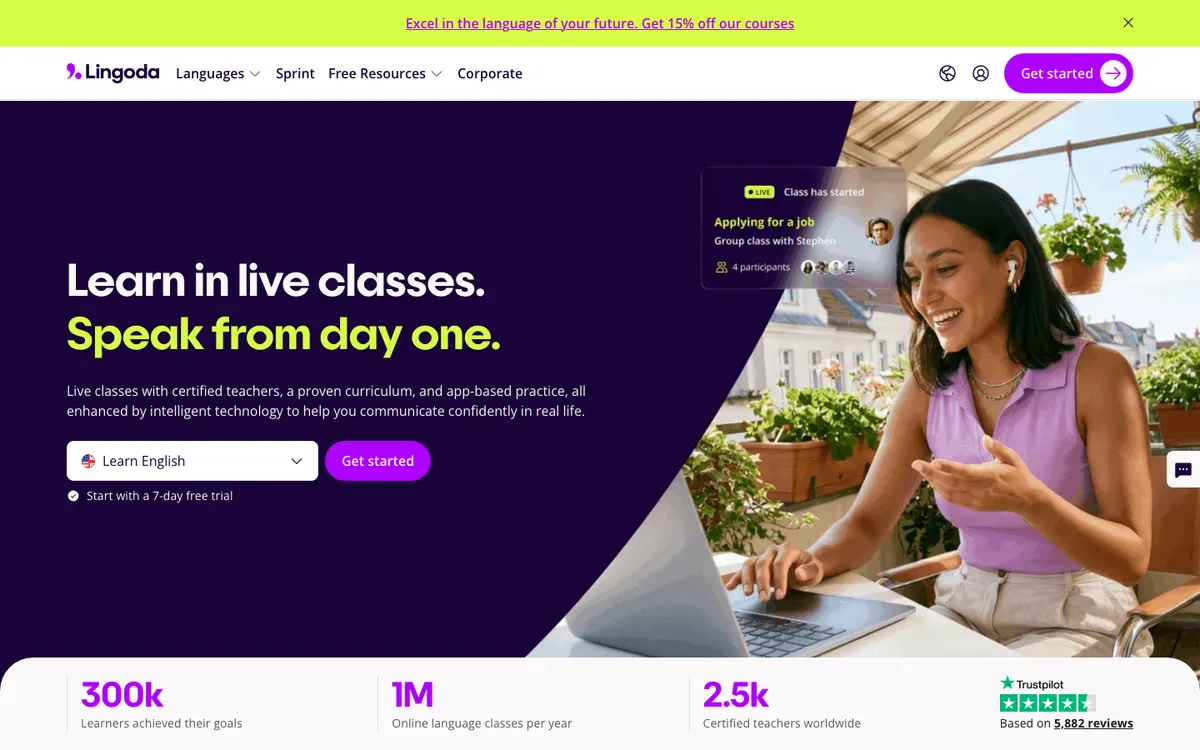
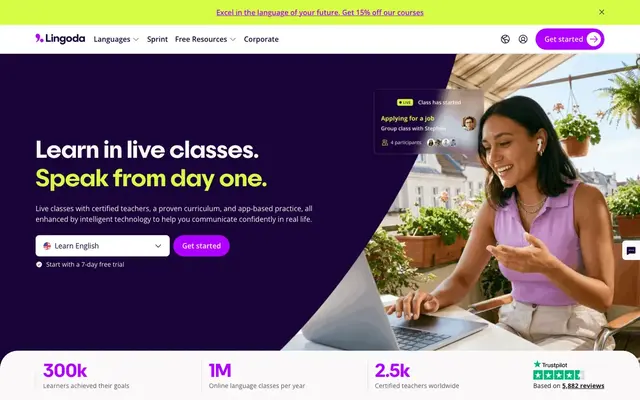
This is where Lingoda earns its price. Every class is 60 minutes, live, led by a native-level teacher, in a group of 3 to 5 students or one-on-one. You speak from the first class, and the teacher corrects you as you go.
Babbel’s app includes interactive speaking practice with speech recognition, which helps pronunciation and recall. It is not a conversation: nobody asks you an unexpected question. Babbel sells live classes, Babbel Live, separately, but they are not part of the app plans on its US pricing page.
If your goal is to hold a conversation, time spent speaking with a person is the deciding factor in this comparison. Nothing stops you from combining them, an app for vocabulary between classes and live classes for speaking; if the budget allows only one, decide by your bottleneck.
WinnerLingoda.
Babbel fits any gap in your day. Lessons are short, you need no booking, and you can stop mid-lesson. That is why it scores 9.5/10 on flexibility.
Lingoda offers classes 24/7, but you book a slot, ideally 7 days ahead, and attend at that time. On the monthly plan you can cancel a class 3 days in advance and get the credit back, and unused credits roll over to the next four weeks. You can pause or change your plan anytime. Learners under 18 cannot join. It scores 8.4/10.
The fixed appointment is also part of Lingoda’s pitch: it says the format is set up to keep you accountable, with a study area to prepare before class and quizzes to recap after.
WinnerBabbel.
Lingoda gives you a teacher in every session, which is why it scores 8.9/10 on support against 7.3/10 for Babbel, whose app plans include no tutor.
Lingoda’s money terms are also clearer. Its 7-day free trial includes 3 group classes or 1 private class, with a reminder one day before it ends; after that, your plan is charged automatically. If you cancel within 14 days of subscribing, you get a refund minus any classes taken.
Babbel’s US pricing page says you can cancel auto-renewal anytime but shows no money-back guarantee. Its end-user terms include a 14-day right of withdrawal described as a statutory right; ask support whether it applies to your purchase before relying on it.
WinnerLingoda.
BabbelLingodaPick BabbelBabbel's short lessons, grammar explanations and personalized review build vocabulary fast, for $107.40 a year. You can start a lesson anywhere, without booking.
Pick LingodaLingoda puts you in 60-minute live classes with a native-level teacher and 2 to 4 classmates. A level takes about 50 classes, so three a week gets you through one in roughly four months, by Lingoda's estimate.
Pick BabbelBabbel's lifetime access costs $299.99 once and includes all 14 of its languages. Lingoda is billed every four weeks for as long as you keep taking classes.
Other language learning options we reviewed, ranked by editorial score.
Learners who want regular one-on-one speaking practice and are willing to try a few tutors to find the right one.
Travelers, heritage learners and anyone who needs key words and phrases in a less common language, at the lowest yearly price in this ranking.

commuters and travelers who want to speak and understand everyday phrases, and who have 30 minutes a day with their hands busy and their ears free.
They tie at 8.7/10 in our review. Babbel scores higher on value and flexibility, Lingoda on support, because every class has a live teacher; they tie on curriculum and credibility. Choose by need: self-study app or live classes.
Babbel, by far. On October 13, 2026 its 12-month plan cost $107.40 and lifetime access $299.99. Lingoda's cheapest group plan was €59.99 for 5 classes every four weeks; 12 group classes cost €93.99 per four weeks.
Babbel sells live online classes, Babbel Live, separately from the app plans. The app plans on its US pricing page do not include a live teacher.
Babbel's plans include all 14 of its languages. Lingoda teaches English, Business English, French, German, Italian and Spanish, with levels that vary by language.
Lingoda offers a 7-day free trial with 3 group classes or 1 private class, then charges your plan unless you cancel; you can also cancel within 14 days of subscribing for a refund minus classes taken. Babbel's US pricing page does not show a free trial or money-back guarantee.
We score each program on curriculum, credibility, value, flexibility and support, using the provider’s official pages; see how we score. The comparison above was written from these sources and re-checked against the official sites on October 13, 2026. Prices and terms change: confirm them on the official site before you enroll.
BabbelChecked October 5, 2026
We may earn a commission when you buy through links on this page. Our rankings are based on our editorial criteria; some partners may be featured more prominently. Read our affiliate disclosure.