On this page · 7 sections6 min read
What a beekeeper does
A beekeeper manages honey bee colonies and the equipment and locations that support them. The work can be a backyard activity or part of a business, but both require attention to local conditions and colony health. Washington’s agriculture department explicitly addresses backyard and business beekeepers in its apiary-registration guidance.
Choose the scale and purpose before buying bees. A household learning project, honey sales, and providing pollination services create different practical and regulatory questions. An introductory online course can help you understand the vocabulary, but it cannot supply the local observations or supervised handling experience that a new hive owner needs.
A useful first objective is learning to inspect and document a colony with an experienced beekeeper. Your notes should distinguish what you actually saw from what you think it might mean. Bring uncertain observations to a qualified local mentor rather than turning a general video example into a diagnosis of your own hive.
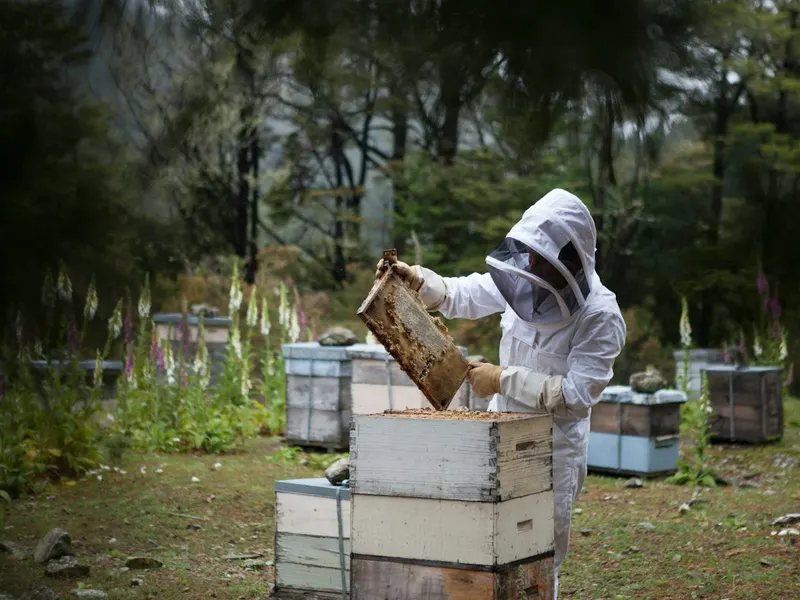
Do you need a license or certification?
There is no single nationwide course certificate established by the cited guidance as the entry requirement for all beekeepers. Apiary registration and local rules are more relevant starting questions than a commercial training badge. Check the agriculture department for your state and the rules for the actual property where the hives will be kept.
Washington provides a concrete example: it requires annual hive registration for backyard and business beekeepers, with registration due by April 1. Its guidance also explains first-time registration and distinguishes an apiary identifier from a business license. These are Washington rules and should not be presented as the requirements of every state. WSDA apiary registration
Local siting rules, property agreements, and the movement or sale of bees may require separate checks. If you plan to sell honey or other products, verify the applicable food and business requirements rather than assuming that hive registration covers sales. Tell the relevant office what you intend to do so its answer addresses the activity rather than only the word “beekeeping.”
A private course certificate documents study according to that provider’s rules. It does not automatically establish eligibility for every association’s advanced recognition or override state requirements. Ask what any proposed credential actually assesses and who recognizes it before paying extra for the title.
Do not interpret online availability as permission to perform every procedure shown. Product labels, local disease-control instructions, and state requirements can affect management decisions. Obtain current, location-specific guidance when selecting a treatment or responding to a suspected problem; this guide does not provide treatment instructions.
Step-by-step: how to become a beekeeper
- Check whether your proposed site is suitable and permitted. Identify property restrictions, nearby activity, access, and the local registration process. Resolve these questions before ordering colonies or building permanent equipment.
- Find local instruction or a mentor. Look for an opportunity to observe an inspection and discuss the seasonal calendar where you live. Ask how beginners obtain help when a colony behaves differently from the examples in a course.
- Learn colony structure and inspection vocabulary. Use the online course to prepare for practical sessions rather than replacing them. Practice explaining what an observation means and what further information would be needed before choosing an action.
- Create an equipment list with your mentor. Separate protective equipment, hive components, handling tools, and any harvesting equipment. Avoid buying a large extraction setup before deciding whether your initial learning plan actually requires it.
- Choose a reputable source of bees. Ask about the type of colony offered, collection arrangements, and any paperwork relevant to movement or inspection. Compare the timing with your preparation and local conditions rather than ordering solely because a website has stock.
- Keep a consistent hive record. Record the date, observations, actions, and questions after each inspection. A useful record lets a mentor understand the sequence of events and helps you avoid repeating an intervention simply because you forgot what was done.
- Review the first season before expanding. Evaluate what you learned, which equipment was useful, and where you needed help. Add colonies or commercial activities only after you understand the additional workload and requirements.
Before your first practical session, prepare a blank inspection sheet. Leave separate spaces for observed conditions, interpretation, and the next question for your mentor. That structure discourages the common beginner habit of writing a confident conclusion without recording the evidence that led to it.
Plan for access and assistance as well as equipment. Ask who could help if you are unavailable when an urgent hive issue arises, and make sure the site can be reached safely. A subscription library is a learning resource, not an on-call local service unless the provider explicitly offers that support.
How long it takes and what it costs
Beekeeping Made Simple is the only provider in this selection, with educational purchases ranging from a $27 introduction to $380 lifetime access. Monthly and annual memberships offer other payment choices. These are prices within one school, not a market-wide tuition range, and they exclude bees, equipment, and the other needs of your first season.
Beekeeping Made Simple Online Class offers a $19/month membership with a 30-day free trial, a $185/year plan, or forever access for $380 paid once. Its introductory course is $27. The membership and lifetime options describe access to learning rather than a fixed graduation schedule.
The membership model has no fixed occupational completion date. Compare the access period with the lessons you expect to use through your local seasonal cycle. A short burst of viewing may introduce the basics while leaving later-season management questions unanswered until they occur in your own apiary.
Obtain local quotes for colonies, hive components, protective equipment, and any required registration. Do not convert the course price into a startup estimate by guessing at the remaining items. For honey sales, add packaging and the actual compliance requirements only after confirming the permitted business model.
Read how the free trial converts to paid access and which cancellation method applies. Lifetime access may reduce repeated subscription costs for someone who will revisit the material, but only if the course remains relevant and its support terms meet your needs. Ask whether updates and instructor responses are included or sold separately.
Best online programs for aspiring beekeepers
One online provider is included below. Compare its access plans against your local seasonal learning needs, and ask how instructor support complements the hands-on help you will need from a nearby mentor.
- Beekeeping Made Simple Online Class offers subscription or lifetime access, alongside a separately priced introductory course.
The Beekeeping comparison explains the available purchase options and links to the course review.
Common mistakes to avoid
Do not order bees before confirming the site and local calendar. An early delivery is not useful if equipment is unfinished or you have not arranged practical help. Align the purchase with readiness rather than treating the arrival date as the beginning of preparation.
Avoid applying a management calendar from a different climate without local review. A lesson can explain a process, but the timing of observations in your area may differ. Ask a mentor how to recognize the relevant conditions instead of copying dates mechanically.
Do not buy harvesting equipment on the assumption that the first season will produce a saleable surplus. Treat production as uncertain while building husbandry skills. Keep any financial plan separate from the educational decision and do not rely on a course to guarantee yield.
When a hive problem arises, resist combining unrelated advice from several videos. Bring your inspection record to a qualified local source and explain what has already been done. A documented sequence is more useful than a list of interventions chosen because each sounded plausible in isolation.
FAQ
Is a course certificate enough to keep bees legally?
Not necessarily. Washington’s official guidance requires hive registration, and other jurisdictions must be checked separately. Education and legal compliance are different matters.
Does Washington exempt backyard beekeepers from registration?
Its page says backyard and business beekeepers need annual registration. Read the WSDA instructions for the current process and first-time guidance.
Does the listed tuition include startup equipment?
The Beekeeping Made Simple listing describes education access. No complete equipment-and-colony package is included in the education offer described here.
Why is there only one recommended provider?
The beekeeping category contains one listed provider. Its membership and lifetime options are purchase choices within that offering, not independent competing schools.