On this page · 8 sections6 min read
What a music producer does
A music producer helps shape a recording’s musical and technical direction, with responsibilities that depend on the project. O*NET’s Sound Engineering Technicians profile covers recording and manipulating sound and working with audio equipment. That is a related technical occupation, not a complete definition of every creative producer role. O*NET.
Producing a finished track can involve arrangement, sound selection, recording, editing, collaboration, and delivery. Sound synthesis is one valuable specialty within that larger workflow. Before choosing a course, decide whether your main gap is musicianship, synthesis, recording technique, mixing, or finishing and organizing projects.
Do you need a license or certification?
The listed programs are music education, not a universal government music-producer license. The cited occupational profile does not identify one mandatory national production certificate. Studios, collaborators, and clients can set their own expectations, and a portfolio of finished work may reveal abilities that a course-completion badge does not.
Separate technical education from permission to use material. A course subscription does not automatically grant rights to every sample, composition, performance, or recording you encounter. Establish the permissions and agreements appropriate to a project before distributing it, especially when working with collaborators or third-party assets.
If you provide specialized services beyond production, investigate their requirements separately. Do not imply that a music-school course authorizes every form of event operation or professional service. For ordinary course selection, the useful questions are what you will make, who will critique it, and what specific skills the assessment demonstrates.
Step-by-step: how to become a music producer
- Choose a realistic production goal. Define the kind of track or service you want to deliver. A synthesis course can address sound design, while lessons with a music teacher may address performance or theory; neither is automatically a complete production curriculum.
- Learn a manageable tool setup. Use one recording or production environment long enough to understand editing, routing, saving, and export. Avoid buying additional plugins whenever a basic workflow problem appears.
- Develop listening and arrangement skills. Compare references you are allowed to use for study and describe what you hear: instrumentation, dynamics, structure, and space. Turn those observations into exercises without copying a finished recording as your own.
- Complete a short project. Work from idea through arrangement, editing, and export rather than endlessly collecting unfinished loops. Document the decisions that helped the piece progress.
- Seek targeted feedback. Ask about the specific gap you are studying, such as clarity of the arrangement or consistency of a recorded part. Make a revision and compare it against the earlier version.
- Prepare a professional handoff. Agree on file formats, naming, versions, and any stems or session materials. Keep backups and clarify credits and permissions with collaborators before release.
Finish a track with a documented handoff
Choose a short brief with an intended mood, instrumentation, and delivery format. Create an arrangement that reaches a clear ending, then export a review version and listen away from the active session. This helps you notice structural problems that are easy to miss while adjusting individual sounds.
Keep a revision list with an audible reason for each change. If a part masks another, describe the conflict before adding more processing. If the arrangement feels repetitive, test a structural change rather than immediately purchasing a new sound library.
At completion, organize the project so another person could understand the files. Label versions, preserve necessary assets, and note what remains dependent on your software or plugins. A finished, understandable delivery is stronger evidence of production readiness than a folder of impressive but incomplete sketches.
Choose the learning format that fits the bottleneck
If you cannot identify the synthesis controls that shape a sound, Syntorial’s interactive focus addresses a specific gap. If your musical phrasing or instrumental technique limits a recording, a live lesson may be more relevant. If you need feedback on a complete production, ask the school how a tutor reviews your actual session or audio submission.
Check what you must provide before enrolling: software, instrument, recording equipment, files, or a prepared piece. Ask whether the teacher can work with your current setup and whether lesson notes or recordings are included. A quoted session length does not describe the full preparation expected from you.
Keep a learning backlog tied to unfinished work. Name the obstacle, the next exercise, and how you will judge improvement. This makes it easier to stop purchasing overlapping courses and return to completing a track with the tools and instruction you already have.
For a collaboration, agree on who makes final decisions and how revisions will be requested. A clear reference, labeled review file, and consolidated feedback can prevent contradictory changes across multiple versions. Keep the original session recoverable before a major revision so you can compare alternatives without losing the work that the collaborator previously approved.
How long it takes and what it costs
The category’s products use very different pricing units. Syntorial is an interactive synthesis-learning product whose current plan prices are unavailable here. Virtu Academy quotes live lesson lengths and per-lesson amounts, while Point Blank’s complete current tuition and duration are unavailable here.
Syntorial’s 199 lessons describe its curriculum, not a universal producer-training timeline. A half-hour or hour lesson likewise says nothing about the independent practice between meetings. Budget any recording software, monitoring equipment, instruments, and course-specific requirements according to your actual project rather than an assumed studio shopping list.
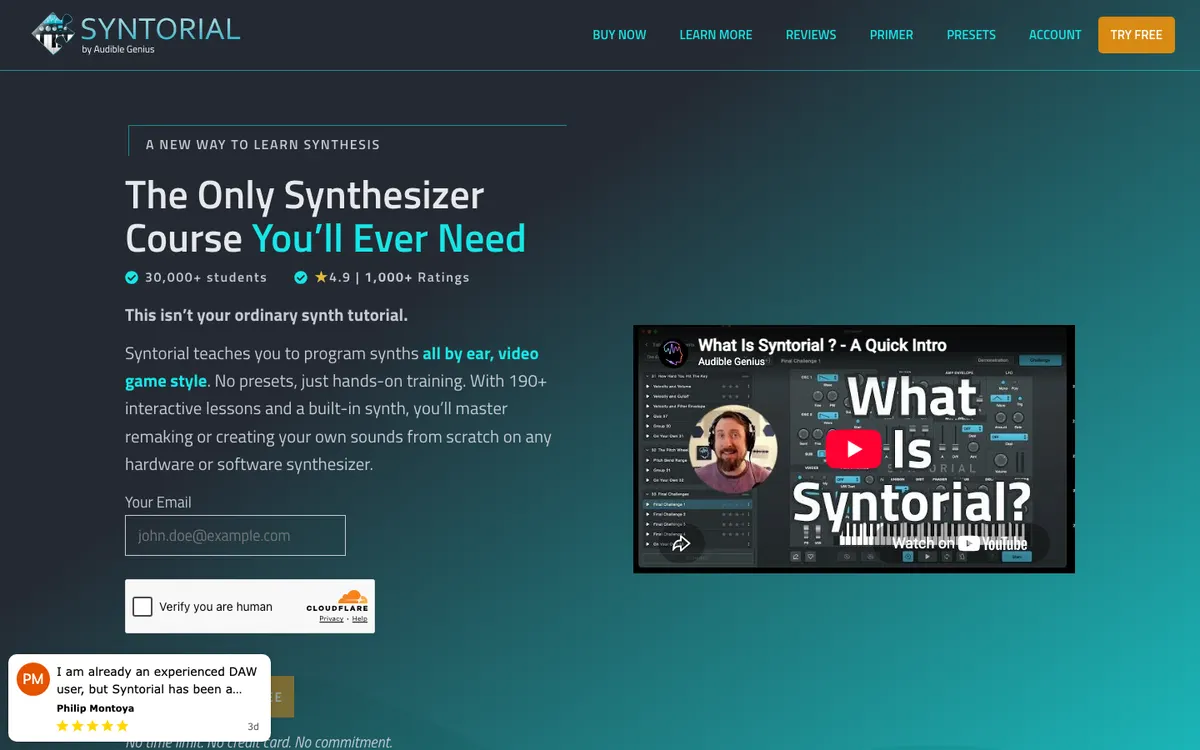
Syntorial (Audible Genius). Syntorial offers monthly and annual plans, but prices are not shown on the homepage. Its curriculum contains 199 interactive lessons. Ask for the current plan price, then consider how the synthesis exercises fit the sound-design skills you want to develop.
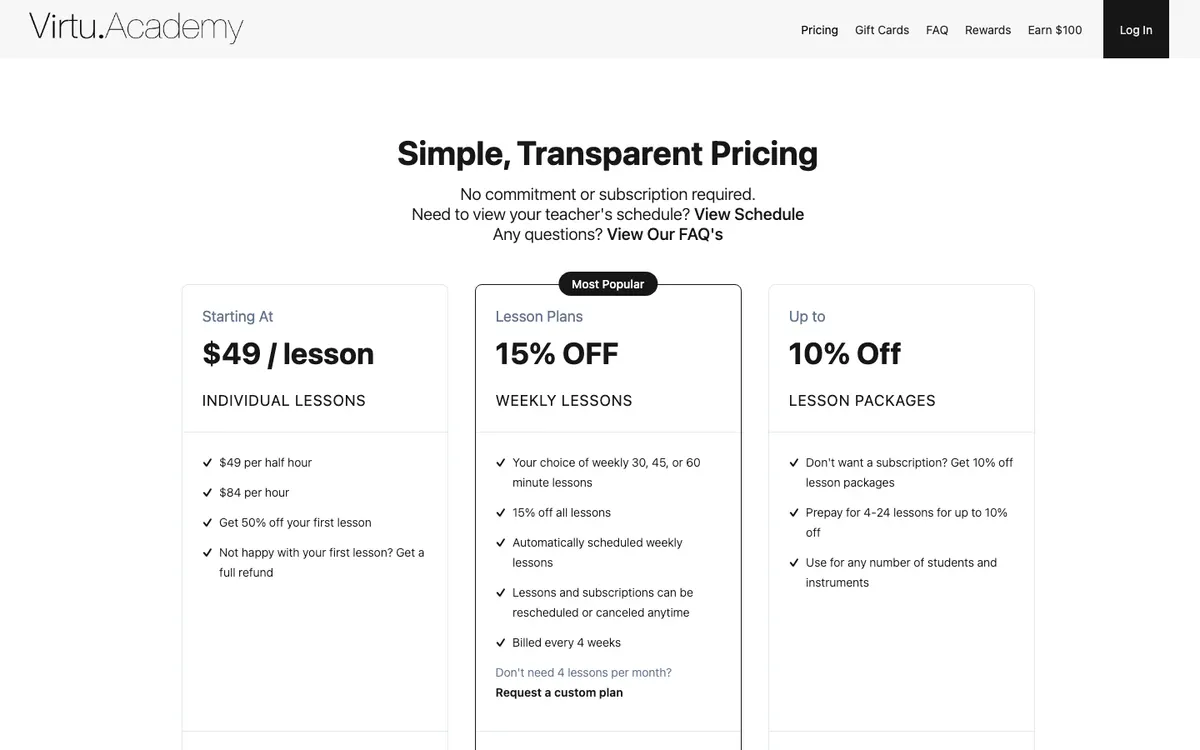
Virtu Academy Online Music Lessons. Individual live lessons start at $49 per half hour or $84 per hour, with 30- or 60-minute sessions. Subscriptions billed every four weeks save 15%, and prepaid packages offer up to 10% off. Compare both the lesson length and billing interval before scheduling ongoing instruction.
Point Blank Music School Online. A usable current tuition quote and dependable completion schedule are unavailable because access to the provider’s details was blocked. Request a direct quote for your intended online course and ask how tutor feedback is delivered on your production work.
Best online programs for aspiring music producers
- Syntorial (Audible Genius) teaches producers to program synthesizer sounds by ear through interactive, game-like lessons.
- Virtu Academy Online Music Lessons connects children and adults with vetted teachers for live, one-on-one music lessons online.
- Point Blank Music School Online provides aspiring producers and DJs with structured music-production courses and tutor feedback.
Read the Music Production comparison and individual reviews to compare synthesis software, live music lessons, and structured production study.
Top programs compared
The 3 highest-scored online music production programs in our ranking, side by side.
Swipe sideways to compare all 3 programs →
| Criterion | |||
|---|---|---|---|
| Our score | 8.8/10 | 8.7/10 | 8.5/10 |
| Price | — | $49 – $84 | — |
| Format | App | Live online | Live online |
| Duration | 199 interactive lessons. | 30- or 60-minute live lessons. | — |
| Free trial | Free demo with the first 22 of 199 lessons. | — | — |
| Best for | Music producers who want to program synth sounds by ear through interactive, game-like… | Students (kids or adults) who want live one-on-one lessons with a vetted teacher online. | Aspiring producers and DJs who want structured music production courses with tutor… |
| Full review | Syntorial / Audible Genius review | Virtu Academy review | Point Blank Music School review |

Scores from our editorial method. See the full ranking of 3 programs.
Common mistakes to avoid
Do not confuse synthesis training with a full production program or live instrument lessons with a mixing course. Each can be useful when it matches the problem you need to solve.
Avoid making purchases based on an assumed current price for a blocked provider page. Also avoid treating more equipment as the default answer to an unfinished project. Compare instruction, feedback, and the ability to complete work before expanding the tool collection.
FAQ
Is Syntorial a complete music-production school?
The Syntorial review describes focused synthesis and ear-training instruction. It addresses one part of a broader production workflow.
Does Virtu Academy provide the same learning format?
No. The Virtu Academy review describes scheduled live lessons, unlike an interactive self-paced app.
Are Point Blank's current tuition details verified here?
The Point Blank review notes blocked access and missing current details. Obtain a direct quote for the intended course.
What should a production portfolio demonstrate?
Finished audio and clear technical decisions are relevant to the work described in ONET's sound-engineering profile, while your exact producer role should be stated separately.