On this page · 8 sections6 min read
What a paralegal does
A paralegal supports legal work under appropriate professional supervision rather than practicing law independently. NALA’s professional standards describe the profession and the ethical framework expected of its members and Certified Paralegals. The useful distinction for an applicant is between supporting an attorney’s work and taking responsibility for advice that requires a law license.
Choose a practice area before comparing short courses. Litigation support may involve organizing evidence, tracking deadlines, and preparing material for attorney review; another office may need transaction documents or case intake support. A course designed around one workflow should be evaluated against that workflow rather than treated as complete preparation for every legal department.
For a practice exercise, build a fictional case file with an index, a chronology, and a list of unanswered questions. Keep facts separate from inferences and identify where each fact came from. That produces a stronger demonstration of legal support judgment than an attractive document containing unsupported conclusions.

Do you need a license or certification?
There is no single course certificate that establishes eligibility for every US paralegal position. Separate employer hiring requirements, state rules governing the role or title, and voluntary certification. A training company’s use of “certified” does not necessarily mean that its graduates have earned NALA’s Certified Paralegal credential.
NALA offers distinct eligibility pathways based on paralegal studies, a bachelor’s degree, or qualifying paralegal experience. Review the documentation for the pathway that actually fits your background before paying for exam preparation. Completing an unrelated short course does not automatically establish eligibility. NALA eligibility requirements
State differences matter. California’s Business and Professions Code section 6450 defines paralegal work, establishes qualification routes, and limits activities such as providing legal advice to consumers. Consult the actual statute and an employer about how your education fits; do not substitute a school’s marketing summary for the qualification review. California section 6450
A paralegal course is also different from a legal document preparer business or a limited legal practice license. Those pathways can have separate rules, and this guide does not claim that a paralegal certificate authorizes them. If your goal is serving the public directly, identify the exact regulated service before choosing education.
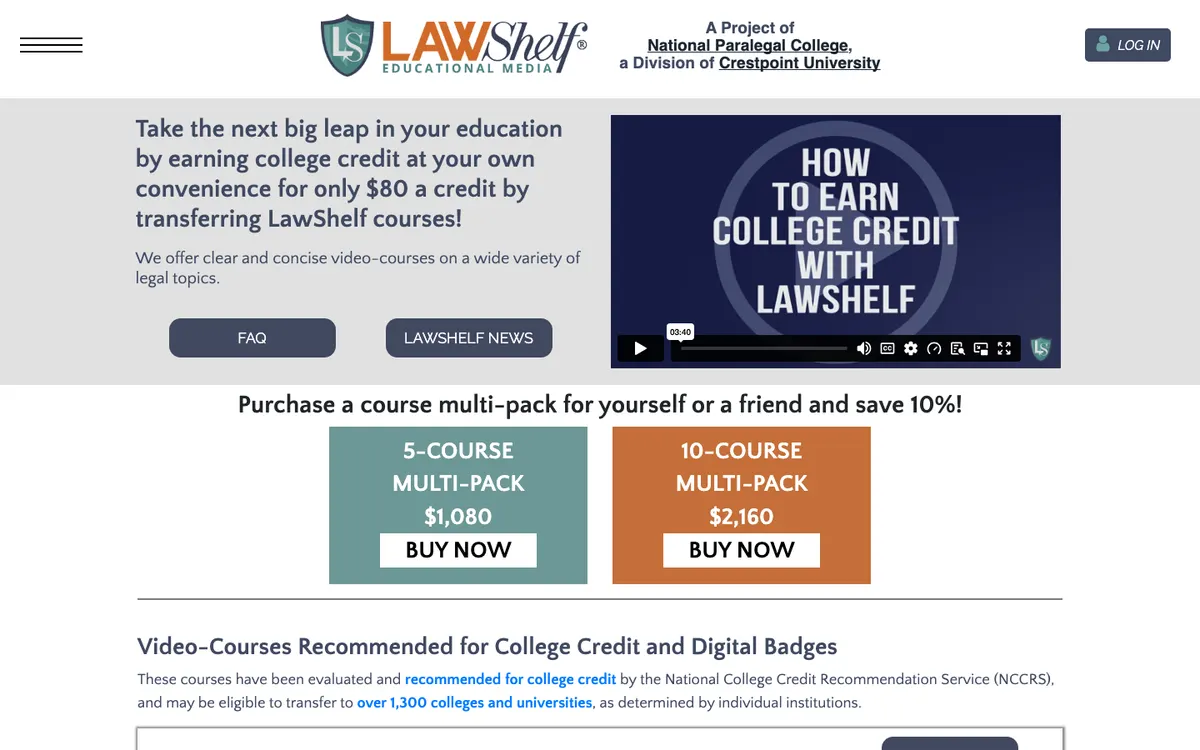
LawShelf’s credit recommendation requires another distinction: recommended college credit is not automatically an awarded degree or a universal transfer guarantee. Ask the receiving institution which course credits it will accept and whether they apply to the required program, not merely to elective credit. Keep that answer with your enrollment records.
Step-by-step: how to become a paralegal
- Identify your intended state and work setting. Compare the requirements of law firms, corporate legal teams, and public employers that interest you. Record whether they request a degree, a paralegal certificate, experience, a named professional credential, or a particular combination.
- Map your existing education to the required pathway. Obtain transcripts and course descriptions before deciding that another certificate is necessary. If NALA certification is your objective, compare your background directly with its published eligibility routes and resolve uncertain credits before buying preparation.
- Select foundational education or a targeted skills course. A beginner needing broad legal education has a different need from an employed assistant learning trial preparation. Ask for a syllabus that shows research, writing, ethics, and practical assignments appropriate to your starting point.
- Practice with fictional or authorized documents. Organize an exhibit list, draft a neutral chronology, and proofread a document against source material. Never put confidential client records into a public portfolio or an unapproved software tool merely to demonstrate your skill.
- Learn the office’s deadline process. Ask how deadlines are calculated, checked, entered, and escalated. In a training exercise, show the source of a deadline and flag assumptions for attorney review rather than treating a calendar reminder as legal verification.
- Seek supervised entry experience. Apply for roles whose responsibilities match your actual preparation, including legal support positions where appropriate. Explain what you have practiced and what you still need to learn; do not describe course exercises as paid case experience.
- Add certification when it serves a defined purpose. If you qualify and your target employers value NALA’s credential, plan the application and exam separately from course completion. Continuing professional development should follow the work you do, not simply the next badge a provider sells.
How long it takes and what it costs
The two options here offer supplemental learning rather than a complete survey of degree programs. LawShelf lists a per-credit exam price, while Paralegal Boot Camp lists individual skills courses. A range of $80 per credit to $697 for a particular boot camp would mix units; it should not be interpreted as the total price of becoming qualified in your state.
LawShelf College-Credit Legal Courses lets you study its video courses and short videos for free at your own pace. Course exams for transfer credit cost $80 per college credit, making the receiving college’s credit decision central to the value of paying.
Paralegal Boot Camp sells self-paced video courses individually for $297 to $697. Examples include Litigation Paralegal Boot Camp at $697, Billable Hours Mastery at $597, and Trial Prep at $297; the Ann AI tool costs $14.95/month.
Both entries are self-paced, so neither supplies a universal calendar deadline for professional readiness. If you need a degree or a broader certificate, include that program’s admissions, credit requirements, and schedule in your plan. A short litigation module may fit around employment without replacing foundational education.
Before paying for transfer-credit exams, request a written credit evaluation from the college you intend to attend. Before paying for a boot camp, ask whether assignments receive feedback and whether the examples match the practice area you want. These questions address different risks and should not be reduced to a price comparison alone.
Best online programs for aspiring paralegals
This selection contains two programs, ranked below. Compare LawShelf for legal study and potential transfer credit with Paralegal Boot Camp for specific office workflows; neither comparison replaces checking the education your target employer or state requires.
- LawShelf College-Credit Legal Courses offers self-paced legal courses with NCCRS college-credit recommendations.
- Paralegal Boot Camp offers targeted self-paced legal support courses, including litigation and trial-preparation topics.
Read the Paralegal Certificate comparison for a closer look at credit-oriented study and targeted skills training.
Top programs compared
The 2 highest-scored online paralegal certificate programs in our ranking, side by side.

| Criterion | ||
|---|---|---|
| Our score | 8.7/10 | 8.4/10 |
| Price | $80 | $297 – $697 |
| Format | Self-paced | Self-paced |
| Duration | Self-paced. | Self-paced video courses. |
| Accreditation | Courses evaluated and recommended for college credit by NCCRS (National College Credit… | — |
| Free trial | Free video courses to study before paying for credit. | — |
| Best for | Adult learners who want low-cost, transferable college credit in legal subjects. | Working paralegals who want practical, job-ready skills (litigation, e-discovery,… |
| Full review | LawShelf (Crestpoint University) review | Paralegal Boot Camp review |


Scores from our editorial method. See the full ranking of 2 programs.
Common mistakes to avoid
Do not confuse a certificate of completion with professional certification. NALA’s credential has its own eligibility and examination process, and a course may serve as education without awarding that credential. Describe the issuing organization accurately on a resume so an employer can evaluate it.
Avoid assuming that an online program approved for one purpose satisfies all other purposes. Credit recommendation, employer acceptance, exam eligibility, and compliance with a state qualification rule are separate decisions. Ask each decision-maker the relevant question and save the answer.
Do not write legal conclusions into a practice portfolio without identifying them as exercises. A stronger submission shows careful sourcing, clean formatting, and questions for attorney review. It should demonstrate that you understand the support role rather than imply authority to advise a real client.
When evaluating a first job, ask about supervision as well as title. Find out who assigns work, reviews drafts, resolves uncertain instructions, and covers absences. An impressive title offers little learning value if nobody is available to explain why a document or filing was rejected.
FAQ
Does an online certificate let me give legal advice?
No such authority is established by these programs. Review NALA’s professional standards and the rules of the jurisdiction in which you work before describing your services.
Can I take the NALA exam immediately after a short course?
Only if you meet a published eligibility pathway. Use NALA’s requirements to check your education and experience rather than assuming course enrollment proves eligibility.
Will LawShelf credits transfer anywhere?
The LawShelf listing describes NCCRS recommendations and partner arrangements. Obtain confirmation from your receiving institution about the exact credits and degree requirements before relying on transfer.
Is a skills boot camp useful for a beginner?
It can teach a defined workflow, but check the assumed background. The Paralegal Boot Camp review lists individual subjects rather than establishing that every course is a complete entry qualification.