On this page · 8 sections6 min read
What a pianist does
A pianist performs music on a piano or keyboard in settings that may include solo playing, ensembles, accompaniment, recording, or teaching. O*NET’s musicians-and-singers profile describes live and recorded performance more broadly. There is no single course that prepares someone equally for every musical role.
Choose a first goal that determines what to practice. Playing songs for personal enjoyment, accompanying a singer, and preparing a formal audition require different balances of reading, listening, technique, and repertoire. An app can support a structured routine, but its progress display is not the same as an independent assessment of musical readiness.
A useful early milestone is playing a complete, appropriately chosen piece with a steady pulse and intentional phrasing. Record an uninterrupted performance and note where coordination becomes uncertain. That gives you a more concrete learning question than simply asking whether you are becoming “good at piano.”

Do you need a license or certification?
The cited musician profiles do not identify a nationwide government pianist license or a mandatory commercial lesson certificate. Performance opportunities are generally tied to the requirements of the ensemble, employer, venue, or client. A private app badge records progress within that product rather than legal authority to perform.
Formal education can matter for particular jobs and musical pathways. The BLS musician profile describes substantial training and formal study in some contexts, but it does not make one online subscription a universal professional qualification. Check audition and hiring instructions for the actual role you want.
Teaching in a public school is a separate credential question from privately performing or learning piano. If that is your goal, investigate the relevant educator pathway rather than assuming a lesson subscription prepares you for it. Similarly, a private teaching business may need local business and safeguarding arrangements beyond musical study.
Performance and publication permissions also need attention. Access to a song inside an app does not automatically grant every right to publish a recording or distribute an arrangement. Check the specific license or obtain appropriate permission before using course materials commercially.
When comparing courses, ask how achievement is assessed. Automated note recognition, self-reported completion, teacher feedback, and a formal examination are different systems. None should be described as another simply because the platform calls a lesson finished.
Step-by-step: how to become a pianist
- Define the first musical use. Decide whether you want to read simple pieces, play chord-based songs, accompany another musician, or work toward an audition. Use that objective to choose a structured path rather than moving randomly through a large song library.
- Set up a suitable instrument and practice space. Check the course’s keyboard requirements and how the app connects or listens. Arrange the setup so you can see instructions and play comfortably without interrupting each exercise to adjust the device.
- Learn reading, rhythm, and coordination together. Practice the task at a manageable level and identify which element breaks down. Do not assume that repeating a complete piece faster will solve a specific reading or timing problem.
- Choose instruction that supplies the feedback you need. An app may identify notes while a teacher can address interpretation, coordination, or questions the software cannot explain. Ask whether personal feedback is included, optional, or absent before comparing subscriptions.
- Practice difficult passages deliberately. Isolate a short section, work through the problem, and reconnect it to the surrounding music. Keep notes on what changed so that the next session begins with a clear task rather than another unfocused run-through.
- Build a small complete repertoire. Prepare beginnings, endings, and recovery after mistakes, not only favorite sections. Record uninterrupted takes and listen for consistency before choosing more difficult material.
- Seek the experience required by your goal. Ensemble and accompaniment work require listening and coordination with other people, while auditions require following their specific instructions. Add that practice rather than assuming solo app progress covers every performance setting.
A useful rehearsal is playing for a listener without restarting after every error. Note where you lose continuity and practice a recovery point. This tests a different skill from earning a high score on a short interactive exercise.
If accompaniment is your goal, practice following a singer or another instrumentalist rather than expecting them to follow the app’s timing. Discuss entrances, tempo, and the form before playing. That interaction helps reveal the gap between knowing the notes and supporting another performer.
How long it takes and what it costs
These piano options sell recurring app or lesson access rather than fixed professional-qualification programs. Month-to-month prices shown here are around $29.99 to $30; longer commitments have lower monthly equivalents. Compare the amount actually charged and cancellation terms before deciding which plan fits your practice routine.
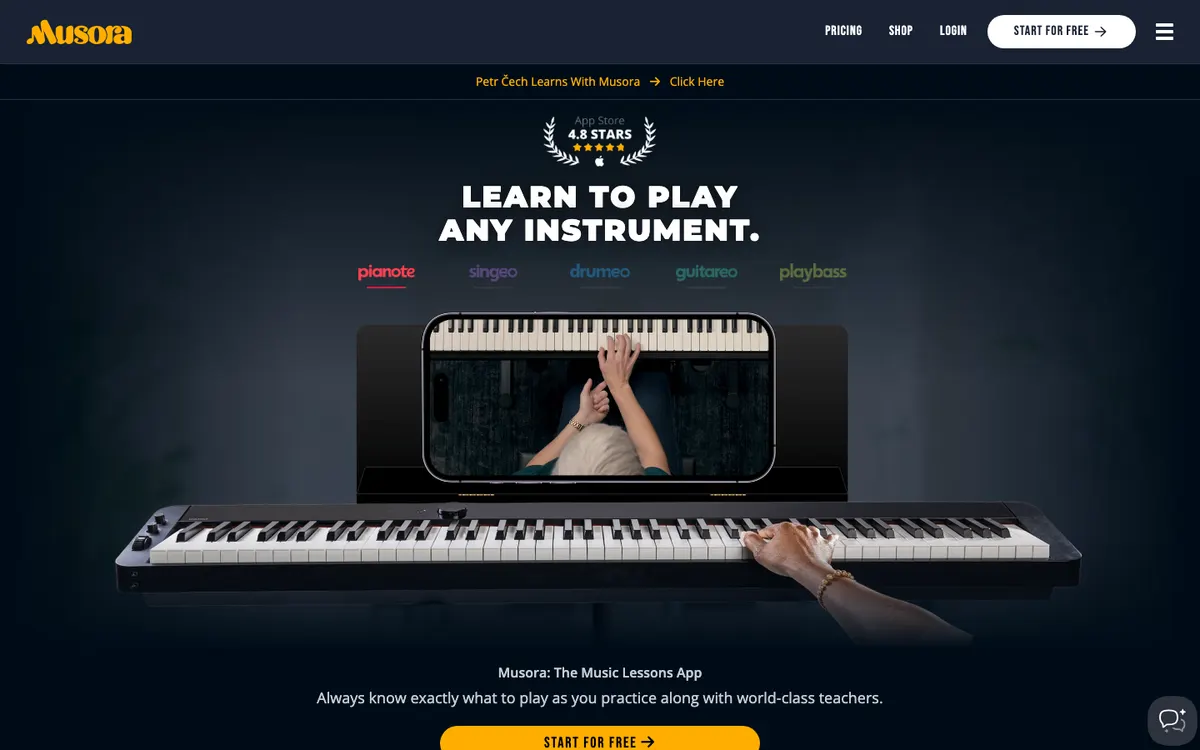
Musora Membership (Pianote, Guitareo, Drumeo, Singeo) is free for 7 days, then $30/month, with an annual option also available. It is an ongoing membership, so choose a billing period around the piano lessons and other instrument learning you expect to use.
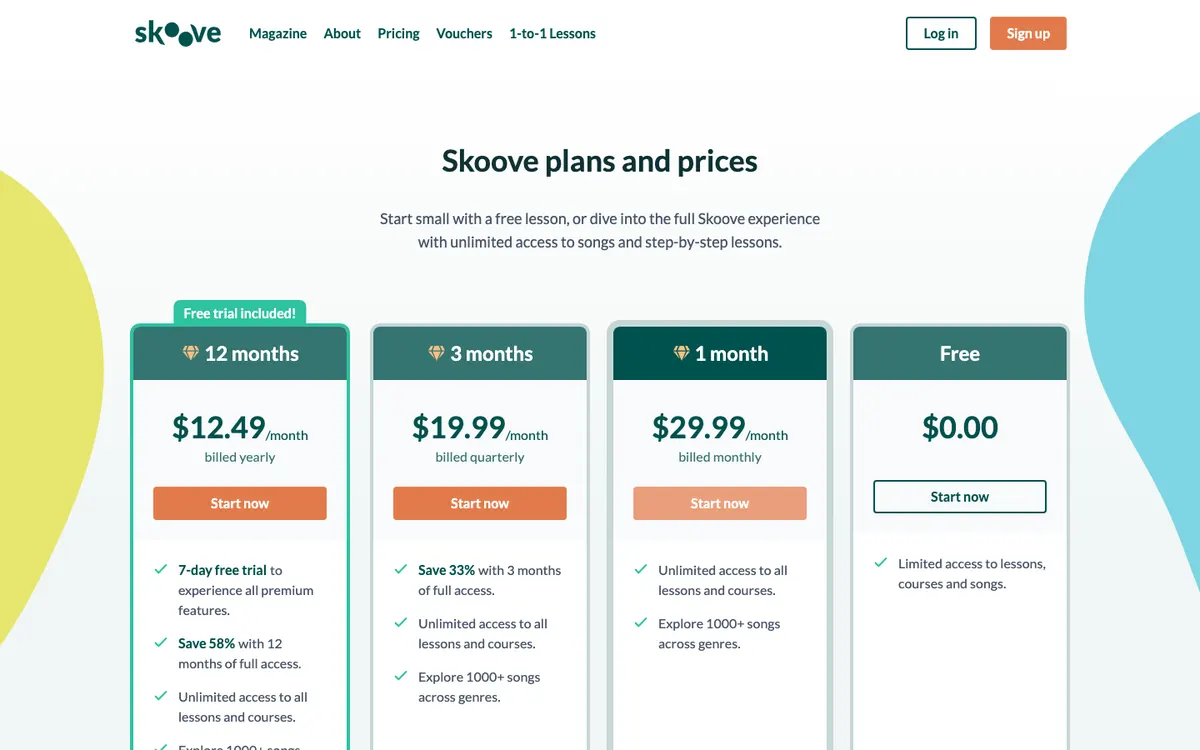
Skoove Premium (Piano) offers monthly access at $29.99/month, a 3-month plan at $19.99/month ($59.99 total), or a 12-month plan at $12.49/month ($149.99 total). A free tier is also available. These are subscription periods rather than promised completion times.
flowkey Premium uses subscription access, but its current price is not confirmed here. Request a written quote for the plan you want and check the billing period before comparing it with Musora or Skoove.
The category now lists three provider families: Musora, Skoove, and Flowkey. Compare the actual piano learning path within each offer, since a broader membership can also include instruction for other instruments. Check whether you need piano-only learning or will make use of the wider catalog before choosing a plan.
No provider schedule here establishes how long it takes to become a professional pianist. A course titled around a short reading challenge describes that learning sequence, not the entire skill. Build your calendar around regular practice, feedback, and the repertoire your intended use requires.
The instrument budget is separate from tuition. Check the selected course’s requirements before buying hardware and obtain actual prices rather than relying on a generic startup estimate. If your existing instrument is suitable, begin with a structured routine and use early lessons to identify whether additional equipment would help.
Best online programs for aspiring pianists
The ranked choices below cover three provider families. Compare their piano-specific paths and feedback rather than judging a multi-instrument membership only by the size of its library.
- Musora Membership (Pianote, Guitareo, Drumeo, Singeo) offers a membership that includes Pianote alongside learning for other instruments.
- Skoove Premium (Piano) offers piano learning through an app with monthly, quarterly, and annual billing options.
- flowkey Premium offers app-based piano learning whose current subscription price needs checking.
Explore the Piano Lessons comparison for the app and membership reviews, with attention to billing and the learning path you will use.
Top programs compared
The 3 highest-scored online piano lessons programs in our ranking, side by side.
Swipe sideways to compare all 3 programs →
| Criterion | |||
|---|---|---|---|
| Our score | 8.7/10 | 8.5/10 | 8.4/10 |
| Price | $30 | $12.49 – $150 | — |
| Format | Subscription | App | App |
| Duration | Membership. | Subscription. | Subscription. |
| Free trial | 7-day free trial; cancel during the trial and you are not… | 7-day free trial. | — |
| Best for | Musicians who want one membership covering piano, guitar, drums and voice lessons with… | Adult beginners who want a structured piano app that listens as they play. | Piano beginners who want to learn songs they like with an interactive app. |
| Full review | Musora (Pianote, Guitareo, Singeo, Drumeo) review | Skoove review | flowkey review |


Scores from our editorial method. See the full ranking of 3 programs.
Common mistakes to avoid
Do not assume that every part of a multi-instrument membership advances your piano goal. Compare the piano lessons, feedback, and practice tools you will actually use. A broad library can be worthwhile, but its size should not distract from whether the next lesson addresses your current difficulty.
Avoid practicing only until the app accepts the notes. Listen to the entire phrase and assess rhythm, continuity, and musical intention. Automated feedback can be useful without capturing every aspect of performance.
Do not select pieces only because they are impressive. A manageable piece completed carefully can reveal more about your progress than a difficult piece you can play only in fragments. Use teacher feedback or an honest recording review to choose the next challenge.
FAQ
Do I need a certificate to perform piano music?
The BLS musician profile does not establish a universal pianist certificate. Follow the requirements of the specific audition, employer, or venue.
Is Musora limited to piano lessons?
The Musora listing describes membership spanning Pianote and other instrument-learning offerings. Check the piano-specific path and included feedback rather than assuming every part of the membership is relevant to your goal.
Is Skoove’s annual monthly equivalent billed monthly?
The Skoove listing shows different billing periods, including an annual total. Read the payment term rather than assuming the displayed monthly equivalent is a monthly cancellation plan.
Is Flowkey’s current price verified here?
The Flowkey review has no confirmed current price. Request or view the current plan before making a cost comparison.