
On this page · 12 sections5 min read
Our verdict
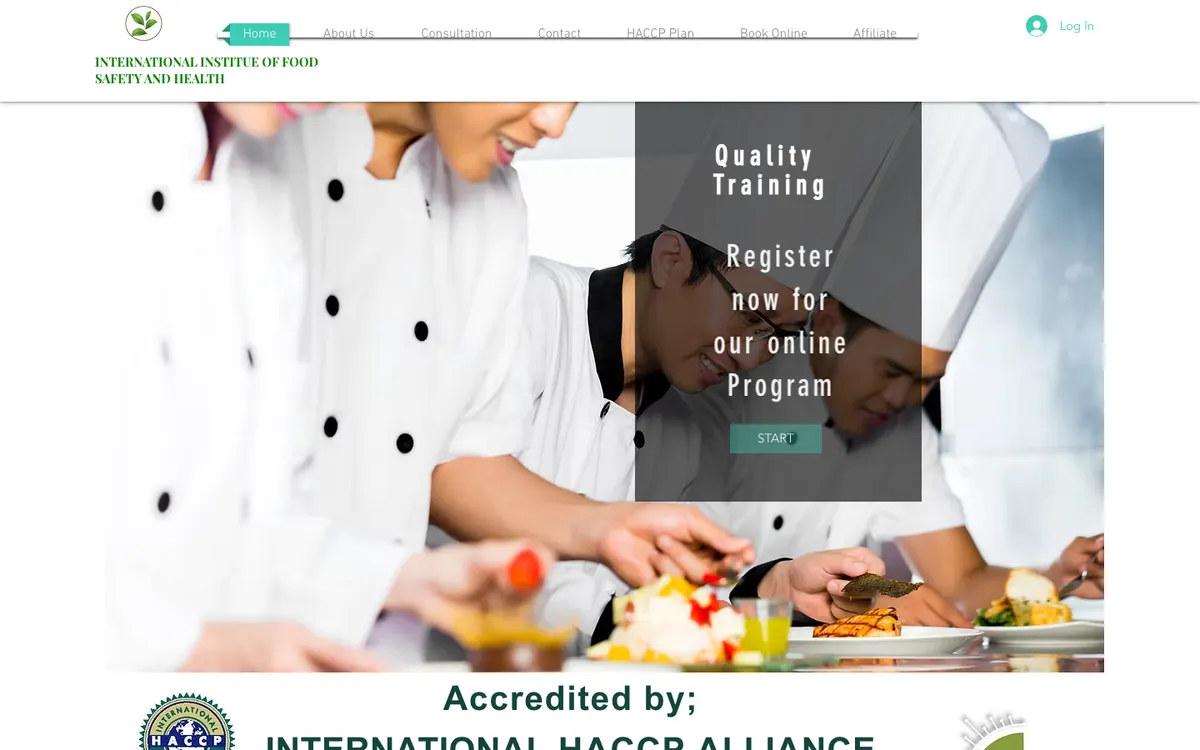
Our verdict8.3/10If someone in QA has told you to get HACCP training and you want a priced, self-paced course, IIFSH does the job: Level I is $150 and Level II $300, with an International HACCP Alliance accreditation the school states on its homepage.
If what you need is a food handler card or the food manager certificate your health inspector asks restaurants for, this isn't it: look at 360training or EduClasses. The catch: the website is thin (no syllabus, hours or refund terms per course), so you're buying on a short description and a price.
Best for: food plant, packing and catering staff who need HACCP Level I or II on file for an audit or a customer requirement and want a low, published price.
At a glance
The email comes from quality assurance, or from a customer’s supplier questionnaire: “Please provide evidence of HACCP training for line supervisors.” Nobody tells you which course. You search, find training companies quoting $500 a seat or “contact us for a quote,” and then land on IIFSH, where HACCP Level I has a price tag of $150 right on the homepage.
The International Institute of Food Safety & Hygiene (its own header says “Food Safety and Health”) is a small online school that sells self-paced HACCP courses in three levels, plus single-topic courses on GMP, kitchen safety, seafood, meat and poultry, packaging and pest control. It also offers consulting to write a HACCP plan or a food safety management system for a business.
How we reviewed it: we read the IIFSH homepage and course list on October 30, 2026, and checked the FDA Food Code to place the credential. We haven’t taken a course.
Some links on this site may earn us a commission if you enroll. Your price stays the same. Our rankings are based on our editorial criteria; some partners may be featured more prominently. How we review
Pros & cons
- Prices in US dollars on the homepage, from $150 for HACCP Level I
- HACCP in three levels, plus GMP, seafood, meat and poultry, and packaging courses
- Self-paced with built-in exams and a certificate at 80%
- States International HACCP Alliance accreditation for its HACCP program
- No syllabus, hour count or access period per course on the site
- Not a food handler card or a certified food protection manager credential
- Small provider with a rough website (typos, an 'About' link that opens the affiliate page)
- Accreditation can only be checked with the Alliance, not on IIFSH's own pages
What the money buys
| Course | Price (Oct. 30, 2026) |
|---|---|
| HACCP Level I | $150 |
| HACCP Level II | $300 |
| HACCP Level III | $450 |
| Food Safety and Hygiene | $150 |
| Kitchen Safety and Law | $200 |
| Good Manufacturing Practices (GMP) | $400 |
| Food Science and Technology | $900 |
Smaller courses (knife safety, menu planning, seafood, meat and poultry processing, food packaging, pest control) sit between $150 and $400.
The HACCP program follows the seven principles you’ll meet in any audit: hazard analysis, critical control points, critical limits, monitoring, corrective actions, verification, and records. In plain terms, the course teaches you to write a product description, draw the process flow, list what can go wrong with each raw material and step, and decide where a temperature check or a metal detector actually matters. The exams are built in, and you need 80% to get the certificate.
Who gets real use out of it
Picture a shift supervisor at a sauce bottling plant. The plant is preparing for a GFSI-type audit, and the auditor will ask for training records. HACCP Level I gives that supervisor the vocabulary and a certificate dated this month, for less than a day of overtime. Level II makes sense for whoever will actually sit on the HACCP team and sign the plan.
It’s also a fit for a small producer (a jam maker moving into retail, a caterer bidding on a hospital contract) who needs to show a buyer some HACCP training without sending staff to a two-day class in another city.
IIFSH recommends a basic grounding in food safety before Level I. If the words “cross-contamination” and “danger zone” mean nothing yet, start with its $150 Food Safety and Hygiene course.
Which level to buy
Level I is for people who work inside a HACCP plan: they follow the monitoring steps, fill in the logs, and need to know why a critical limit exists. Level II is for people who build or maintain the plan, which means the hazard analysis, the decision about each critical control point, and the validation. Level III, at $450, sits above that, though the site doesn’t spell out how its content differs. If you can’t tell which one your auditor wants, ask: a supervisor with Level I and a QA lead with Level II is a common and sensible split, and it costs $450 for the pair.
Budget it like any training line. Five line supervisors on Level I comes to $750, about the price of one seat at many in-person HACCP workshops. The trade-off is time: self-paced means each person has to find the hours on their own, between shifts. Schedule them, or the certificates will arrive the week of the audit.
The catch
The website gives you prices and outcomes, and very little else. There’s no syllabus per level, no hour count, no access period and no refund policy on the pages we read. The “About” link opens a page recruiting affiliates. Typos sit in the header. None of that says the course is bad, but it does mean you buy on trust.
The accreditation is the other thing to verify. IIFSH says its HACCP program is accredited by the International HACCP Alliance and by ISEKI-Food Association, and that it meets GFSI training requirements. Those are its claims. The Alliance’s old public course list no longer loads, so if your auditor or customer specifically wants Alliance-accredited training, email IIFSH for the accreditation details and ask your auditor whether that’s enough before you pay.
Not the certificate your restaurant needs
This is where people lose $150. Most US health departments work from the FDA Food Code, which asks restaurants and food service for a certified food protection manager who passed an exam from an accredited program. ServSafe Manager is the familiar example. Front-line staff in many states need a food handler card instead. A HACCP certificate is neither. It’s the right tool for processing, manufacturing and supply-chain audits, and the wrong one for a health inspection at a restaurant.
Alternatives
If you need a food handler card or alcohol server training, 360training sells state bundles through Learn2Serve, and Ace Food Handler is a cheap option for Texas. For the manager-level certificate in Texas, EduClasses packages training and the exam. Our food handler and food safety ranking lists all four side by side.
If your company needs a HACCP team trained together, with a live instructor who can look at your own process, a classroom or virtual workshop from an audit firm will cost more per seat and answer more of your questions.
Swipe sideways to compare all 4 programs →
| Criterion | This review | |||
|---|---|---|---|---|
| Our score | 8.3/10 | 8.7/10 | 8.4/10 | 8.4/10 |
| Price | $150 – $400 | — | $6 | — |
| Format | Self-paced | Self-paced | Self-paced | Self-paced |
| Duration | Self-paced online. | Self-paced online. | Self-paced online. | Self-paced study (108 sections, about 2 hours of reading for the Texas course; the ANAB track is described as about 8 hours of training), then a 90-minute exam in one sitting, with 2 attempts per purchase. |
| Accreditation | HACCP certification accredited by the International HACCP Alliance (per IIFSH). | ANAB-accredited food handler training; state-approved alcohol server programs (e.g., TABC, Illinois BASSET, Louisiana Responsible Vendor, Utah). | State-approved TABC seller/server training; food handler course approved by numerous state, county and city health departments (per the site). | Two tracks: a Texas DSHS-approved Certified Food Manager program (license #10023), valid only in Texas and not proctored; and the ANAB-CFP accredited FMC Food Managers Certification exam (accreditation ID 1135), proctored, sold on foodmanagerscertification.com. |
| Best for | food plant, packing and catering staff who need HACCP Level I or II on file for an audit or a customer requirement and want a low, published price. | Servers, bartenders and kitchen staff who need a food handler card and their state's alcohol server certificate in one purchase. | Texas restaurant and bar workers who need TABC and a food handler card fast, at the lowest price. | food service managers in Texas who want the cheapest state-approved certificate online, and employers in any state who need a proctored ANAB-accredited exam with bulk codes. |
| Full review | You are here | 360training (Learn2Serve, etc.) review | Ace Food Handler review | EduClasses (Food Manager Classes) review |


“—” means the information was not published or not yet checked. See all 4 food handler & food safety programs.
Your next step
Ask the person who requested the training (QA, the customer, the auditor) which credential they expect, word for word. If the answer is “HACCP training, any accredited provider,” email IIFSH, ask for the Level I outline and its accreditation reference, and enroll once both come back.
Score breakdown
HACCP, GMP and food safety topics.
International HACCP Alliance accreditation stated.
HACCP Level I at $150.
Online.
Limited support information.
Weighted average of five criteria. Read our methodology.
FAQ
Is an IIFSH HACCP certificate the same as ServSafe Manager?
No. The FDA Food Code, which most state and local health codes follow, asks for a certified food protection manager who passed an exam from an accredited program. HACCP training is a different credential, used mostly in processing, manufacturing and audits.
How much does IIFSH HACCP certification cost?
On October 30, 2026, HACCP Level I was $150, Level II $300 and Level III $450 on the IIFSH homepage. You pass with 80% or more on the built-in exams.
Do I need to know food safety before HACCP Level I?
IIFSH recommends a basic understanding of food safety first, and sells a $150 Food Safety and Hygiene course for people who don't have it.
Sources
- https://www.iifshl.com/
- https://www.iifshl.com/about-1
- https://www.fda.gov/food/fda-food-code/food-code-2022
Prices and offers can change; confirm on the official site before you enroll.