On this page · 13 sections5 min read
Our verdict
Our verdict8.9/10Need a hunter education card or a boater card for your state?
Kalkomey runs the official online course for most states (Hunter-ed.com and Boat-ed.com), so it's the safe default: a few hours of study, $34.95 to $64.95 on the state pages we checked on October 30, 2026, and a certificate your state agency issues or recognizes. If you only need a boater card and live in a state that accepts it, the free BoatUS Foundation course costs nothing. The catch is that online isn't always the whole job: in Texas, hunters under 17 at registration still have to attend a field day, and Pennsylvania only lets residents aged 16 or older take the online hunter course.
Best for: first-time hunters and boaters who need their state's official education certificate and want to study online in an evening or two.
At a glance
A hunting license or a rented pontoon boat can come with homework. Most US states won’t sell a first-time hunter a license, or let a younger adult drive a powerboat, without an approved safety course. For most states, that course is made by one company in Richardson, Texas: Kalkomey, which runs Hunter-ed.com and Boat-ed.com.
This isn’t a course you choose for its teaching style. You choose it because your state’s wildlife or boating agency lists it as the official online route, and because you can finish it in an evening or two. The real questions are what it costs in your state, and whether online is enough.
How we reviewed it: on October 30, 2026, we read the Hunter-ed.com and Boat-ed.com home pages, the Texas and Pennsylvania hunter pages, the Texas and Florida boater pages, and both help FAQs, then compared them with the free BoatUS Foundation course. We haven’t taken the courses.
Some links on this site earn us a commission if you enroll. Your price stays the same. Our rankings are based on our editorial criteria; some partners may be featured more prominently. How we review
Pros & cons
- State-delegated provider: the course is the one your wildlife or boating agency points to
- Short: about 3 hours for boating and 4 to 6 hours for hunting, according to the FAQ
- Hunter pages advertise unlimited exam attempts and a lifetime card
- You can print a temporary certificate as soon as you pass (60 days in Texas, 90 days in Florida for boaters)
- Online is only part of the process in some states: Texas hunters under 17 must attend a field day, and Pennsylvania under-16s need an in-person course
- Price depends on your state, and some states add their own agency fee on top of the course fee
- Access lasts 90 days; Boat Ed then renews automatically for a fee unless you switch it off
- Not available in every state: Connecticut gets a study guide only on both sites
Two sites, one company
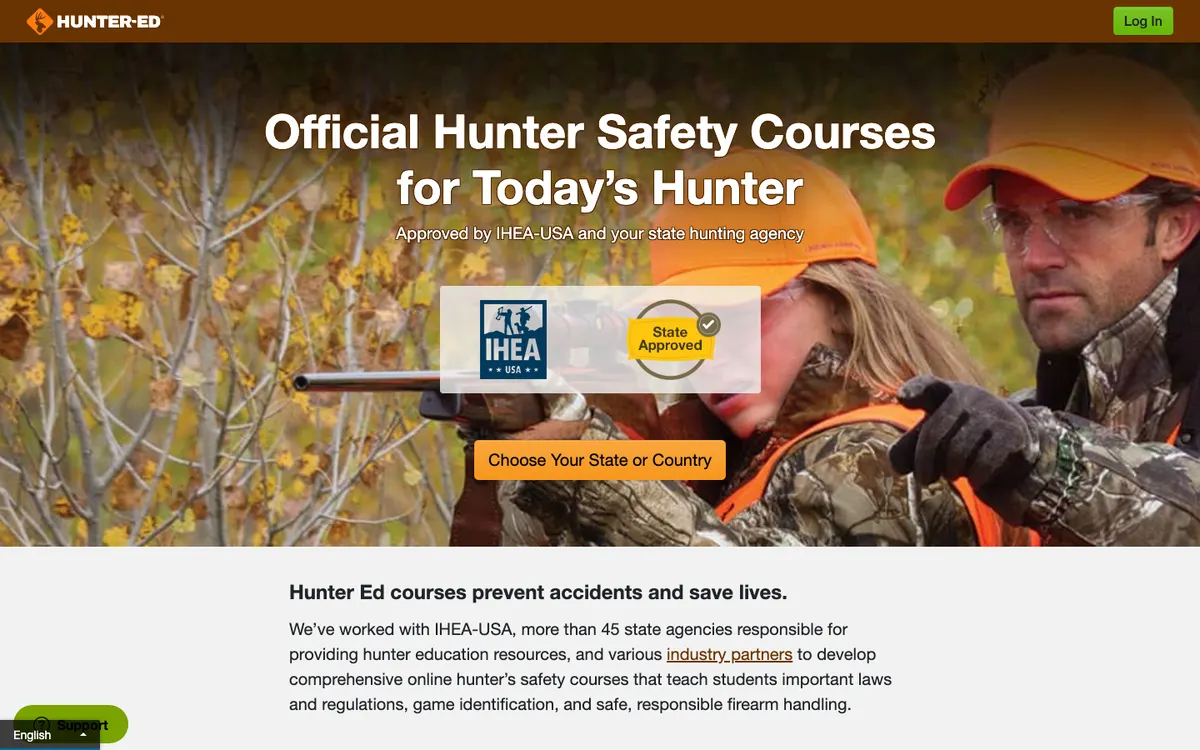
Hunter-ed.com says its courses were built with the International Hunter Education Association (IHEA-USA) and more than 45 state agencies. They cover hunting laws, game identification and safe firearm handling. Boat-ed.com says its courses are approved by NASBLA (the association of state boating law administrators) and Transport Canada, and recognized by the U.S. Coast Guard. Boat Ed has also launched Boat-Ed+, a more interactive version of the course.
Kalkomey describes itself as a state-delegated provider. In practice, the certificate you print at the end is the one your state agency expects, which is the whole point.
What it costs in four states
There’s no national price. Each state page shows its own fee, and some add a state agency fee on top. What we found on October 30, 2026:
| Course | State | Price |
|---|---|---|
| Hunter education | Texas | $39.95, plus a $5.25 state fee if you’re over 17 |
| Hunter education | Pennsylvania | $34.95 |
| Boater education | Texas | $64.95 ($54.95 course + $10 state fee) |
| Boater education | Florida | $54.95 |
So for most people it’s less than a tank of gas for the boat. The money isn’t the hard part. The rules around the course are.
How long it really takes
The FAQs estimate about 3 hours for a boating course and 4 to 6 hours for a hunting course, not counting quizzes and any re-reading. The state pages say 3 to 4 hours for the main study step. Your progress saves when you log out, so a realistic plan is two evenings: chapters one night, the rest and the final exam the next.
Pass, and you can print a temporary certificate right away. In Texas, the temporary boater certificate is valid for 60 days while the permanent one is processed; in Florida, the temporary boating card lasts 90 days. The hunter pages advertise unlimited exam attempts and a lifetime card.
One detail to plan around: paid courses stay open for 90 days from payment. On Boat Ed, if you haven’t finished by then, the course renews for another 30 days and your card is charged again, unless you untick “Automatically renew my course” in your profile. If you’re buying in March for a July trip, do the course in March.
The catch: online isn’t always the end of it
The online course is the whole requirement in some states and only half of it in others. Two examples from the pages we read:
- In Texas, anyone under 17 when they register for the hunter course must pass it and then attend a field day. You need hunter education there if you were born on or after September 2, 1971.
- In Pennsylvania, you must be at least 16 and a state resident to take the online hunter course. Younger hunters take an in-person course with the Game Commission, or a separate interactive course (ilearntohunt).
Boating has its own age rules. Texas requires boater education for anyone born on or after September 1, 1993, who operates a motorboat over 15 horsepower, a sailboat over 14 feet or a personal watercraft, and the online course starts at age 13. Florida’s rule covers anyone born on or after January 1, 1988, at the controls of a boat with 10 horsepower or more.
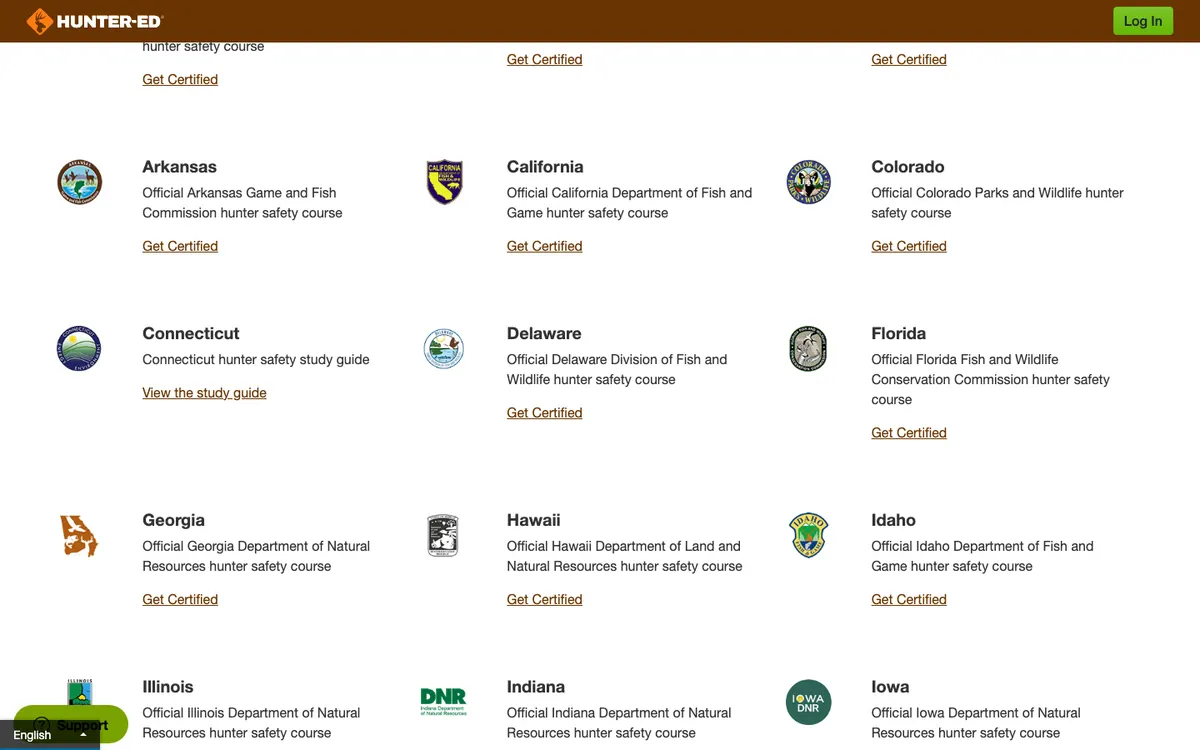
And Connecticut isn’t covered by either site: there’s a study guide, not a course you can pay for.
If you’re signing up a teenager, read the “After this course” box on your state page before you pay. That box tells you whether you’ll also be driving to a field day on a Saturday.
Who it suits
An adult first-time hunter who needs the certificate before buying a license this season. A new boat owner, or someone renting a jet ski, in a state where boater education is required for their age. Parents who want to get a teen through the online part early, then book the field day. Anyone who’d rather spend an evening on a laptop than a full weekend in a classroom, in states where that’s allowed.
Video: Kalkomey (hunter-ed.com, boat-ed.com)
Who should look elsewhere
Boaters who simply want the cheapest approved course: the free BoatUS Foundation course is approved in a number of states, so check whether yours is one of them before paying. Hunters under the online age limit in their state, who’ll need the in-person route anyway. And anyone in Connecticut.
Alternatives
BoatUS: its Foundation’s boating safety course is free in the states that accept it, and the BoatUS membership (from $25 a year) adds towing plans for people who go out often.
Your state agency: most fish and wildlife departments also list in-person hunter education classes, often run by volunteer instructors. That’s the route for younger students, or for anyone who learns better with a teacher in the room.
See both options side by side in our boater and hunter safety ranking.
| Criterion | This review | |
|---|---|---|
| Our score | 8.9/10 | 8.6/10 |
| Price | — | $25 – $215 |
| Format | Self-paced | Subscription |
| Duration | About 3 hours for a boating course and 4 to 6 hours for a hunting course, at your own pace; paid courses stay open 90 days, and Boat Ed renews for 30 more days for a fee unless you untick auto-renewal (official FAQ, October 30, 2026). | Annual membership. |
| Accreditation | Hunter-ed.com courses approved by IHEA-USA and state hunting agencies; Boat-ed.com courses recognized by the U.S. Coast Guard and approved by NASBLA and state boating agencies. | — |
| Best for | first-time hunters and boaters who need their state's official education certificate and want to study online in an evening or two. | Boaters in one of the roughly three dozen approved states who want a free boater card course, and owners who go out often enough to need on-water towing. |
| Read more | You are here | BoatUS reviewHead-to-head → |

“—” means the information was not published or not yet checked. See all 2 boater & hunter safety programs.
Your next step
Open your state’s page on Hunter-ed.com or Boat-ed.com and read three things: the price, the minimum age and the “After this course” requirements. If those fit, set aside two evenings within the 90-day window and switch off auto-renewal when you sign up.
Score breakdown
State-specific official hunter and boater curricula.
Official state-delegated provider with IHEA and NASBLA approvals.
State-set fees; prices not on homepage.
Online, but some states require a field day.
Standard support.
Weighted average of five criteria. Read our methodology.
FAQ
How much does Hunter-ed.com cost?
It depends on the state. On October 30, 2026, the Texas course was $39.95, plus a $5.25 Texas Parks and Wildlife fee for hunters over 17, and the Pennsylvania course was $34.95. Each state page lists its own price.
How much is the Boat-ed.com course?
It varies by state. On October 30, 2026, Texas cost $64.95 in total ($54.95 course fee and a $10 state fee) and Florida cost $54.95. The price on your state page is the one that counts.
Can I get my hunter education certificate fully online?
In some states, yes. In Pennsylvania, adults print a temporary card right after passing. In Texas, anyone under 17 at registration must also attend a field day. Check your state page before you pay.
Head-to-head comparisons
Sources
- https://www.hunter-ed.com/
- https://www.boat-ed.com/
- https://www.hunter-ed.com/texas/
- https://www.hunter-ed.com/pennsylvania/
- https://www.boat-ed.com/texas/
- https://www.boat-ed.com/florida/
- https://www.boat-ed.com/faq/
- https://www.hunter-ed.com/faq/
Prices and offers can change; confirm on the official site before you enroll.