8.7/10Editorial score
- Price
- $107.40/yr or $299.99 lifetime
- Best for
- Adults who want grammar explained and a low yearly price.
Babbel is the better app for most adult learners: it explains grammar, costs less per year and offers a one-time lifetime plan. Rosetta Stone wins if you want full immersion without translation or a language Babbel does not teach.
Choose Babbel if…you want short lessons that explain grammar in English, the lowest yearly price ($107.40 as of October 2026) or a one-time lifetime plan, and your language is among Babbel's 14.
 Choose Rosetta Stone if…
you prefer learning by immersion, without translation, want pronunciation feedback from TruAccent, or need one of the 25 languages Rosetta Stone covers that Babbel does not.
What tips the choicehow you like to learn grammar. If you want rules explained, Babbel is cheaper and clearer. If figuring out meaning from pictures and context keeps you motivated, Rosetta Stone's immersion method is the reason to pay more.
We may earn a commission when you buy through links on this page. Our rankings are based on our editorial criteria; some partners may be featured more prominently. Affiliate disclosure.
| Criterion | Babbel | Rosetta Stone |
|---|---|---|
| Editorial scoreWeighted average of our five criteria | 8.7/10Higher score | 8.5/10 |
| PriceAs published on the official site | 12 months: $107.40 billed yearly ($8.95 a month); Lifetime: $299.99 one-time (as of October 13, 2026) | $19.99 a month billed monthly, or $159 billed yearly ($13.25 a month), as of October 13, 2026Lower starting price |
| Payment plansHow the cost can be spread | Yearly billing, one-time lifetime purchase; other durations listed under "Show all plans". Auto-renewal can be cancelled anytime | Billed monthly ($19.99) or yearly ($159); one subscription covers all 25 languages |
| FormatHow you study | App | App |
| DurationTime to finish or access period | Subscription (1 to 12 months, auto-renewing) or lifetime access; short, self-paced lessons on web and mobile | Subscription. |
| Refund policyYour way out if it is not a fit | No money-back guarantee shown on the US pricing page; Babbel's terms describe a 14-day statutory right of withdrawal | 14 days from purchase for purchases made directly from Rosetta Stone (Terms of Service, July 28, 2026); no prorated refund after cancelling |
| Best forWho it suits | Adults who want short, structured lessons with clear grammar explanations, for travel, work or a move abroad. | Visual, patient learners who want to build an ear and an accent through immersion, especially in more than one language on the same subscription. |
“Not published” means the provider did not state it or we could not confirm it. Program data checked October 5, 2026. Comparison updated October 13, 2026.
Babbel: Structured conversation-based lessons. · Rosetta Stone: Immersion method with speech recognition.
Babbel: Major language-learning company. · Rosetta Stone: Long-established language brand.
Babbel: About $8.95/month on annual plan. · Rosetta Stone: $159/year.
Babbel: App-based. · Rosetta Stone: App-based.
Babbel: No tutor in the app plan. · Rosetta Stone: Self-study app.
Scores out of 10 from our published method; the overall score is the weighted average.
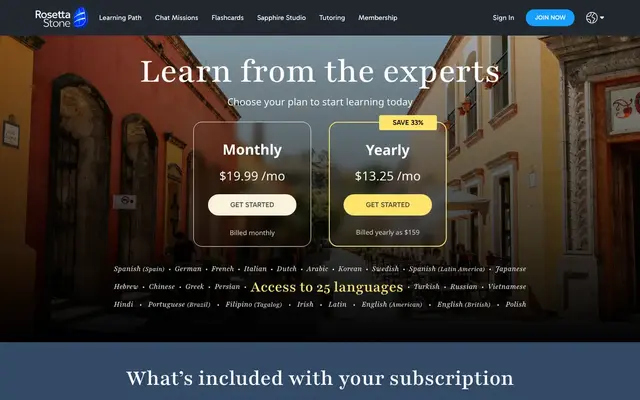
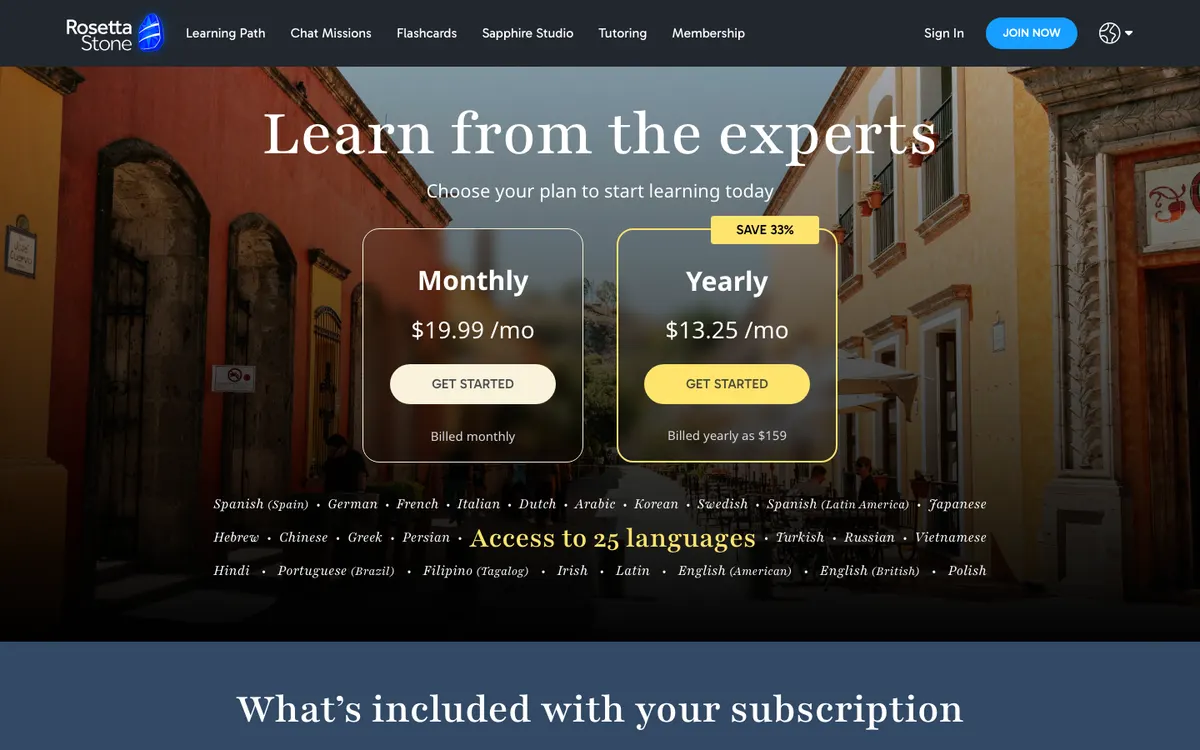
Both sell yearly plans, but Babbel’s is cheaper and it also sells a one-time option. When we checked on October 13, 2026, Babbel’s 12-month plan cost $107.40, billed every 12 months and advertised as $8.95 a month. Lifetime access cost $299.99, paid once. Rosetta Stone’s buy page listed $19.99 a month billed monthly, or $159 billed yearly, shown as $13.25 a month.
| Over… | Babbel | Rosetta Stone |
|---|---|---|
| One month | Behind “Show all plans” | $19.99 |
| One year | $107.40 | $159 |
| Three years, same yearly rate | $322.20, or $299.99 lifetime | $477 |
The three-year line assumes renewals at today’s price, which neither company promises. It still shows the gap: if you will study for three years or more, Babbel’s lifetime plan costs less than three yearly renewals of either app. Babbel uses $215.40 as the cost of twelve months on its one-month plan, so paying month by month is the expensive way in on both apps.
WinnerBabbel, for the lower yearly price and the lifetime option.
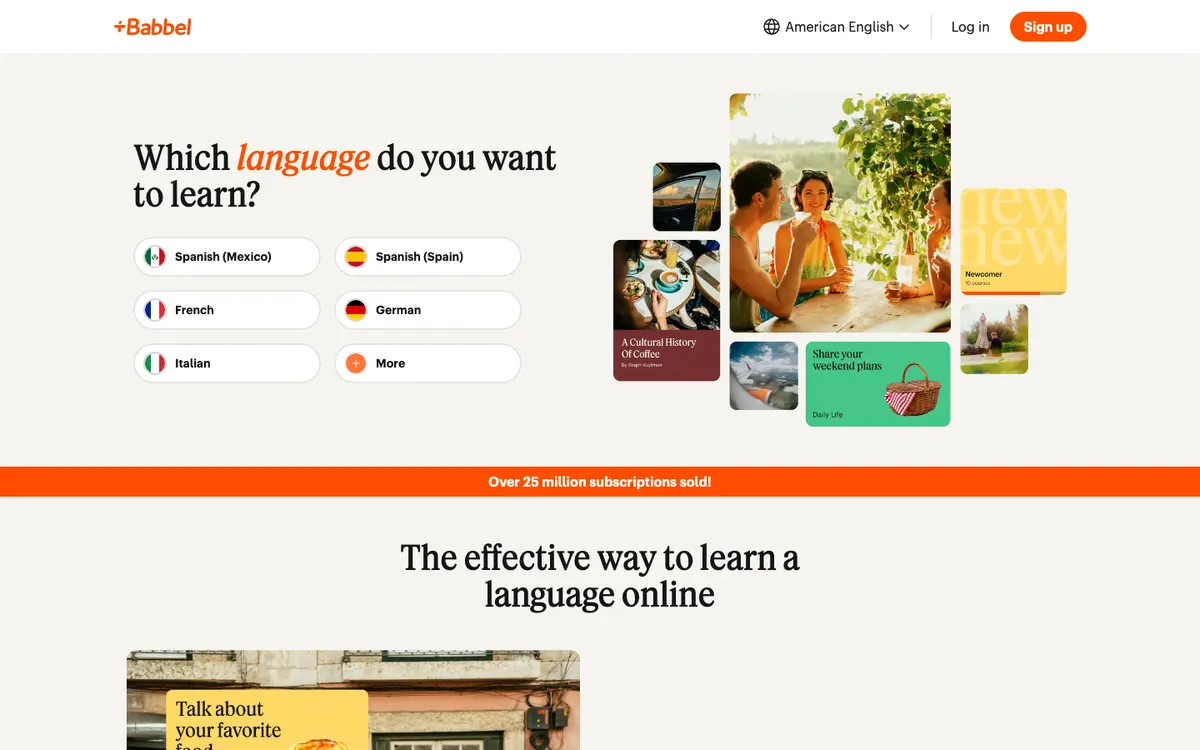
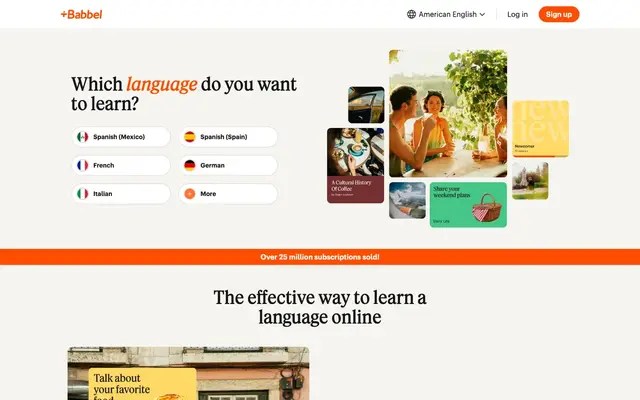
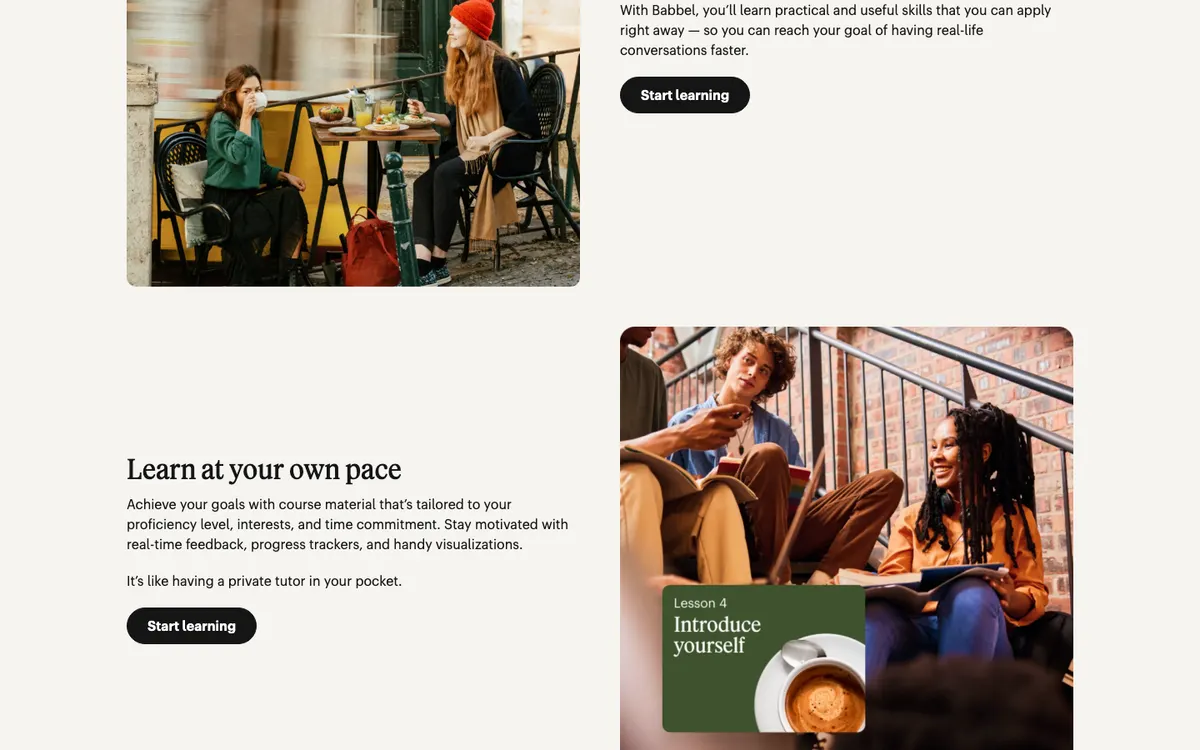
This is the real difference between the two apps. Babbel builds short lessons around everyday conversations and explains the grammar as it goes. Its pricing page lists interactive speaking practice, “grammar, clearly explained”, bite-sized lessons, personalized review exercises and an expert-built curriculum on every plan.
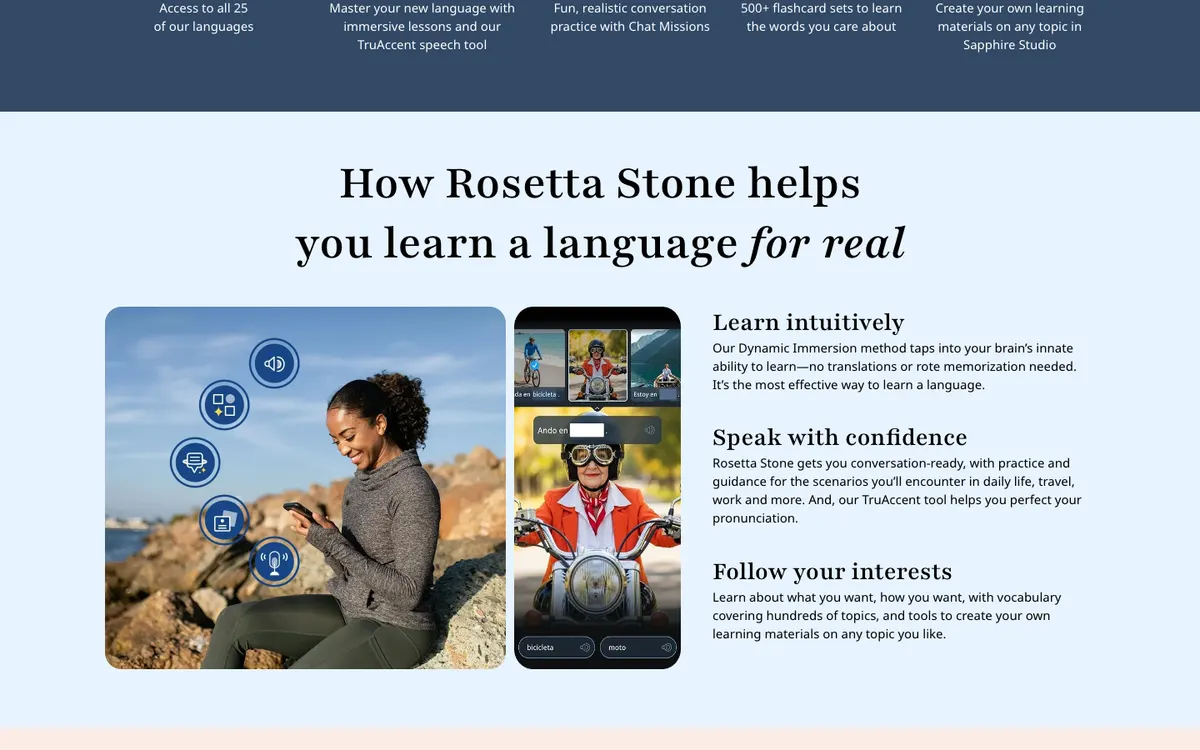
Rosetta Stone uses what it calls Dynamic Immersion: you learn from pictures, audio and context, with no translation and no rote memorization. Its TruAccent speech tool checks your pronunciation. Immersion can build an intuitive feel for the language, but if you want to know why a verb changes, you have to infer it.
For most adults, the explained route is faster to follow, which is why Babbel scores 8.9/10 on curriculum against 8.4/10. Immersion is not a weaker method in itself, though: if grammar tables put you off, you may find it easier to keep going with Rosetta Stone, and the lesson you actually finish beats the better-designed one you abandon.
WinnerBabbel.
Rosetta Stone covers more ground. Its subscription includes all 25 of its languages, from Spanish (Spain and Latin America) to Greek, Hebrew, Hindi, Irish, Latin, Persian, Polish, Swedish and Vietnamese. On top of the lessons, it lists Chat Missions for realistic conversation practice, more than 500 flashcard sets and Sapphire Studio, which builds learning material on a topic you choose.
Babbel’s plans include all 14 of its languages. That is enough for the most common choices, but check your target language before anything else. Neither app’s credentials differ much: both are long-established brands, both score 8.9/10 on credibility, and neither gives you an accredited language qualification.
WinnerRosetta Stone, for language choice and extra practice tools.
Both are self-paced apps and both score 9.5/10 on flexibility. You open a lesson when you have ten minutes and stop when you need to.
The feel is different. A Babbel session is a short lesson with explanations, dialogues and review of words you are about to forget. A Rosetta Stone session asks you to match sounds, images and words, then say them aloud, with Chat Missions and flashcards when you want variety. If you enjoy puzzles, immersion keeps you engaged; if you get stuck without a rule, it can feel slow.
A realistic routine looks the same on paper: one short lesson a day, plus review. The difference shows after a few weeks. With Babbel, review exercises bring back the words you are about to forget, so you always know what to do next. With Rosetta Stone, the core path moves you forward and the extra tools (flashcards, Chat Missions, Sapphire Studio) are there when you want to practice a topic you care about, such as travel or work. Rosetta Stone’s buy page also lets you choose between Spanish from Spain and Latin American Spanish, which matters if you know where you will use it.
Neither replaces conversation with a person. Rosetta Stone lists tutoring as a separate feature, and its terms treat tutoring sessions as separate purchases. Babbel’s US pricing page does not include a live teacher in the app plans. If speaking with real people is your goal, plan to add a tutor or a class to either app.
WinnerTie. Try a sample lesson of each and keep the one you want to open tomorrow.
Rosetta Stone publishes clearer terms. Its Terms of Service, updated July 28, 2026, allow you to return a purchase made directly on its site within 14 days for a refund. That guarantee does not cover add-ons such as extra tutoring sessions, and if you cancel later you keep access until the end of the term, without a prorated refund.
Babbel’s US pricing page says you can cancel auto-renewal anytime but shows no money-back guarantee. Its end-user terms include a 14-day right of withdrawal described as a statutory right; ask support whether it applies to your purchase before you count on it.
Day to day, both are self-study apps with no tutor in the base plan, and both score 7.3/10 on support.
WinnerTie on support; Rosetta Stone has the clearer written refund window.
BabbelRosetta StonePick BabbelBabbel's plans all include grammar explained in clear terms and personalized review. Rosetta Stone teaches through images and context without translation, which some learners find slow.
Pick Rosetta StoneRosetta Stone lists 25 languages, including Greek, Hebrew, Hindi, Irish, Latin and Vietnamese. Babbel's plans cover 14 languages; check that yours is one of them before comparing anything else.
Pick BabbelBabbel sells lifetime access for $299.99 once. Rosetta Stone's buy page showed only monthly and yearly subscriptions on October 13, 2026.
Other language learning options we reviewed, ranked by editorial score.
Learners who want regular one-on-one speaking practice and are willing to try a few tutors to find the right one.

Travelers, heritage learners and anyone who needs key words and phrases in a less common language, at the lowest yearly price in this ranking.

commuters and travelers who want to speak and understand everyday phrases, and who have 30 minutes a day with their hands busy and their ears free.
For most adults, yes. Babbel scores 8.7/10 against 8.5/10 in our review, ahead on curriculum and value, and tied on credibility, flexibility and support. Rosetta Stone is the better pick if you want immersion without translation or a language Babbel does not teach.
Babbel. On October 13, 2026 its 12-month plan cost $107.40, against $159 for Rosetta Stone's yearly plan. Babbel also sells lifetime access for $299.99; Rosetta Stone's monthly plan costs $19.99.
Not directly. Its Dynamic Immersion method teaches through pictures, audio and context, without translation. Babbel's lessons include grammar explanations, which is why it scores higher on curriculum in our review (8.9 vs 8.4).
Babbel's plans include all 14 of its languages. Rosetta Stone's subscription gives access to all 25 of its languages, including Latin, Irish, Persian and Filipino (Tagalog).
Rosetta Stone's terms (updated July 28, 2026) allow a refund within 14 days of a purchase made directly on its site, with no prorated refund after you cancel. Babbel's US pricing page shows no money-back guarantee; its terms describe a 14-day statutory right of withdrawal, so ask support before relying on it.
We score each program on curriculum, credibility, value, flexibility and support, using the provider’s official pages; see how we score. The comparison above was written from these sources and re-checked against the official sites on October 13, 2026. Prices and terms change: confirm them on the official site before you enroll.
BabbelChecked October 5, 2026
We may earn a commission when you buy through links on this page. Our rankings are based on our editorial criteria; some partners may be featured more prominently. Read our affiliate disclosure.