On this page · 13 sections5 min read
Our verdict
Our verdict8.5/10With $159 a year (October 30, 2026) now buying access to all 25 of its languages, Rosetta Stone suits patient, visual learners who want to absorb a language through pictures, audio and speaking practice, without translation.
If you want grammar explained in English, Babbel is cheaper and more direct; if you want to talk to a person, italki or Preply tutors start at a few dollars a lesson. What holds it back: immersion is slow for adults who like rules, and live tutoring is an extra purchase.
Best for: Visual, patient learners who want to build an ear and an accent through immersion, especially in more than one language on the same subscription.
At a glance
Adults rarely quit a language because it’s too hard. They quit because week three gets boring, or because the app keeps asking them to translate sentences they’ll never say. Rosetta Stone’s answer has long been to skip translation altogether: you see a picture, you hear a word, you say it back, and your brain does the connecting.
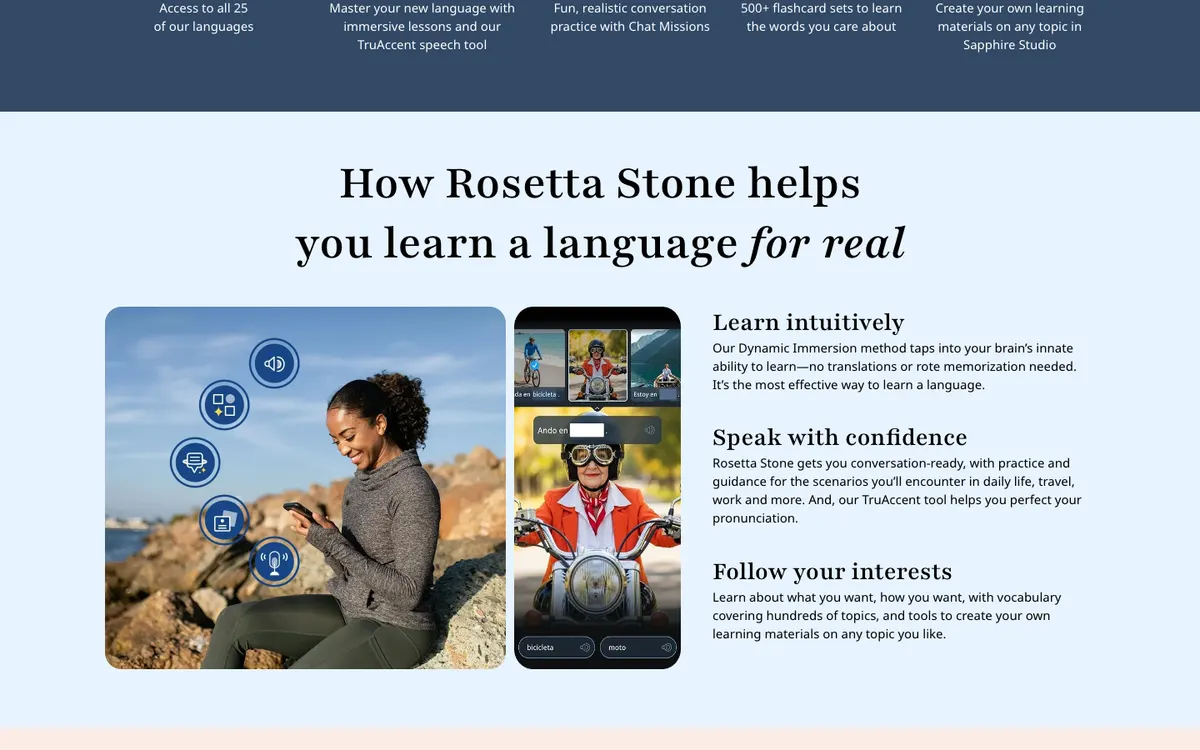
Rosetta Stone is one of the oldest names in language software. Its current app, branded Sapphire, combines the immersion lessons with speech recognition, scenario-based conversation practice, flashcards and a tool for building your own activities. On October 30, 2026, a subscription cost $19.99 a month or $159 a year, and covered all 25 languages Rosetta Stone teaches.
How we reviewed it: we read Rosetta Stone’s plans page, homepage and tutoring page on October 5 and October 30, 2026, and compared prices and methods with the other language programs we list. We didn’t subscribe.
Some links on this site earn us a commission if you enroll. Your price stays the same. Our rankings are based on our editorial criteria; some partners may be featured more prominently. How we review
Pros & cons
- $159 a year (about $13.25 a month) or $19.99 monthly, with all 25 languages included
- Immersion lessons with TruAccent speech recognition for pronunciation
- Chat Missions for scenario-based conversation practice, plus flashcards
- Sapphire Studio for building practice activities on topics you choose
- Little explicit grammar: adults who want rules explained can feel lost
- One-to-one tutoring is a separate purchase on top of the subscription
- The monthly plan costs $240 a year if you keep it, so the real decision is the yearly plan
The method, in practice
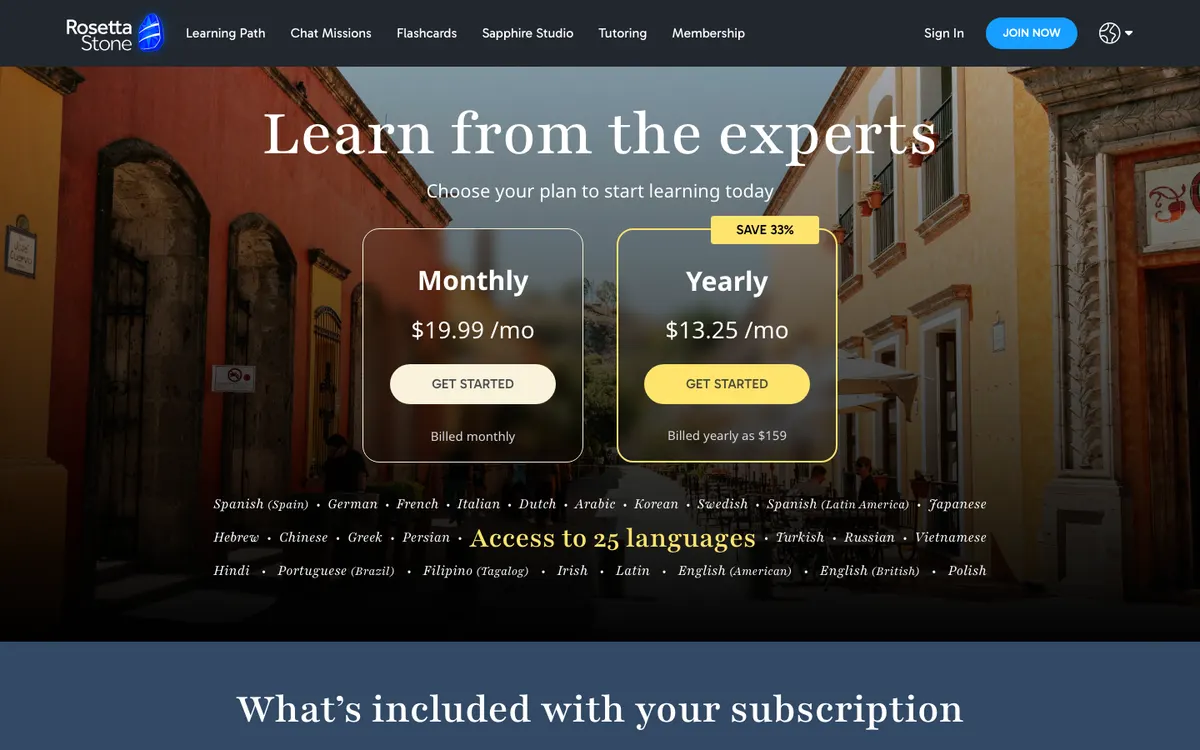
A lesson starts with images and sound, something like a photo of a woman eating paired with “ella come.” No English appears. You pick the right picture, then say the phrase out loud, and the TruAccent speech tool tells you whether your pronunciation is close enough. Rosetta Stone calls this Dynamic Immersion.
It works the way a child learns: by pattern and repetition. The upside is that you start thinking in the language instead of translating in your head, and your accent gets attention from the first day. The downside is that you discover grammar rather than being told it. You’ll notice that verbs change endings before anyone explains why, and if you’re the kind of person who wants the conjugation table now, that’s frustrating.
Ten to fifteen minutes on the bus or with your morning coffee fits the format well, and consistency matters far more than session length. Lessons are short, and the speech practice works best when you can actually speak, so the kitchen beats a quiet open-plan office.
More than flashcards
The newer parts of the app address the old criticism that Rosetta Stone taught you to describe pictures, not to hold a conversation. Chat Missions put you in practice scenarios like travel and social situations. Flashcards build vocabulary. Sapphire Studio lets you create activities on a topic you care about, so a nurse can practice hospital vocabulary and a traveler can drill restaurant phrases.
None of that replaces talking to a real person, who will interrupt you, speak too fast and use slang the app never mentioned. That messiness is exactly what you need to practice before a trip. Rosetta Stone sells one-to-one tutoring for that, but separately: you need a subscription first, then you buy sessions.
What it costs
| Plan | Price, Oct. 30, 2026 | Over a year |
|---|---|---|
| Monthly | $19.99 a month | $239.88 |
| Yearly | $159, billed once | $159 (about $13.25 a month) |
The detail that changes the value: one subscription covers all 25 languages, from Spanish (Spain and Latin America), French, German and Japanese to Irish, Latin, Tagalog, Vietnamese and Persian. If your household has one person learning Spanish for a trip and you want to dabble in Italian, or if you’re studying two languages for work, that matters.
We didn’t find refund terms on the plans page. Check them at checkout, especially before committing to the yearly plan, and note the renewal date in your calendar so a subscription you’ve stopped using doesn’t quietly renew.
Billed monthly ($19.99) or yearly ($159); one subscription covers all 25 languages
No public discount was listed on the official site when we checked. We never publish unverified coupon codes.
The catch: slow for rule-lovers, and talking costs extra
Immersion is a real method, not a gimmick, but it suits some learners better than others. If you studied a language in school and want to understand why things work, you’ll learn faster with an app that explains grammar in English. If your goal is speaking with confidence on a deadline, a few weeks of lessons with a tutor will usually do more than months of picture matching. Rosetta Stone covers the first half of that path well, and the second half costs extra.
Who should skip it
Students facing a grammar-heavy exam, like a college placement test or a DELE or DELF level, will want explicit grammar and practice tests that Rosetta Stone isn’t built around. Business travelers who need to get through meetings in three months will get more from a tutor twice a week. And anyone who already reads the language reasonably well but can’t speak it should spend the money on conversation, not on a beginner-first app.
Video: Rosetta Stone
A realistic first month
Week one feels easy and a little silly: pictures, single words, repeating after the speaker. Week two, sentences appear and you notice yourself guessing meaning from context, which is the point. By week three, the pronunciation feedback starts to matter, because the tool pushes back on sounds English doesn’t have. Week four is where most people either settle into a daily habit or quietly stop. If you’ve kept a streak of short daily sessions and can introduce yourself, order food and ask for directions without looking anything up, the method is working for you.
Alternatives by learning style
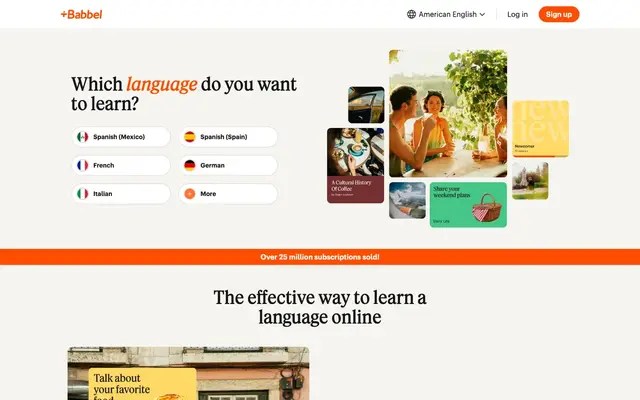
- Babbel: $8.95 a month on a 12-month plan ($107.40 a year) on our last check, with grammar explained along the way.
- Pimsleur: audio-first lessons with a 7-day free trial, good for commuters.
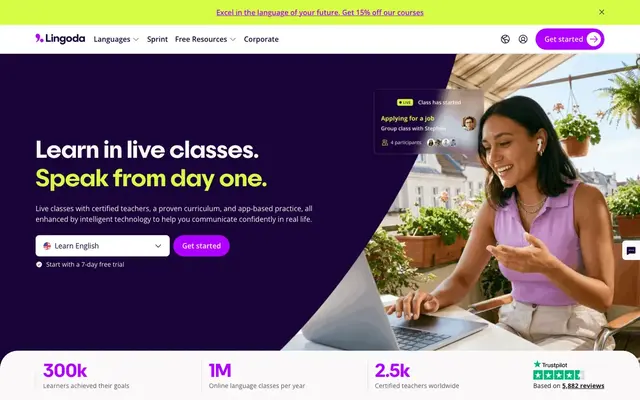
- italki and Preply: pay-as-you-go tutors, from a few dollars to $40 or more per lesson.
All of them are in our language learning rankings.
Swipe sideways to compare all 4 programs →
| Criterion | This review | |||
|---|---|---|---|---|
| Our score | 8.5/10 | 8.8/10 | 8.8/10 | 8.8/10 |
| Price | $19.99 – $159 | $4 – $60 | $4.99 – $99.99 | $20.95 |
| Format | App | Live online | App | App |
| Duration | Subscription. | Per lesson. | Subscription. 60+ topics per language, about 2 to 3 hours each according to uTalk, so up to 180 hours of material per language. | Subscription. |
| Accreditation | — | — | None: a consumer vocabulary app from EuroTalk Ltd (London, company no. 2674118). No CEFR level or certificate. | — |
| Free trial | — | Discounted trial lessons. | No | 7-day free trial. |
| Best for | Visual, patient learners who want to build an ear and an accent through immersion, especially in more than one language on the same subscription. | Learners who want regular one-on-one speaking practice and are willing to try a few tutors to find the right one. | Travelers, heritage learners and anyone who needs key words and phrases in a less common language, at the lowest yearly price in this ranking. | commuters and travelers who want to speak and understand everyday phrases, and who have 30 minutes a day with their hands busy and their ears free. |
| Read more | You are here | italki review | uTalk review | Pimsleur reviewHead-to-head → |


“—” means the information was not published or not yet checked. See all 9 language learning programs.
Start this way
Write down why you’re learning (a trip in May, a partner’s family, a job requirement) and how many minutes a day you can give it. If it’s 15 minutes and your goal is comfortable basics with a good accent, try the monthly plan for one month. If you’re still opening the app every day after four weeks, the yearly plan is the better buy from there, saving about $80 over a full year of study.
Score breakdown
Immersion method with speech recognition.
Long-established language brand.
$159/year.
App-based.
Self-study app.
Weighted average of five criteria. Read our methodology.
FAQ
How much is Rosetta Stone per month?
$19.99 billed monthly, or $159 billed once a year (about $13.25 a month), on October 30, 2026. Both plans include all 25 languages.
Is Rosetta Stone worth it in 2026?
It is for learners who like immersion and want pronunciation practice, and the all-language subscription adds value if you study more than one. If you need grammar explanations or conversation with a person, Babbel or a tutor platform gets you there faster for less.
Does Rosetta Stone include tutoring?
No. Rosetta Stone Tutoring offers one-to-one sessions with tutors, but you buy it separately, and you need a subscription first.
Head-to-head comparisons
Sources
Prices and offers can change; confirm on the official site before you enroll.