On this page · 8 sections6 min read
What a reiki practitioner does
Reiki is a complementary practice commonly described in terms of a practitioner placing hands on or near a person. The National Center for Complementary and Integrative Health explains that Reiki has not been clearly shown effective for any health-related purpose and that scientific evidence does not support the proposed energy field. A responsible career guide must keep those limits separate from a school’s spiritual teaching or certification terminology. NCCIH.
If you explore offering sessions, define them honestly as a nonmedical service within whatever local rules apply. Client intake, consent about touch, a comfortable setting, scheduling, and clear boundaries deserve attention alongside the tradition you study. Do not promise diagnosis, treatment, or recovery on the basis of a Reiki course.

Do you need a license or certification?
A private Reiki certificate should not be treated as a medical license or as permission to practice another regulated profession. A Reiki certificate alone cannot settle the licensing questions for every US state. Before providing paid services, check the rules that apply to the actual activities involved, including touch-based services and any separately regulated healthcare work.
Ask the relevant state or local authority about your proposed service in plain language rather than asking only whether the title Reiki practitioner is licensed. Explain whether you intend to touch clients, provide massage, use other modalities, or make health claims. If you already hold a healthcare or massage license, check that profession’s scope and employer policies as well.
Look closely at the subjects in this Reiki comparison: it includes massage continuing education, Ayurveda programs, and Ayurvedic Yoga Massage, alongside Reiki offerings. Those are not interchangeable qualifications. Membership approval for continuing education in one profession does not convert that program into Reiki training or authorize an unlicensed person to perform the underlying profession.
Step-by-step: how to become a reiki practitioner
- Clarify why you want to study. Personal spiritual interest, offering relaxation sessions, and continuing education for an existing profession are different goals. Write down the intended outcome before comparing certificate levels or buying a bundled pathway.
- Check what the course actually teaches. Look for an explicit Reiki syllabus if Reiki is your objective. Do not infer Reiki content from placement in a wellness category or from the presence of words such as healing or holistic.
- Investigate local practice boundaries. Describe your intended services to the relevant authority and, where applicable, your professional insurer or employer. Resolve uncertainty before promoting a paid service.
- Evaluate teaching and assessment. Ask how practical work is observed, what feedback is provided, and what a completion certificate represents. A title such as master may describe a school’s tradition or level without being a standardized government qualification.
- Practice consent and communication. Explain the proposed session, ask about touch preferences, and allow the person to stop. Rehearse describing the service without promises about diseases or clinical outcomes.
- Keep medical concerns outside your service. Encourage clients to discuss health concerns with appropriately licensed clinicians. Do not advise stopping prescribed care or interpret a session experience as proof that a medical condition has changed.
Screen a wellness syllabus before enrolling
Read the learning objectives and mark which are practical, which describe the school’s tradition, and which make a health claim. Practical objectives might concern session structure, consent, or professional communication. Health claims need evidence beyond the fact that a school teaches them.
Ask the instructor how the course handles referrals, client expectations, and situations in which a person wants to replace medical care. Request a sample assignment or assessment rubric so you can see whether completion requires more than watching videos. An inexpensive introductory class can help you evaluate the teaching style without committing to an advanced package.
For existing licensed practitioners, keep the continuing-education question distinct from the practice question. A course may be relevant to professional development while still requiring separate confirmation that its hours count toward your particular renewal. Check the approving body and your own board instead of relying on a broad approval logo.
How long it takes and what it costs
A single price range would be misleading because the listed products teach different subjects and include different delivery settings. A massage continuing-education membership, an Ayurveda cohort, a travel-based bodywork course, and a low-cost Reiki video bundle should be budgeted separately. Preserve the listed currencies instead of converting them without a verified exchange rate.
For an in-person retreat, tuition may exclude accommodation and meals. For a subscription, continuing access may require renewal. Compare the price of the exact Reiki training you need, and ask whether any assessment, mentoring, or further level is needed for the school’s stated certificate.
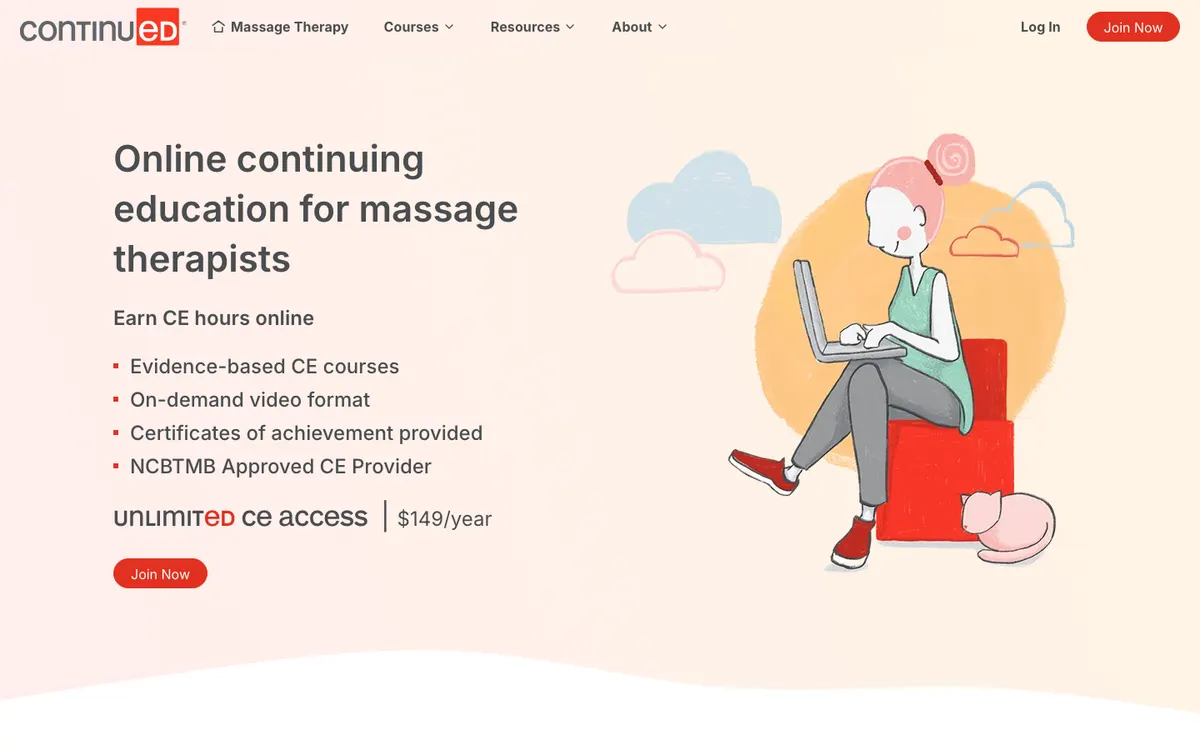
Continued Massage Therapy CE Unlimited Membership. An annual membership costs $149 and provides unlimited access to on-demand massage continuing-education courses. Check whether those courses meet your renewal needs before treating the membership as relevant to Reiki study.
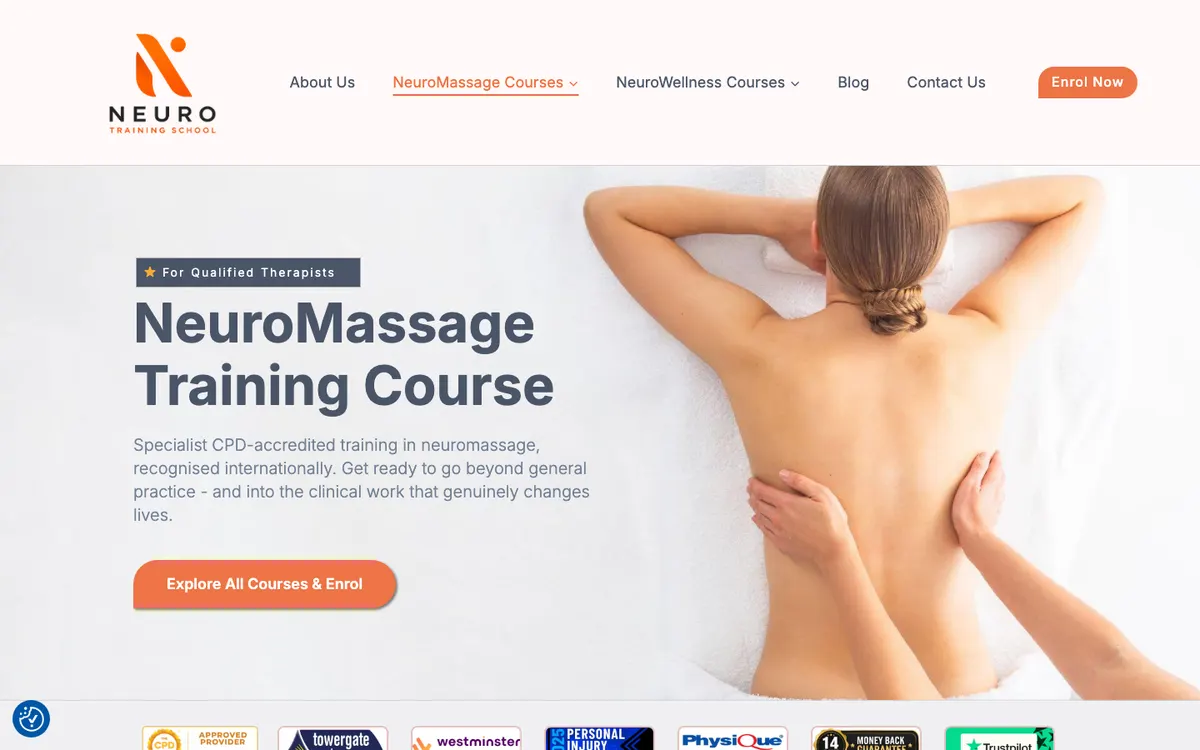
Neuro Training School NeuroMassage Training. The specialist courses have one-time fees in GBP: £699 for NeuroMassage for Brain Injuries and £599 for NeuroMassage for Multiple Sclerosis. The Advanced Practitioner Training fee is unavailable. Specialist study is self-paced with 12 months of course access, while the site also mentions lifetime access to resources; clarify that distinction. The Brain Injuries course contains more than 30 hours.
Kerala Ayurveda Academy Holistic Ayurvedic Coach (HAC) Program. The Holistic Ayurvedic Coach program costs $3,850 for six months and 300 hours, with the next cohort starting October 12, 2026. Ayurvedic Health Counselor study costs $8,950 for one year and 600 hours; Advanced Ayurvedic Practitioner tuition is $12,950. Short courses start at $95.
Ananta ARYM Ayurvedic Yoga Massage Therapist Training. The Ubud, Bali example covers Levels 1–4 in a 56-hour therapist-certification course lasting about 10 days. Standard tuition is €1,380, or €1,180 at the early-bird price; 28-hour sections start at €820. Accommodation and meals cost extra. The complete pathway spans seven levels and 14 masterclasses, totaling more than 500 hours.
Blissful Careers Reiki Master Bundle (Level 1, 2 and Master). The official affiliate page shows $49.50 for the Reiki Master Bundle, covering Level 1, Level 2, and Master study. Level 1 is free and contains 12 video modules. The online videos are self-paced.
Best online programs for aspiring reiki practitioners
- Continued Massage Therapy CE Unlimited Membership serves licensed massage therapists seeking affordable, on-demand continuing education for license renewal.
- Neuro Training School NeuroMassage Training teaches qualified massage therapists who want to specialize in work with neurological conditions, including brain injury and MS.
- Kerala Ayurveda Academy Holistic Ayurvedic Coach (HAC) Program offers beginners a structured Ayurveda cohort and a route toward counselor-level study.
- Ananta ARYM Ayurvedic Yoga Massage Therapist Training provides hands-on Ayurvedic Yoga Massage instruction at worldwide retreat locations for massage therapists, yoga teachers, and beginners.
- Blissful Careers Reiki Master Bundle (Level 1, 2 and Master) lets curious beginners start Reiki at no charge before deciding whether to buy its inexpensive pathway to Master level.
Read the Reiki Certification comparison and the individual reviews with each course’s actual discipline in mind.
Top programs compared
The 4 highest-scored online reiki certification programs in our ranking, side by side.
Swipe sideways to compare all 4 programs →
| Criterion | ||||
|---|---|---|---|---|
| Our score | 8.7/10 | 8.6/10 | 8.4/10 | 8.3/10 |
| Price | $149 | — | $3,850 – $12,950 | — |
| Format | Self-paced | Self-paced | Hybrid | In-person |
| Duration | On-demand courses; annual membership | Self-paced; 12 months of access on specialist courses (site also… | HAC: 6 months, 300 hours; next cohort starts October 12, 2026 | 56-hour therapist certification (Levels 1-4) over about 10 days; full… |
| Accreditation | NCBTMB Approved CE Provider (National Certification Board for Therapeutic Massage &… | CPD Group accredited; recognised by insurers including Towergate, Westminster and Balens | Presented as a pathway to NAMACB accreditation; HAC transfers into the first 6 modules of… | Accredited by the International Institute for Complementary Therapists (IICT), recognised… |
| Free trial | One free massage therapy CE course (limited to one per… | — | — | — |
| Best for | Licensed massage therapists who need affordable, on-demand continuing education hours for… | Qualified massage therapists who want to specialize in clients with neurological… | Beginners who want a structured, cohort-based entry into professional Ayurveda with a… | Massage therapists, yoga teachers and beginners who want hands-on Ayurvedic Yoga Massage… |
| Full review | Continued (continued.com/massage-therapy) review | Neuro Massage Training School review | Kerala Ayurveda Academy (US) review | Ananta (ARYM Ayurvedic Yoga Massage) review |


Scores from our editorial method. See the full ranking of 6 programs.
Common mistakes to avoid
The biggest mistake is treating the category label as proof that every listed program certifies Reiki practitioners. Read each program’s subject and prerequisites: some entries are intended for qualified massage therapists, while others are Ayurveda or bodywork pathways.
Avoid presenting spiritual explanations as established medical mechanisms. Also avoid assuming that a longer or more expensive course must produce a clinically recognized credential. The useful comparison is between what the course teaches, what it actually assesses, and the limited service you intend to offer.
FAQ
Has Reiki been proven to treat medical conditions?
NCCIH states that it has not been clearly shown effective for any health-related purpose. Read its Reiki evidence summary before evaluating treatment claims.
Is massage continuing education Reiki certification?
No. The Continued review describes massage continuing education. Check the actual syllabus rather than inferring a Reiki credential from its category placement.
Can a beginner enroll in every listed program?
No such conclusion is supported. The NeuroMassage review describes specialist education for qualified massage therapists, which differs from beginner Reiki study.
Where should I compare the available options?
Use the Reiki category as a catalog, while checking subject fit carefully. Its entries include multiple wellness disciplines and should not be treated as equivalent certification routes.