On this page · 11 sections5 min read
Our verdict
Our verdict7.9/10Here's a cheap way to find out whether NTA's food-first, root-cause approach is for you: Foundations of Healing, $250 on October 30, 2026, six weekly modules on diet, digestion, blood sugar, sleep and stress.
It's for your own health, and a sensible test before NTA's $5,700-plus practitioner program. If you want an evidence-based coaching credential for clients, Precision Nutrition ($599 on our last check) fits better. The fine print: the FAQ says there's no direct instructor support, and the videos disappear after a year.
Best for: People who want to change their own eating, sleep and stress habits with a structured six-week course, and those weighing NTA's NTP program who want to sample its approach first.
At a glance
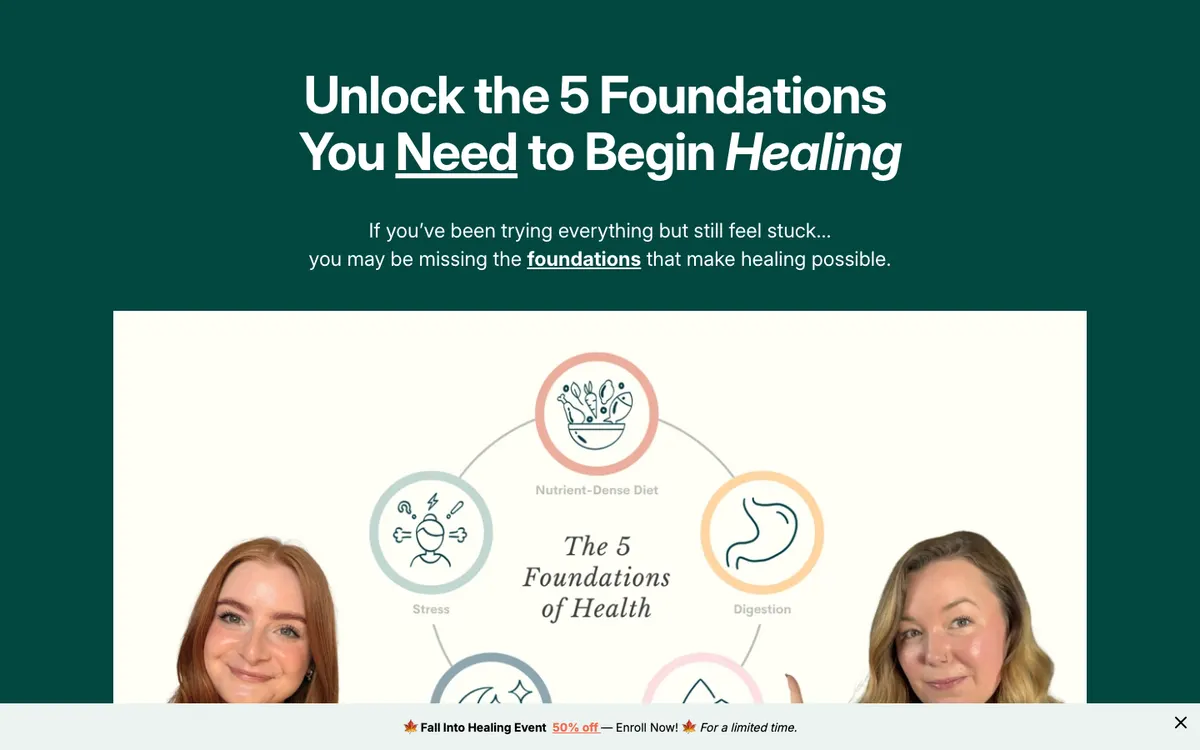
Tired by three in the afternoon, bloated after lunch, awake at 2 a.m. for no reason. You’ve tried cutting carbs, then eating more protein, then the supplement a coworker swears by. Foundations of Healing, the introductory course from the Nutritional Therapy Association, promises a more orderly approach: six weeks on the basics of what you eat, how you digest it, and how sleep and stress feed into both.
NTA is a private vocational school licensed in Washington State and best known for its Nutritional Therapy Practitioner (NTP) program. Foundations of Healing (FOH) is its consumer course, sold on the NTA Connect platform. On October 30, 2026, it cost $250, shown as a limited-time discount from $500.
How we reviewed it: on October 5 and October 30, 2026, we read the FOH course page and checkout page, the NTP program page and NTA’s course overview. We didn’t take the course.
Some links on this site earn us a commission if you enroll. Your price stays the same. Our rankings are based on our editorial criteria; some partners may be featured more prominently. How we review
Pros & cons
- $250 for six modules and more than eight hours of video, with downloadable guides and worksheets
- One to two hours a week, with a year to finish at your own pace
- Bi-weekly group calls with a Nutritional Therapy Practitioner and a community forum
- A low-cost look at the NTA method before the $5,700-plus NTP program
- The FAQ says no direct instructor support, despite the group calls
- Videos can't be downloaded and access ends after one year
- Sales page testimonials claim people came off medication, which no six-week course should promise; NTA programs aren't accredited by the Department of Education
Six weeks, one module at a time
| Week | Module | Video length |
|---|---|---|
| 1 | Nutrient-dense diet, part 1 | 52 min |
| 2 | Nutrient-dense diet, part 2 | 1 h 14 min |
| 3 | Digestion | 1 h 24 min |
| 4 | Blood sugar regulation | 1 h 37 min |
| 5 | Sleep | 57 min |
| 6 | Stress | 1 h 36 min |
A bonus module ties everything into a personal plan. NTA says most people spend one to two hours a week on lessons and practice.
The practical side is where the course earns its price. Week one starts a food and mood journal and sets goals from your own health concerns. Week two gets into meal planning, batch cooking, reading ingredient lists, and old preparation methods like soaking, sprouting and fermenting. So a typical week looks like a lesson on Sunday evening, a grocery list built around it, two cooking sessions, and a few lines in the journal each night. By week four you’re paying attention to how breakfast affects your 11 a.m. energy, which is the kind of noticing the course is built around.
You also get downloadable guides and worksheets, a community forum, and bi-weekly group calls with a certified Nutritional Therapy Practitioner.
The catch: support and access are thinner than they look
The course page lists those bi-weekly group calls. The FAQ on the same page says the course doesn’t include direct instructor support, and suggests you’ll find answers in the videos and guides. Both can be true: a group call is not one-on-one help. Just don’t expect someone to review your food journal.
Access lasts one year, and the videos aren’t downloadable. NTA itself suggests downloading the handouts for later. Six weeks of content in a year is plenty of time, but if life gets in the way, set a start date and stick to it.
One more thing. The sales page carries testimonials about restored energy, a pregnancy and coming off cholesterol and blood pressure medication. Those are individual stories chosen by the seller. Food and sleep changes can matter a lot, but if you take medication, talk to your doctor before changing anything, and treat the course as education, not treatment.
From course to career: the NTP program
Many FOH students are wondering about the bigger step. NTA says FOH isn’t a prerequisite for the NTP program, but it’s a cheap way to see whether you like the school’s approach before committing far more money and time.
On October 30, 2026, the NTP program page listed a new flexible format starting January 4, 2027: six to twelve months, live monthly workshops, one-on-one instructor office hours, functional lab analysis training and access to NTA’s Nutri-Q software. Tuition was $8,000, or $5,700 with the early-bird discount paid in full, or $314 a month at 0% after a $250 intro fee. NTA’s own comparison table puts the workload at about 20 hours a week and requires a high school diploma.
On credentials, NTA is direct: its programs aren’t accredited by the Department of Education. The NTP program is recognized by the National Association of Nutrition Professionals, so graduates can sit for NANP’s board exam. What you’re allowed to do with clients depends on your state’s nutrition licensing rules, which NTA notes vary.
Who should skip it
If you have a diagnosed condition, such as diabetes, celiac disease or a thyroid disorder, a general six-week course isn’t where to start. A registered dietitian, whose visits some insurance plans cover, can build a plan around your diagnosis and your medication.
If you already cook from scratch, read labels and sleep reasonably well, much of weeks one and two will feel familiar. The blood sugar and stress modules may still be useful, but $250 is a lot for a refresher; NTA’s free webinars and sample class are a better first look.
And if what you really want is a career helping clients, FOH won’t give you a credential. It’s a personal course. Go straight to comparing the NTP program with coaching certifications, looking hard at total cost, weekly hours, and what your state allows a non-licensed practitioner to do.
Videos about Nutritional Therapy Association
Alternatives
- Precision Nutrition: $599 one-time on October 30, 2026, a coaching certification with a 45-day money-back guarantee.
- Nutrition Therapy Institute: a longer program paid course by course ($950 per course on our last check).
- Food Matters Institute: $3,990 for a holistic nutrition certificate.
All of them are in our nutrition certification rankings.
Swipe sideways to compare all 4 programs →
| Criterion | This review | |||
|---|---|---|---|---|
| Our score | 7.9/10 | 9.0/10 | 8.8/10 | 8.7/10 |
| Price | $250 – $8,000 | $599 – $708 | $950 | $449 |
| Format | Self-paced | Self-paced | Live online | Self-paced |
| Duration | FOH: 6 weekly modules plus a bonus module, 8+ hours of video, about 1-2 hours a week, 1-year access. NTP: 6-12 months, about 20 hours a week | Self-paced online; most students spend 3-5 hours a week, no deadline, materials don't expire | 500 hours: 12 ten-week courses plus a 20-week Independent Study | Self-paced, 16 lessons; NCSF says most candidates finish in about 2 to 4 months; the exam must be taken within 6 months of exam registration |
| Accreditation | NTA is a private vocational school in Washington; programs are not accredited by the Department of Education. The NTP program is recognized by NANP, and graduates can sit for the NANP National Board Exam | — | Graduates are eligible to sit for the NANP board exam (Board Certified in Holistic Nutrition); see NTI FAQ for approval agencies | Not NCCA-accredited: NCSF's accreditation page names only its Certified Personal Trainer credential. The course is approved by the NCSF Board for Certification for 8 CEUs toward NCSF CPT renewal |
| Free trial | — | — | — | No |
| Best for | People who want to change their own eating, sleep and stress habits with a structured six-week course, and those weighing NTA's NTP program who want to sample its approach first. | Fitness professionals and coaches who want an evidence-based, practical nutrition coaching credential at a moderate price, with CEUs for their main certification. | Career-changers who want a rigorous, science-heavy holistic nutrition education with NANP board exam eligibility, and can commit to years of steady study. | Personal trainers who already hold an NCSF or other NCCA-accredited certification and coach lifters or athletes who ask about macros, nutrient timing and supplements. |
| Full review | You are here | Precision Nutrition review | Nutrition Therapy Institute (NTI) review | NCSF Sport Nutrition review |



“—” means the information was not published or not yet checked. See all 6 nutrition certification programs.
A sensible way in
Buy FOH only if you can name the six weeks you’ll do it in. Start the food journal on day one, keep it through week six, and compare the first and last pages. If the habit stuck and you want to help other people do the same, look at the NTP program’s next start date and your state’s rules. If not, you’ve spent $250 on a better grocery list and a clearer picture of your own habits, which isn’t a bad outcome.
FOH: one-time or two payments of $125. NTP: pay in full or 0% monthly payments of $314 after a $250 intro fee, plus third-party financing
No public discount was listed on the official site when we checked. We never publish unverified coupon codes.
Score breakdown
Introductory content; details not published on the pages read.
Established school; NTP recognized by NANP, not federally accredited.
Price not published on the pages read.
Online delivery.
Webinars and community; support level for FOH not detailed.
Weighted average of five criteria. Read our methodology.
FAQ
How much is Foundations of Healing?
$250 one-time, or two payments of $125, on the official checkout page on October 30, 2026. It was shown as a limited-time discount from $500.
Do I need Foundations of Healing before the NTP program?
No. NTA says it isn't a prerequisite, though many students take it first. The NTP program itself was listed at $8,000, or $5,700 with the early-bird discount, for a flexible-format start on January 4, 2027.
Is the Nutritional Therapy Association accredited?
Not by the Department of Education. NTA is a private vocational school licensed in Washington State, and its NTP program is recognized by the National Association of Nutrition Professionals, so NTP graduates can sit for NANP's board exam.
Sources
- https://www.nutritionaltherapy.com/
- https://ntaconnect.nutritionaltherapy.com/foundations
- https://www.nutritionaltherapy.com/ntp
- https://programs.nutritionaltherapy.com/sample-class
- https://www.nutritionaltherapy.com/courses
- https://ntaconnect.nutritionaltherapy.com/checkout/foundations-of-healing
Prices and offers can change; confirm on the official site before you enroll.