On this page · 15 sections5 min read
- 01Our verdict
- 02At a glance
- 03Pros & cons
- 04What you’ll learn
- 05Format, schedule and time commitment
- 06Accreditation and what the credential is worth
- 07Price, payment plans and refunds
- 08Who it’s best for — and who should skip it
- 09Pros and cons in detail
- 10How it compares
- 11Singing Carrots vs alternatives
- 12How to enroll
- 13Score breakdown
- 14Key facts
- 15FAQ
Our verdict
Our verdict8.2/10Singing Carrots is an AI-assisted vocal training site built around pitch-tracking exercises, structured courses such as "From Zero to Singing Hero", and free tools including a vocal range test and pitch accuracy test.
It recommends short, regular practice of 15 to 20 minutes three times a week, and offers bulk licenses for teachers and choirs. Paid plan prices are only shown after logging in, which makes comparison harder. Real-time pitch feedback is genuinely useful for intonation, but software cannot assess tone, breath support or vocal health as a teacher can. It suits beginners and hobby singers who want measurable practice, ideally combined with occasional lessons.
Best for: Singers who want AI-guided pitch and range exercises with free self-assessment tools.
At a glance
Singing Carrots is an online vocal-practice service built around pitch analysis, range tools, and guided exercises. It suits a singer who wants something measurable to do between lessons or a beginner who wants to explore their voice before buying a larger course. The free tools make it approachable, but paid pricing is not transparent on the public pages available to us. Its strongest role is structured practice; the available evidence does not justify treating automated feedback as a complete substitute for individual instruction.
Pros & cons
- Free vocal range and pitch accuracy tests
- AI vocal coach with structured courses
- Bulk licenses for teachers and choirs
- Prices hidden until you log in
- Software feedback cannot fully replace a voice teacher
What you’ll learn
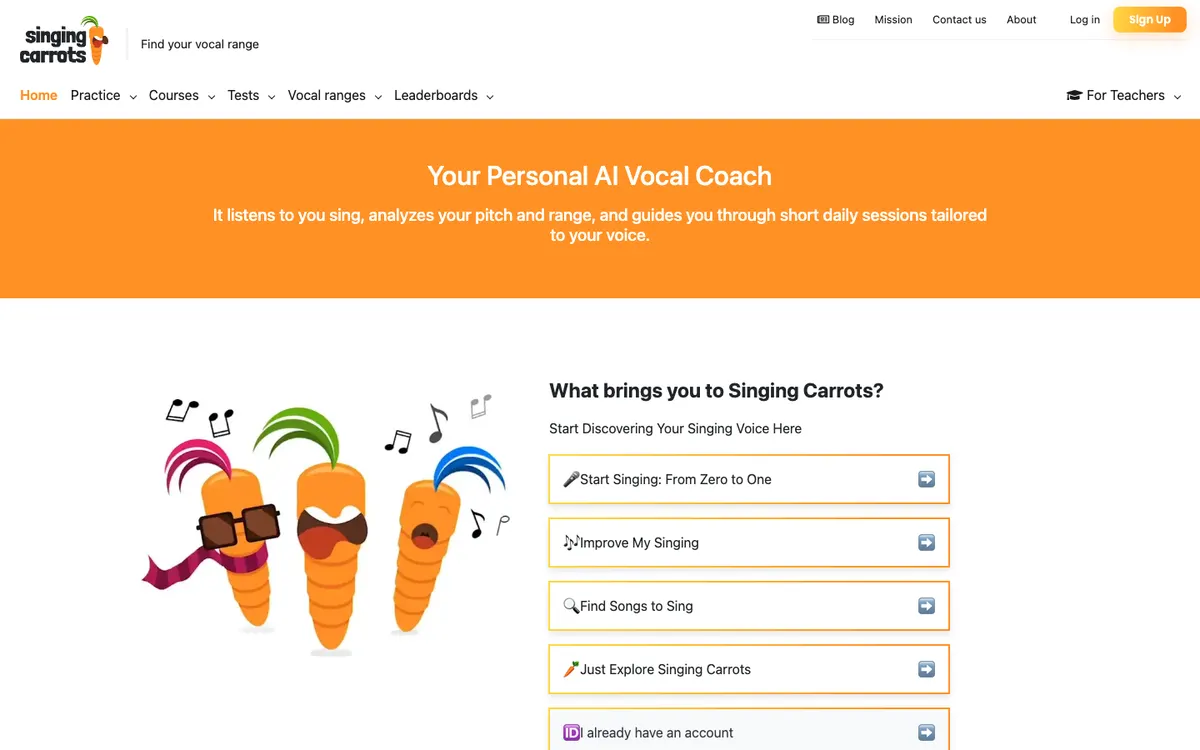
The official site lists a vocal range test, pitch accuracy test, pitch-training game, sustain and breath training, and a simple vocal pitch monitor. It also offers courses called From Zero to Singing Hero and All-Round Vocalist. This is a mix of diagnostic tools, exercises, and sequenced lessons rather than a single video course.
Song discovery is another distinctive element: the site lets users look for material by vocal range. That can help connect exercises to a practical repertoire choice instead of treating range as a contest to reach ever more extreme notes. The onboarding asks about goals such as singing in tune, harmonies, rhythm, registers, and performance, but those prompts should not be mistaken for independently demonstrated outcomes.
Format, schedule and time commitment
Singing Carrots recommends practicing for 15–20 minutes three times a week. That is a suggested routine, not a completion schedule or guaranteed improvement rate. Since the service is online and self-paced, the learner decides when to repeat an exercise and when to move to a course.
The official onboarding distinguishes users who already have a teacher, want one, or prefer independent practice. This is a useful acknowledgment that the tools can sit alongside lessons. Before subscribing, test the microphone and pitch display in the room and on the device you will actually use, because the interaction with your own singing is the essential product experience.
Videos about Singing Carrots
Accreditation and what the credential is worth
The public course descriptions do not establish a recognized academic award or professional singing-teacher certification. Course completion and exercise results show activity within Singing Carrots, not an externally assessed qualification. References to an AI vocal coach describe the product’s feedback model rather than an accredited instructor credential.
For recreational singing, formal accreditation may be less important than a clear exercise and a usable practice routine. For someone seeking a teaching qualification or institutional credit, the course information provides no basis for claiming equivalence. Similarly, a range measurement is information about a particular exercise; it should not be presented as a comprehensive assessment of a person’s musicianship.
Price, payment plans and refunds
A free account includes tools such as vocal range and pitch accuracy tests. Paid prices are shown after login; the pricing page available to us did not display a current public rate. No paid subscription amount or refund period can therefore be confirmed here.
The site also describes bulk licenses for schools and choirs, with individual student accounts and an administrative dashboard. That is a different purchasing context from a one-person practice account. Compare the eventual individual quote with 30 Day Singer’s published annual-billing rate, but do not assume either product’s free access unlocks its complete catalog.
Who it’s best for — and who should skip it
Singing Carrots is a sensible shortlist choice for a hobby singer who wants to work on intonation and keep practice focused. It is also relevant to a teacher looking for between-lesson exercises, particularly because the provider explicitly offers school and choir arrangements. The combination of tests and song-range discovery can be useful before choosing a repertoire goal.
Skip a paid plan if you only need the free range tool, or if your priority is a teacher listening to expressive choices and giving contextual feedback. The product’s automated measurements do not by themselves answer every question about a performance. A learner who prefers long instructor-led demonstrations may also find a video-centered service more suitable.
Pros and cons in detail
The free tests are a concrete strength because they expose the interactive element before payment. The named courses give more direction than a collection of disconnected pitch meters, while the school licensing option recognizes that teachers may want to monitor multiple learners. None of these features requires accepting the homepage’s promotional improvement statistics as guaranteed results.
The price gate is the main commercial drawback: it adds friction to comparing paid access. The instructional limitation is the difference between measuring a feature of singing and interpreting an entire performance. A pitch score can provide a focused practice target, but it is not proof that phrasing, style, diction, and overall delivery have all been addressed.
How it compares
The two direct alternatives in the singing category use different delivery models. 30 Day Singer emphasizes instructor videos and a broader lesson library, while Singorama is positioned as a downloadable purchase. Singing Carrots is the clearest fit when the desired activity is interactive, pitch-oriented practice rather than watching or downloading a conventional course.
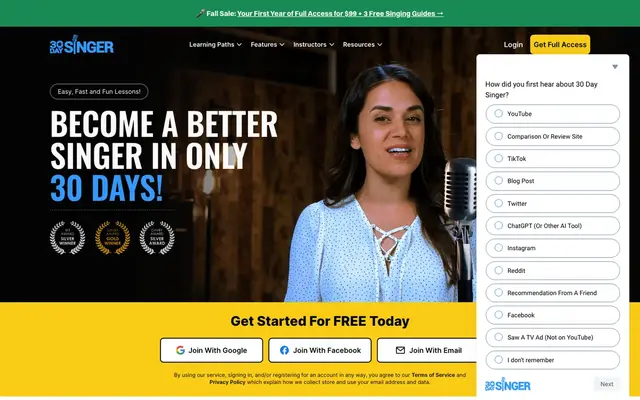
30 Day Singer Full Access costs $10.75 per month with annual billing and also offers free Basic access. Its beginner course follows a 30-day structure within an ongoing membership, appealing to new singers who want affordable video instruction and a money-back guarantee. The side-by-side comparison looks at this video-led approach alongside Singing Carrots’ interactive exercises.
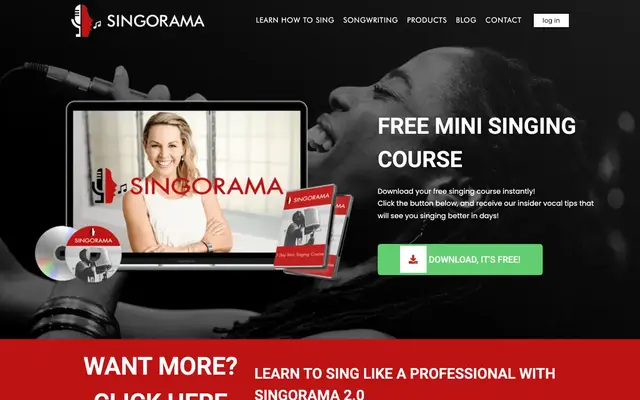
Singorama takes a self-paced, downloadable approach with exercises of about 15 minutes a day. Its advertised one-time purchase price is $99.95, although that amount is not visible on the homepage and needs confirmation. If avoiding a subscription matters more than interactive pitch tracking, consult the side-by-side comparison.
Our Singing Lessons category groups the other vocal-learning options. For an explanation of how practical exercises, credibility, price transparency, flexibility, and help for learners shape this assessment, visit the review methodology.
Singing Carrots vs alternatives
How Singing Carrots stacks up against other singing lessons programs we reviewed, on the facts published by each provider.
Swipe sideways to compare all 3 programs →
| Criterion | This review | ||
|---|---|---|---|
| Our score | 8.2/10 | 8.3/10 | 7.9/10 |
| Price | — | Free | $99.95 |
| Format | App | Subscription | Self-paced |
| Duration | Self-paced; the site recommends practicing 15-20 minutes, 3 times a… | Membership; beginner course designed around 30 days. | Self-paced; exercises of about 15 minutes a day. |
| Free trial | Free account with free tools (vocal range test, pitch… | Free Basic Access tier. | — |
| Best for | Singers who want AI-guided pitch and range exercises with free self-assessment tools. | Beginner singers who want structured, low-cost video lessons with a money-back guarantee. | Self-learners who prefer a one-time-purchase downloadable singing course over a… |
| Read more | You are here | 30 Day Singer reviewHead-to-head → | Singorama reviewHead-to-head → |


“—” means the information was not published or not yet checked. See all 3 singing lessons programs.
How to enroll
The homepage offers Sign Up and a guided onboarding flow that asks about existing lessons, goals, and experience. Begin with the free tools and test the actual pitch-tracking interaction before selecting paid access. If you already study with a teacher, identify which exercises you intend to use between appointments.
Before accepting a paid plan, read the amount, billing period, renewal terms, and cancellation rules shown in the account flow. For a school or choir, use the provider’s group-plan information rather than assuming that an individual subscription permits shared student access. No account was created or purchase flow completed for this review.
Score breakdown
Structured courses and pitch-based exercises.
Popular tool; limited credential information.
Strong free tools; paid price hidden.
Practice anytime online.
AI feedback only.
Weighted average of five criteria. Read our methodology.
Key facts
FAQ
Is Singing Carrots free?
It offers a free account with tools like a vocal range test; full courses require a paid plan.
How often should I practice?
The site recommends 15-20 minutes, three times a week.
Head-to-head comparisons
Sources
Information checked on October 5, 2026. Prices and offers can change; confirm on the official site.