On this page · 8 sections6 min read
What a meditation teacher does
A meditation teacher introduces a practice, gives understandable instructions, and helps participants reflect on their experience without insisting that everyone should respond identically. NCCIH’s meditation overview describes a range of practices involving attention and mind-body awareness. That variety matters when selecting training: a general mindfulness course and a specific contemplative tradition may have different aims and teaching methods.
Decide whether you want to teach community groups, incorporate meditation into an existing profession, or deepen personal practice. A consumer membership can support personal learning without assessing your ability to lead others. Teacher preparation should explain how to introduce a practice, offer alternatives, facilitate discussion, and handle a participant who wants to stop.
For a first teaching exercise, prepare a brief introduction that states the purpose and the participant’s choices. Rehearse giving instructions without overwhelming the listener with continuous commentary. Ask a mentor to assess whether the language is clear and whether you leave enough space for the experience you are inviting.

Do you need a license or certification?
The meditation sources cited here do not establish a nationwide government license specifically for general meditation teaching. A school certificate or association recognition is a private educational or professional credential. Employers may require particular training, but that does not turn every meditation certificate into a healthcare qualification.
Clinical services require a separate scope check. A general teacher-training course should not be assumed to authorize psychotherapy or the treatment of a diagnosed condition. NCCIH distinguishes different meditation-based approaches and describes uncertainty in the evidence and safety literature; it does not validate every commercial teacher credential. NCCIH evidence and safety guidance
The Sounds True program describes a particular teacher-certification pathway, alongside general learning memberships and self-study offerings. Ask exactly which credential is awarded and what assessment supports it. If a school mentions recognition by an association, verify whether that applies to the course, the graduate, or a separate application.
Do not interpret the absence of a dedicated license as absence of responsibility. A workplace, school, or healthcare organization may have requirements for access, safeguarding, insurance, or supervision. Check the intended setting before assuming that a general online certificate is sufficient for its participants.
A program should have a clear response to distress. NCCIH reports that negative experiences can occur and cautions that safety evidence is incomplete. Your preparation should therefore include recognizing your limits and knowing when to stop an exercise or refer, rather than promising that meditation is universally comfortable or harmless.
Step-by-step: how to become a meditation teacher
- Clarify the practice you intend to teach. Identify the tradition or approach and the audience it is designed for. If you want a secular community class, ask how the course handles religious language and cultural context rather than assuming every syllabus has the same orientation.
- Develop a consistent personal learning process. Keep notes on the instructions used, questions that arise, and what helps you remain attentive. Personal experience is useful, but it should become a basis for questions rather than a rule that every participant must follow.
- Choose a teacher pathway with assessment. Ask who observes your teaching, how feedback is provided, and what you must demonstrate to graduate. Distinguish a content library from a program that evaluates facilitation and ethical judgment.
- Rehearse participant choice. Practice offering alternatives such as changing position or discontinuing an exercise without framing them as failure. Ask a supervisor how the program handles distress and when a teacher should involve another professional.
- Learn to facilitate discussion carefully. Invite participants to describe their own experience without interpreting it for them. Do not use a group reflection period to diagnose someone or make claims about the meaning of an emotional response.
- Complete the required teaching practice. Keep assignments, feedback, and completion documents organized. If the program requires an application, prerequisites, or attendance, confirm those requirements before arranging your work schedule around a cohort.
- Start with a defined class offering. Describe the practice, intended audience, format, and limits in ordinary language. Review the session afterward with a mentor and adjust the instructions before expanding into more complex populations or settings.
How long it takes and what it costs
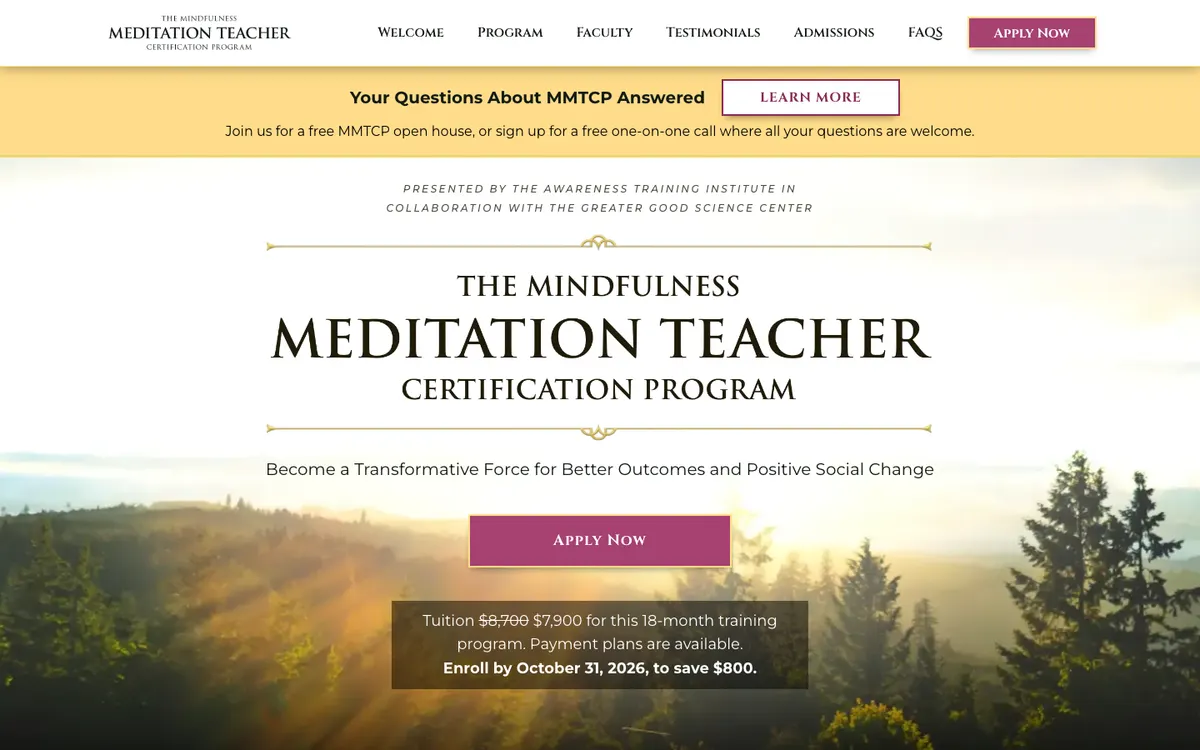
An 18-month teacher-training cohort entails a different commitment from a general learning membership. Sounds True charges $8,700, with a dated early-enrollment price of $7,900, while Radiance Sutras lists an advanced track at $4,900. Neither should be priced against Mindvalley membership as though all three awarded the same teaching qualification.
The Mindfulness Meditation Teacher Certification Program (MMTCP) runs for 18 months, with about two hours of weekly work plus monthly mentor and peer-group calls. Tuition is $8,700, reduced to $7,900 for enrollment by October 31, 2026; the application requires a $50 nonrefundable deposit.
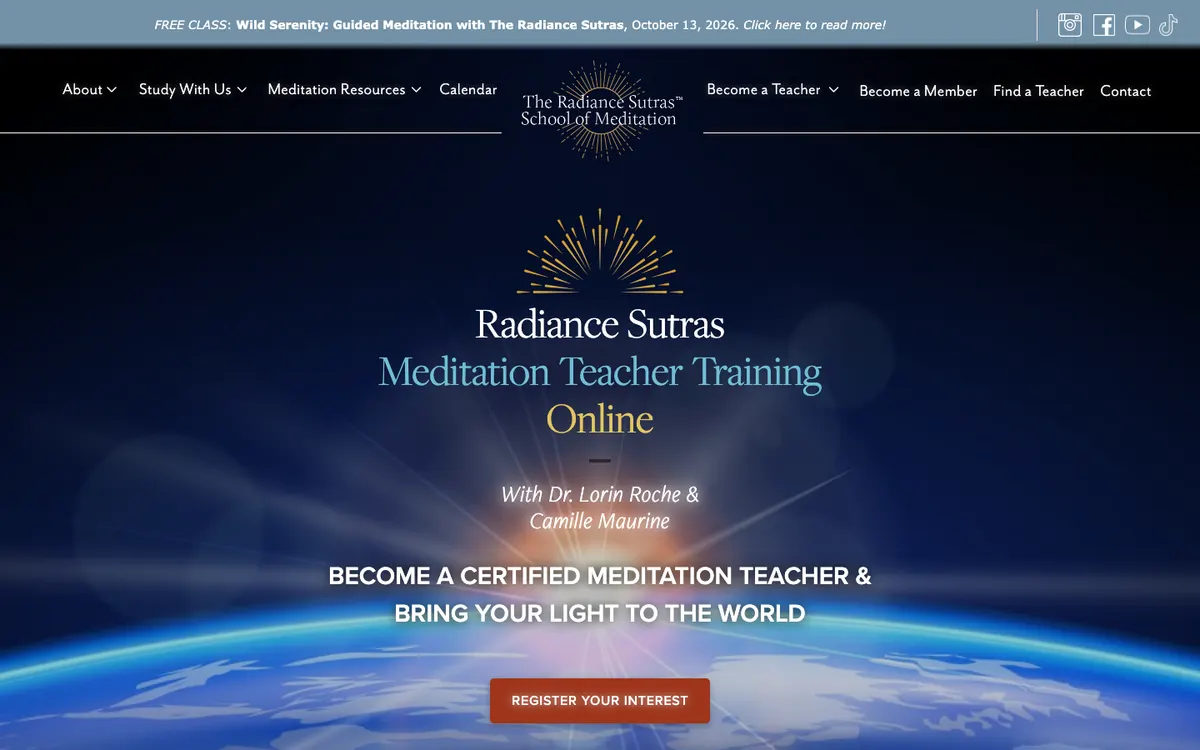
Radiance Sutras Instinctive Meditation Teacher Training (MTT-200) describes 20 weeks of training spread over 6 months, with replays of live classes. The advanced track leading to a 500-hour certificate is listed at $4,900, or a $1,800 deposit plus monthly payments; that is not a quote for the 200-hour course, whose tuition was absent from the available pages. Required texts cost about $50.
The Mindfulness Center 160-Hour Meditation Teacher Training (SOMA) offers 160 hours of self-paced online training. Its tuition is unconfirmed here, so obtain a written quote for SOMA before comparing it with a cohort-based teacher pathway.
Mindvalley Membership and Coach Certifications prices a 12-month membership at $499 per year, about $41.50/month billed annually; a single pathway costs $299/year. Quests use short daily lessons. Certifications cost extra and need their own quote.
Live and Dare Meditation Courses (Limitless Life) offers self-paced online courses and a membership. There is no confirmed tuition figure here; ask which specific course meets your learning goal and request its price in writing.
Missing tuition is not evidence that a program is free. Ask The Mindfulness Center and Live and Dare for the exact current course and its total cost if either fits your goal. For Radiance Sutras, do not apply the advanced-track price to the foundational 200-hour option whose tuition remains unconfirmed.
Calendar planning should include practice, peer meetings, teaching assignments, and mentoring where required. A self-paced program gives scheduling flexibility but still requires time for active learning. Ask whether access to live support ends before your content access does and how incomplete assessments are handled.
Best online programs for aspiring meditation teachers
This ranked selection combines teacher preparation with broader meditation learning. Pay particular attention to whether the purchase includes an assessed teaching credential.
- Mindfulness Meditation Teacher Certification Program (MMTCP) offers an application-based 18-month mindfulness teacher-training cohort.
- Radiance Sutras Instinctive Meditation Teacher Training (MTT-200) lists live online training with recordings and separate foundational and advanced credential levels.
- The Mindfulness Center 160-Hour Meditation Teacher Training (SOMA) lists 160 hours of self-paced meditation teacher training.
- Mindvalley Membership and Coach Certifications is a general learning membership whose certifications are priced separately.
- Live and Dare Meditation Courses (Limitless Life) offers self-paced courses and membership, whose teacher-credential details need clarification.
Explore the Meditation Teacher Training comparison for detailed reviews of the teaching pathways and general learning options.
Top programs compared
The 4 highest-scored online meditation teacher training programs in our ranking, side by side.
Swipe sideways to compare all 4 programs →
| Criterion | ||||
|---|---|---|---|---|
| Our score | 9.0/10 | 8.5/10 | 8.4/10 | 8.3/10 |
| Price | $7,900 – $8,700 | — | — | $299 – $499 |
| Format | Live online | Live online | Self-paced | App |
| Duration | 18-month cohort program; about two hours per week plus monthly mentor… | 20-week training spread over 6 months; live classes recorded | 160 hours of training; self-paced online format | 12-month membership; quests based on short daily lessons |
| Accreditation | Certified by the International Mindfulness Teachers Association (IMTA), per the program… | Graduates can register with Yoga Alliance as RYT-200 | — | Mindvalley describes some coach certifications as ICF-accredited; membership itself… |
| Best for | Experienced meditators who want a rigorous, mentored path to teaching mindfulness under… | Meditators who want a teacher-led, non-dogmatic meditation teacher training that also… | People who want an evidence-based, science-oriented meditation teacher certificate from a… | Personal-growth learners who want access to a large library of guided programs, with the… |
| Full review | Sounds True — MMTCP (Mindfulness Meditation Teacher Certification Program, Jack Kornfield & Tara Brach) review | Radiance Sutras School of Meditation review | The Mindfulness Center (Bethesda, 501c3) review | Mindvalley review |



Scores from our editorial method. See the full ranking of 5 programs.
Common mistakes to avoid
Do not treat personal relaxation as proof that you can teach a group. Leading requires understandable pacing, consent, and responses to varied experiences. Seek feedback on those skills instead of relying only on your enthusiasm for the practice.
Avoid advertising treatment claims based on a general teacher certificate. The research summarized by NCCIH concerns particular interventions and contexts; it is not a blanket endorsement of any course or facilitator. Keep descriptions tied to what you actually teach and the qualifications you hold.
Do not buy a general membership expecting a professional credential unless the exact certification is included. Mindvalley distinguishes membership pricing from certification pricing. Similar branding can conceal a significant difference in what the purchase provides.
FAQ
Is meditation teacher certification a healthcare license?
No such equivalence is established by the sources. Review the Sounds True program as a teacher-training pathway, and verify clinical professional requirements separately if you intend to offer treatment.
Is meditation always comfortable for participants?
No. NCCIH describes possible negative experiences and limits in the safety evidence. Training should prepare you to respect choice and recognize when another kind of support is needed.
Does Mindvalley membership include teacher certification?
The Mindvalley review says certifications are priced separately. Confirm the exact product rather than inferring professional training from general membership access.
Can I compare every program by its hour count?
Not reliably. The meditation comparison mixes different levels and formats; inspect teaching assessment, mentoring, prerequisites, and the credential awarded alongside hours.