On this page · 13 sections5 min read
Our verdict
Our verdict8.4/10Among meditation teacher trainings, SOMA is the sensible pick for someone who already meditates every day and wants a science-first approach: $1,200 (online rate, October 30, 2026), self-paced over 9 to 12 months with a mentor you can book.
If you're still building a habit, start with the center's intro course or Live and Dare; if you want big-name teachers and a live cohort, Sounds True's program costs about six times more. The catch: the credential is the center's own certificate, and 20 of the 160 hours are community teaching you'll have to organize yourself.
Best for: regular meditators, yoga teachers and health or education professionals who want an evidence-based meditation teacher certificate they can complete online, at their own pace, for well under $2,000.
At a glance
Ten minutes at your desk before the inbox, twenty at night: you’ve kept that up for a few years now, and people have started asking you to lead it. A colleague wants a short practice before team meetings. Your yoga students linger after class to ask how you breathe through a rough week. You’d like to say yes without improvising, and you’d like a piece of paper that says you know what you’re doing.
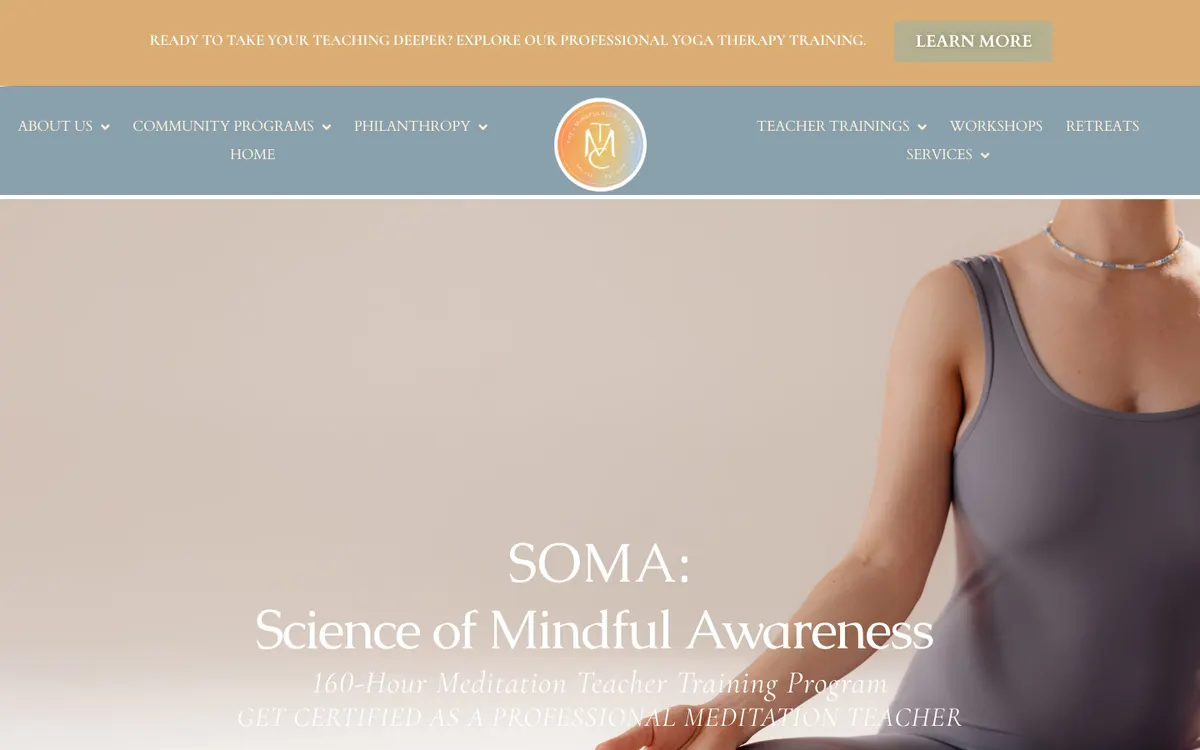
That’s who SOMA, short for Science of Mindful Awareness, is built for. It’s the 160-hour meditation teacher training of The Mindfulness Center, a nonprofit in Bethesda, Maryland, led by its founder Dr. Deborah Norris, a psychologist at American University. It runs online, at your pace, and its angle is the research: what meditation does to stress, mood and the brain, and how to teach it in clinics, classrooms and offices.
How we reviewed it: on October 30, 2026, we read the program page, its FAQ and requirements, and the center’s class listings, then compared SOMA with the other programs in our meditation teacher training ranking. We haven’t taken the training.
Some links on this site may earn us a commission if you enroll. Your price stays the same. Our rankings are based on our editorial criteria; some partners may be featured more prominently. How we review
Pros & cons
- $1,200 online rate with payment plans, and no fee to apply
- Science of mindfulness is the backbone: research on stress, mood and the brain runs through the lessons
- One-on-one office hours with the educational director whenever you need them
- Covers teaching in health care, schools and leadership, plus trauma survivors, veterans and people in recovery
- Recognized by IAYT for professional development credit, and yoga teachers can log CE hours
- The certificate is issued by the center itself, and meditation teaching has no license behind it
- You must line up 20 hours of community teaching and 10 hours of practice with fellow students on your own
- Live webinars and retreats with Dr. Norris cost extra
- Requires at least a year of regular practice, so it's not a starting point
- Self-paced with a 24-month limit, which makes it easy to drift
What it costs, and how you get in
The online rate is $1,200, as listed on October 30, 2026. Payment plans and group rates exist, and the center mentions limited scholarships and financial aid, which you discuss with the registrar.
You don’t pay first. You fill in an application, there’s no fee for it, and once you’re accepted you receive a welcome letter and an invoice. The one real filter is experience: the center calls SOMA an advanced professional training and expects at least a year of regular, ongoing practice. If you’re newer than that, it points you to its Introduction to Meditation online course first.
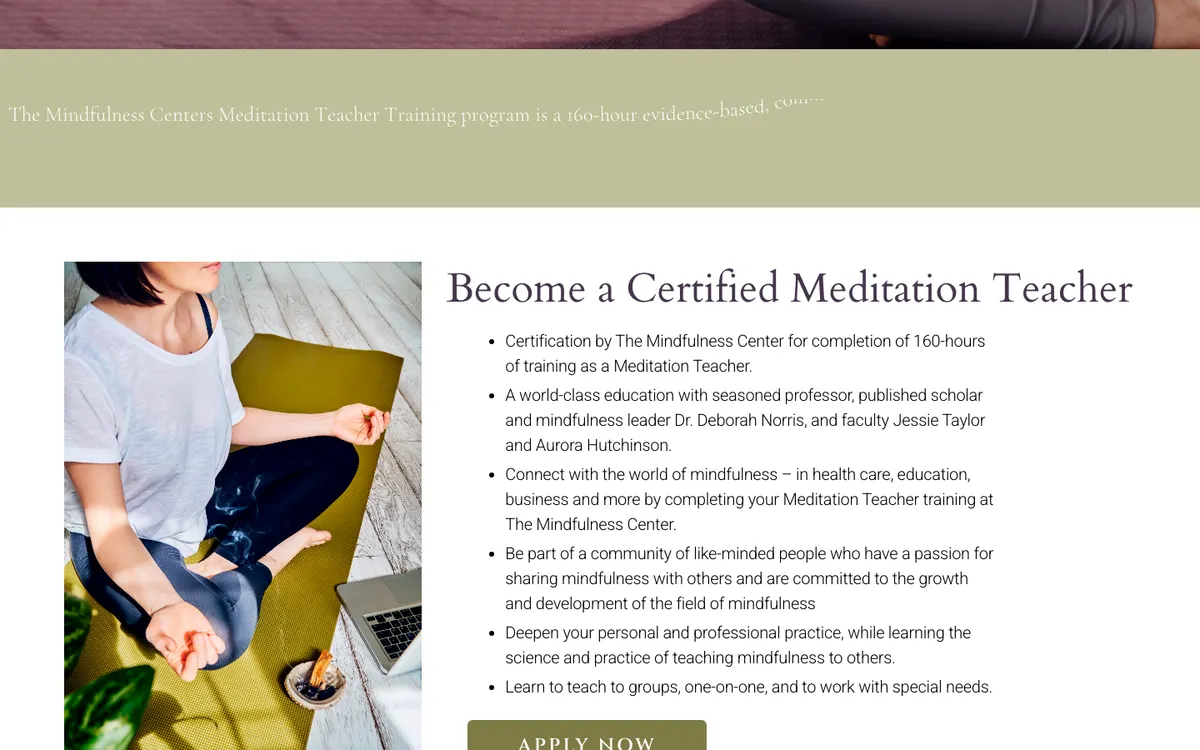
The fee covers the 130 hours of online coursework and a digital copy of the required textbook, In The Flow: Bridging the Science and Practice of Mindfulness. A paper copy is extra, on Amazon. So are the elective live webinars and the in-person retreats with the faculty, though those can count toward your hours if you tell the educational director.
Payment plans, group rates and limited scholarships; ask the registrar
No public discount was listed on the official site when we checked. We never publish unverified coupon codes.
How the 160 hours break down
The coursework comes in three online “classroom” sections. Each one mixes video lectures, reading, study guide questions and meditation assignments, and the platform logs your progress for you. That’s 130 hours.
The other 30 hours happen off the screen. Ten are one-on-one meditation with fellow students, and twenty are community service: you teach mindfulness to real people, for free, somewhere in your community. In practice that might be a lunchtime session at your workplace, a weekly sit at the library, or a short practice before a parents’ meeting at your kid’s school. This is the part that turns the course into teaching rather than reading, and it’s also the part you organize yourself.
Most students take 9 to 12 months, according to the center. A few finish in two or three. The rule is to be done within 24 months, with extensions discussed case by case.
Where it goes deeper than most
The curriculum spends real time on context. There’s a special emphasis on mindfulness in health care, education and leadership, and on teaching in unusual situations: trauma survivors, veterans, diverse groups, people dealing with substance abuse or other clinical conditions. You also practice scripting and delivering guided meditations, then try them on fellow trainees in an online community before you take them anywhere else.
The other strength is access to a person. You can book an office-hours consult with the educational director, Jessie Taylor, whenever you need one, and the training includes mentoring plus live and recorded group conversations. For a self-paced program at this price, that’s more human contact than you’d expect.
The catch
Two things to know before you apply.
The first is the credential. You get a certificate of completion from The Mindfulness Center. The center is upfront that teaching meditation isn’t licensed or regulated, and it says the program is recognized by the International Association of Yoga Therapists for Approved Professional Development credit. Yoga teachers can log continuing education through Yoga Alliance and IAYT, and mental health professionals may be able to apply for credit with their own boards. That’s useful, but outside those circles the certificate’s value is the center’s reputation and what you can show you’ve taught.
The second is pace. Self-paced with two years to finish sounds relaxed. It’s also how good intentions stall around month five, especially once you hit the community hours and have to find a room and a group. Put the 20 hours on the calendar early, even before you finish the first section.
Who it suits
Regular meditators who want to start teaching with a science-based framework. Yoga teachers who want meditation training that also counts as CE. Nurses, counselors, teachers and managers who want to bring short practices into their workplace and explain why they work.
Video: The Mindfulness Center (Bethesda, 501c3)
Who should look elsewhere
If you’re new to meditation, you won’t meet the one-year requirement. A beginner-friendly program such as Live and Dare, built around a single teacher and a daily habit, is the better first step. If you want to train with well-known teachers in a mentored cohort and can spend much more, Sounds True’s program with Jack Kornfield and Tara Brach lists tuition of $8,700, or $7,900 paid at once by November 2, 2026. If you want lots of live practice and a path that also leads to Yoga Alliance registration, look at the Radiance Sutras School of Meditation.
Alternatives
Sounds True MMTCP is a two-year mentored program with an IMTA-certified credential.
Radiance Sutras School of Meditation runs teacher-led trainings, with a 500-hour advanced program at $4,900.
Mindvalley sells an annual membership with meditation programs; its certifications are priced separately.
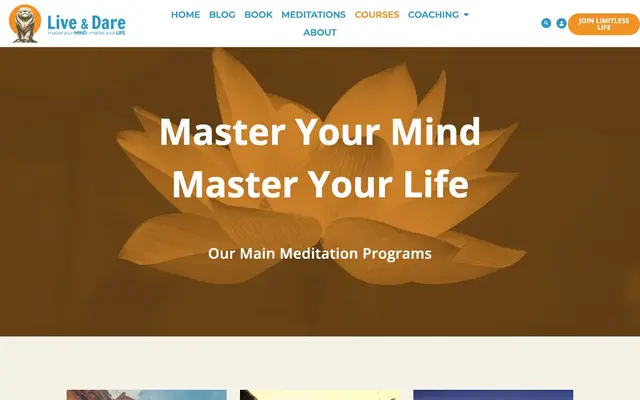
Live and Dare suits beginners and stalled meditators who want structure.
See all of them side by side in our meditation teacher training ranking.
Swipe sideways to compare all 4 programs →
| Criterion | This review | |||
|---|---|---|---|---|
| Our score | 8.4/10 | 9.0/10 | 8.5/10 | 8.3/10 |
| Price | $1,200 | $7,900 – $8,700 | — | $299 – $499 |
| Format | Self-paced | Live online | Live online | App |
| Duration | 160 hours: 130 hours of online coursework plus 30 independent hours; usually 9 to 12 months, to finish within 24 months | 18-month cohort program; about two hours per week plus monthly mentor and peer-group calls | 20 weeks spread over 6 months, about 10 hours a week (5 live, 5 self-study); every live class is recorded (official page, October 30, 2026). | 12-month membership; quests based on short daily lessons |
| Accreditation | Certificate of completion from The Mindfulness Center; recognized by IAYT for Approved Professional Development credit, with CE for yoga teachers through Yoga Alliance and IAYT | Certified by the International Mindfulness Teachers Association (IMTA), per the program FAQ | Graduates can register with Yoga Alliance as RYT-200 | Mindvalley describes some coach certifications as ICF-accredited; membership itself carries no accreditation |
| Best for | regular meditators, yoga teachers and health or education professionals who want an evidence-based meditation teacher certificate they can complete online, at their own pace, for well under $2,000. | Experienced meditators who want a rigorous, mentored path to teaching mindfulness under Jack Kornfield and Tara Brach, with an IMTA-certified credential. | meditators who want a teacher-led, non-dogmatic meditation teacher training, with lots of live practice, that also leads to Yoga Alliance RYT-200 registration. | Self-improvement fans who enjoy variety and want a big library of guided programs, with short daily lessons on phone, web or TV. |
| Read more | You are here | Sounds True — MMTCP (Mindfulness Meditation Teacher Certification Program, Jack Kornfield & Tara Brach) reviewHead-to-head → | Radiance Sutras School of Meditation reviewHead-to-head → | Mindvalley review |


“—” means the information was not published or not yet checked. See all 5 meditation teacher training programs.
Your next step
Download the full course requirements and syllabus from the program page, and check the community-service part against your real life: where would you teach those 20 hours, and to whom? If you have an answer, apply, and ask the registrar about a payment plan before the invoice arrives.
Score breakdown
160 hours covering the science and practice of meditation and teaching it to groups, individuals and special populations.
Long-standing nonprofit led by a published psychologist and university faculty member; no external accreditation named.
Tuition is not published, so value cannot be judged from the official page.
Self-paced online format accessible anytime.
Mentoring office hours and live group conversations are included.
Weighted average of five criteria. Read our methodology.
FAQ
How much does The Mindfulness Center meditation teacher training cost?
The online rate is $1,200, according to the program page on October 30, 2026. You apply first; once accepted you get an invoice, and there's no application fee. Payment plans, group rates and a few scholarships are available through the registrar.
How long does the SOMA training take?
It depends on your pace. The center says most students take 9 to 12 months, a fast few finish in 2 to 3, and everyone should finish within two years. The 160 hours split into 130 hours of online coursework and 30 independent hours.
Is the certification accredited?
Not in the licensing sense, because no body licenses meditation teachers. The Mindfulness Center issues the certificate, IAYT recognizes the program for professional development credit, and yoga teachers can claim continuing education through Yoga Alliance and IAYT.
Head-to-head comparisons
Sources
- https://www.themindfulnesscenter.org/
- https://www.themindfulnesscenter.org/classes/
- https://www.themindfulnesscenter.org/trainings/mtto/
Prices and offers can change; confirm on the official site before you enroll.