On this page · 13 sections5 min read
Our verdict
Our verdict9.2/10Only learners who will finish two or more programs in twelve months should pay $399 up front for Coursera Plus (October 30, 2026); below that, paying $49 to $79 a month for a single program, or Plus at $59 a month, costs less.
If you want one university course with a big name on it, edX's pay-per-course model may suit you better. The trade-off: degrees and some programs aren't included, and the 14-day refund on the annual plan revokes any certificate you earned in those two weeks.
Best for: Career changers with a concrete plan of two or more Coursera certificates, such as a Google certificate followed by a specialization, who can study steadily for a year.
At a glance
Ambitious plans are cheap in January. Google Data Analytics in the spring, a SQL specialization over the summer, maybe the IBM data science certificate by Christmas. Coursera Plus is built for that plan: one subscription, unlimited certificates. Whether it saves you money depends entirely on how much of the plan you finish.
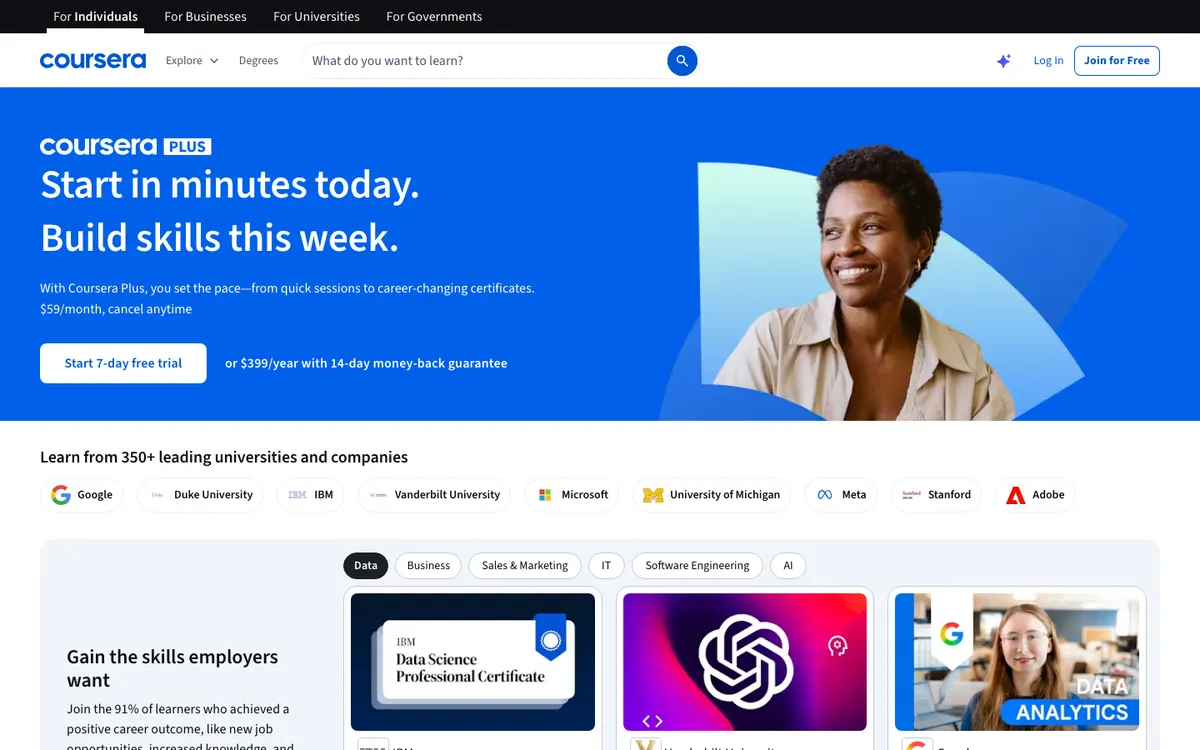
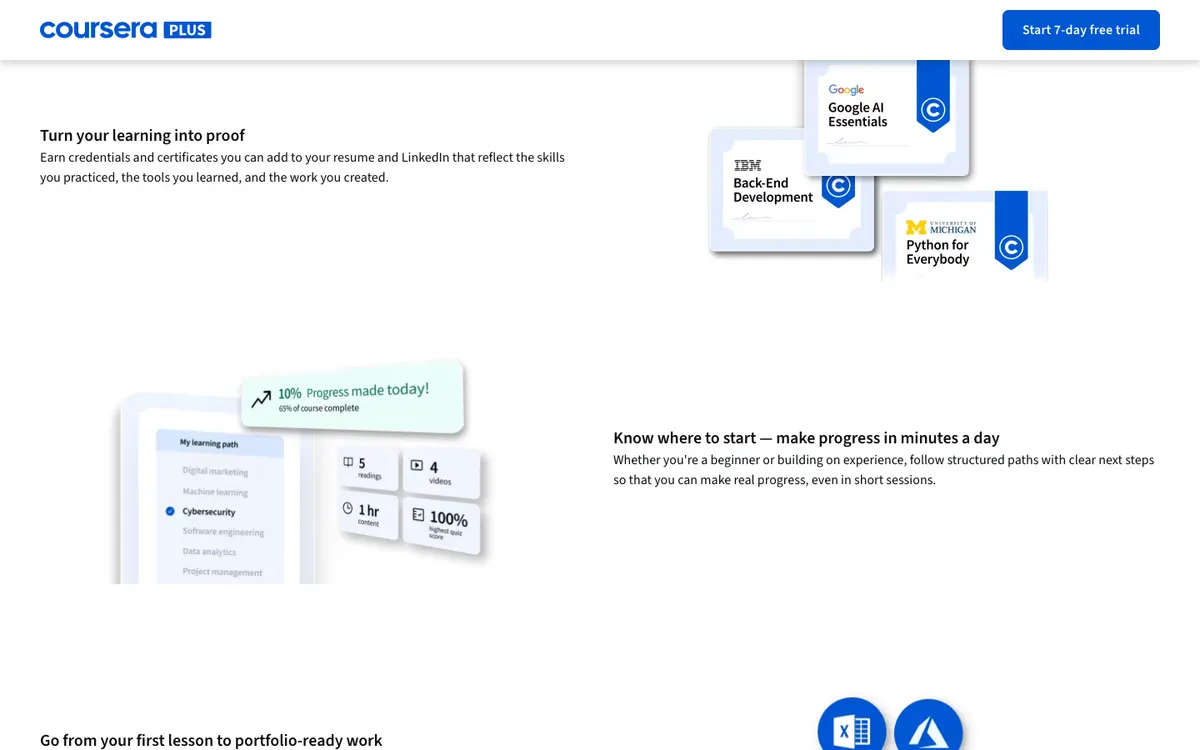
Coursera Plus is Coursera’s all-access subscription for individuals. It covers more than 10,000 courses, specializations and professional certificates from over 350 universities and companies, including Google and IBM. On October 30, 2026, it cost $59 a month, cancel anytime, with a 7-day free trial, or $399 a year with a 14-day money-back guarantee.
How we reviewed it: we read the Coursera Plus page on October 5 and October 30, 2026, checked individual program prices on Coursera, and compared the subscription with the other learning platforms we list. We didn’t subscribe.
Some links on this site earn us a commission if you enroll. Your price stays the same. Our rankings are based on our editorial criteria; some partners may be featured more prominently. How we review
Pros & cons
- Unlimited certificates across 10,000+ courses, specializations and professional certificates in the Plus catalog
- Annual price works out to about $33 a month, against $49 to $79 a month for a single program
- Google, IBM and university programs from 350+ partners
- 7-day free trial on the monthly plan and a 14-day money-back guarantee on the annual plan
- Degrees and some programs are excluded; you have to check each one for the Plus badge
- The annual plan is paid up front and only pays off if you keep finishing courses
- Refunding the annual plan within 14 days revokes certificates earned in that window
The math, three ways
Coursera says a single course or program costs $49 to $79 a month when you buy it on its own. We also found cheaper ones: the Intuit Academy Bookkeeping certificate was $39 a month on October 30, 2026. Here’s how the three options compare for typical learners.
| Your plan | Pay per program | Plus monthly ($59) | Plus annual ($399) |
|---|---|---|---|
| One certificate, 4 months at $49 | about $196 | about $236 | $399 |
| Two certificates, 8 months in a row at $49 | about $392 | about $472 | $399 |
| Three certificates, 12 months | about $588 | about $708 | $399 |
The annual plan works out to about $33 a month. It pays off from the second program onward, and only if you actually keep studying through the year. If you take a three-month break in the summer, you’re paying for months you don’t use. The monthly plan rarely wins on price; its advantage is flexibility, since you can stop when life gets busy.
What a year of Plus looks like
Picture it as a study rhythm rather than a library. Most professional certificates on Coursera are designed for a few hours a week over several months. Coursera itself estimates the Intuit bookkeeping certificate at about four months at under four hours a week. Two of those back to back fill most of a year of evenings. Three is ambitious if you also work full time.
The learners who get the most from Plus pick one main certificate, then use the “unlimited” part for short courses that support it: an Excel specialization alongside a data analytics certificate, or a project management course while finishing the Google PM certificate. People who enroll in eight things at once tend to finish none of them.
The catch: what isn’t included, and the refund trap
Not everything on Coursera is in Plus. Degrees and some certificates are excluded, so check that each program on your list carries the Plus badge before you subscribe. Coursera’s search lets you filter for Plus content.
The refund rule on the annual plan deserves a careful read. You can ask for your money back within 14 days, but Coursera’s page (as we read it on October 5, 2026) said certificates earned in those first 14 days are revoked if you take the refund. So don’t sprint through a short course in week one and then cancel expecting to keep the certificate.
Also, the 7-day free trial belongs to the monthly plan. The annual plan has the 14-day guarantee instead. They’re two different ways to try it, not both at once.
14-day money-back guarantee on the annual plan.
Monthly or annual.
No public discount was listed on the official site when we checked. We never publish unverified coupon codes.
What the certificates are worth
A Coursera certificate shows you completed the course or program, under the name of the university or company that built it. Google’s and IBM’s certificates are among the best-known names in the catalog, but they’re still nondegree certificates, not licenses or independent professional certifications. Put the skills on your résumé with a project you can show; the certificate supports the story rather than replacing it.
Who should skip it
If you need one certificate for one reason, a promotion case or a résumé gap, buy that program on its own. You’ll pay for exactly the months you study and stop the moment you finish.
If you mostly want to browse, Plus is an expensive way to do it. Many Coursera courses can be explored before you pay, and some public libraries give cardholders free access to learning platforms, so ask yours.
If your employer offers a learning budget, ask first. Some companies already provide Coursera through a business account, and many reimburse a certificate only when it’s approved in advance.
And if your goal is a degree, Plus is the wrong product: degree programs have their own admissions and tuition.
Video: Coursera
A realistic first month
Week one is the free trial. Use it to finish the first module of your main program, not to sample ten courses. By week four you should know three things: how many hours a week the program really takes you, whether the assignments are graded by peers or automatically (peer grading can add a few days of waiting), and whether you’re still opening the app without a reminder. If all three look good, the subscription will probably pay for itself.
Alternatives
- edX: pay per course, often with a free audit first; better if you want one specific university course.
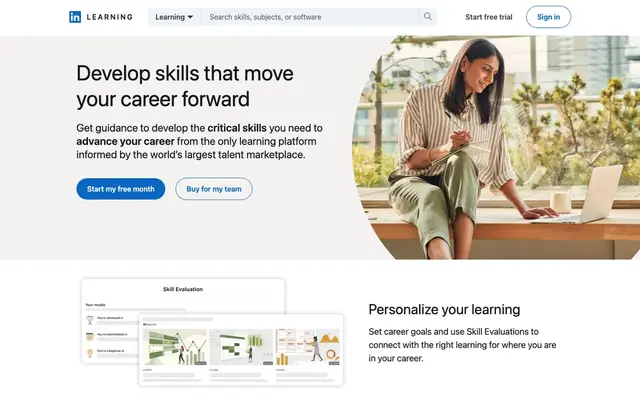
- LinkedIn Learning: shorter skill videos, useful for software tools rather than career certificates.
- CreativeLive: creative skills like photography and design, with its own subscription.
All of them are in our online course platform rankings.
Swipe sideways to compare all 4 programs →
| Criterion | This review | |||
|---|---|---|---|---|
| Our score | 9.2/10 | 8.7/10 | 8.7/10 | 8.7/10 |
| Price | $59 – $399 | $299 | — | $15 |
| Format | Subscription | Hybrid | Self-paced | Live online |
| Duration | 12 months of unlimited access. | 2,300+ on-demand classes; 100+ live classes a year. | Varies by course or program. | Typically 30-60 minute live sessions. |
| Free trial | 7-day free trial. | — | Most courses can be audited for free, with temporary access and no certificate | — |
| Best for | Career changers with a concrete plan of two or more Coursera certificates, such as a Google certificate followed by a specialization, who can study steadily for a year. | Working photographers, designers and video editors who want a big on-demand library plus live classes they can ask questions in. | Self-directed learners who want one specific course from a named university, and who want to try it free before paying for the certificate. | homeschool families and parents who want small live online classes or tutoring for a child aged 3 to 18, in academics or a specific interest. |
| Read more | You are here | CreativeLive reviewHead-to-head → | edX reviewHead-to-head → | Outschool review |


“—” means the information was not published or not yet checked. See all 15 online course platforms programs.
How to decide this week
Write down the programs you want to finish in the next twelve months, and check each one for the Plus badge and its estimated hours. Start the monthly plan’s free trial with the first program. If, after a month, you’re on track and the second program is lined up, the annual plan becomes the cheaper way to cover the rest of the year; ask Coursera support how a switch from monthly is billed before you make it.
Score breakdown
10,000+ courses and certificates.
University and industry partners.
$399/year for unlimited certificates.
Self-paced, cancel anytime monthly.
Forums and peer review; limited 1:1 help.
Weighted average of five criteria. Read our methodology.
FAQ
How much is Coursera Plus?
$399 a year, or $59 a month with a 7-day free trial and cancellation anytime, on October 30, 2026. The annual plan has a 14-day money-back guarantee.
Is Coursera Plus worth it vs paying per course?
It is if you'll finish two or more programs within the year. One program taking four months at $49 a month costs about $196, half the annual price. Two or three back to back usually cost more than $399.
Does Coursera Plus include everything on Coursera?
No. Degrees and some certificates are excluded. Look for the Coursera Plus badge on the course page, or filter search results for Plus content, before you subscribe.
Head-to-head comparisons
Sources
- https://www.coursera.org/courseraplus
- https://www.coursera.org/professional-certificates/intuit-bookkeeping
Prices and offers can change; confirm on the official site before you enroll.