On this page · 15 sections5 min read
- 01Our verdict
- 02At a glance
- 03Pros & cons
- 04What you’ll learn
- 05Format, schedule and time commitment
- 06Accreditation and what the credential is worth
- 07Price, payment plans and refunds
- 08Who it’s best for — and who should skip it
- 09Pros and cons in detail
- 10How it compares
- 11Herbal Academy vs alternatives
- 12How to enroll
- 13Score breakdown
- 14Key facts
- 15FAQ
Our verdict
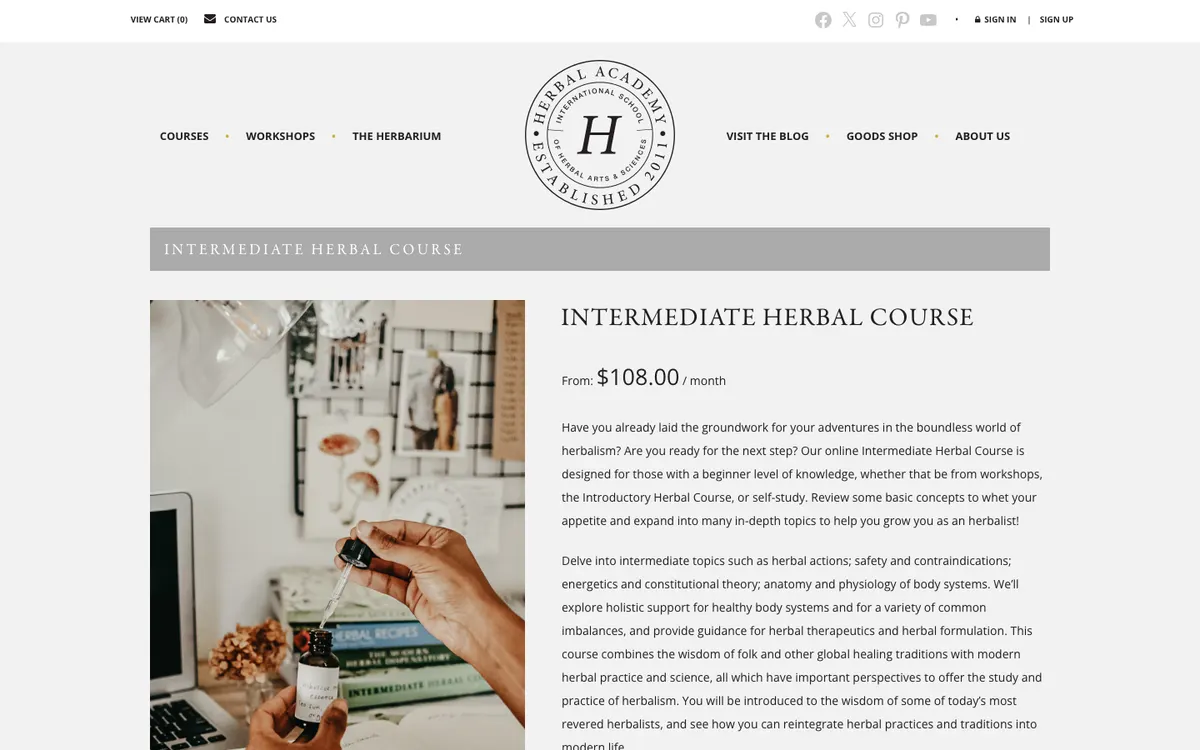
Our verdict8.6/10Herbal Academy is one of the larger online herbalism schools, and its Intermediate Herbal Course covers body systems, herbal energetics and formulation in 10 units and 59 lessons, with more than 175 recipes.
It is self-paced, with quizzes to progress and a certificate at the end. The affiliate page lists the course at $395, and the product page offers 6- and 9-month installments from $108 a month, plus a print edition. Students also get a community and partner discounts. It is a well-structured next step after an introductory course. Herbalism is not licensed in the US, so treat the certificate as proof of study rather than a professional qualification.
Best for: Home herbalists who want a structured, self-paced course on body systems, energetics and formulation.
At a glance
Herbal Academy’s Intermediate Herbal Course offers a structured next step in body systems, herbal energetics and formulation. Its self-paced lessons and quizzes suit home herbalists who have already completed some introductory study. The main strengths are curriculum organization and a substantial recipe collection. It is a course-completion pathway, with package pricing and refund terms needing careful confirmation.
Pros & cons
- 59 lessons in 10 units with 175+ recipes and formulas
- Self-paced with installment options
- Student community and partner discounts on herb suppliers
- Part of a clear Introductory > Intermediate > Advanced path
- Not a professional license or accredited credential
- Print version costs extra
- Refund terms not stated on the product page
What you’ll learn
The Intermediate course develops body-system study, herbal energetics and formulation through ten units. Its 59 lessons include more than 175 recipes and formulas, making the material more structured than a miscellaneous recipe collection. Unit quizzes provide a completion requirement.
The official description expects some prior herbal learning, which can include introductory study, community classes, workshops or self-study. A review of basic concepts in the opening unit does not make all prior knowledge irrelevant; examine that bridge before choosing Intermediate over the introductory course.
Format, schedule and time commitment
Intermediate is organized into ten units and 59 self-paced lessons. Online and print-related packages have different purchasing considerations, so confirm access for the version you select. The installment period governs billing; it does not tell you how quickly you must work through the units or practice the formulations.
A student community is available, but one-to-one instruction is limited. Think about whether you mainly want organized study and peer contact or need regular individual guidance through your work.
Video: Herbal Academy
Accreditation and what the credential is worth
Passing the unit quizzes earns the Intermediate Herbal Course certificate. No independent accreditation is identified in the available description, so this is the school’s course-completion award.
The award documents completing the school’s course and quizzes. It does not establish a professional license or independent clinical credential; this review does not infer authority to provide regulated services from the course title.
The course builds on introductory herbal knowledge. Use the opening-unit review and published curriculum to judge whether your previous classes, workshops, or self-study provide a suitable starting point.
Price, payment plans and refunds
As of October 5, 2026, the official affiliate page gives a $395 pay-at-once price, while installment offers start at $108 monthly. The Introductory course starts at $58.50 monthly. Six- and nine-month options and print-plus-online versions are available, making the exact package important to any total you calculate.
The product page does not state complete refund terms; request them before buying. The affiliate-page cash price and product-page installments may describe different packages. Do not turn a starting monthly figure into a supposed equivalent total by choosing an installment count without confirmation.
6- or 9-month installment options; print + online versions available
No public discount was listed on the official site when we checked. We never publish unverified coupon codes.
Who it’s best for — and who should skip it
Home herbalists with basic knowledge who want organized study of body systems, energetics, and formulation are the intended fit. The structure can help connect what you already know into a clearer learning sequence. Choose another route if extensive personal supervision or an independently examined professional award is essential.
Pros and cons in detail
A substantial structured syllabus. Fifty-nine lessons across ten units place more than 175 recipes and formulas within a broader study framework.
Flexible study and payment. Self-pacing lets you organize practical preparation alongside reading, while installment options spread the purchase cost.
Community and supplier benefits. Student contact and partner discounts on herbs add convenience, though neither replaces the educational value of the course.
A staged course sequence. Introductory, Intermediate, and Advanced levels help you locate the material that matches your current knowledge.
Education rather than licensing. The completion certificate is not a professional license or independently accredited credential.
Print adds to the bill. Decide whether you want physical materials before budgeting, since the print version costs extra.
Cancellation terms require an inquiry. The product page does not state a refund policy, so do not assume a standard digital-course guarantee.
How it compares
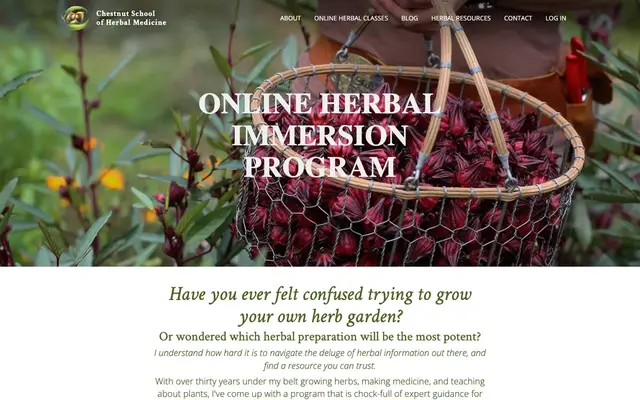
Chestnut School’s Herbal Immersion offers a much larger 1,200-hour program with full access at enrollment. Tuition is $3,749 upfront or 24 payments of $169, shown on sale at $139 with a stated 20% discount. Independent accreditation was not established for that course.
Dedicated students wanting comprehensive self-paced study with substantial botany and medicine-making content may prefer Chestnut. Its $3,749 upfront cost is high, and it advertises a two-week refund period with a full money-back guarantee. The Chestnut–Herbal Academy comparison helps distinguish that broader commitment from intermediate study.
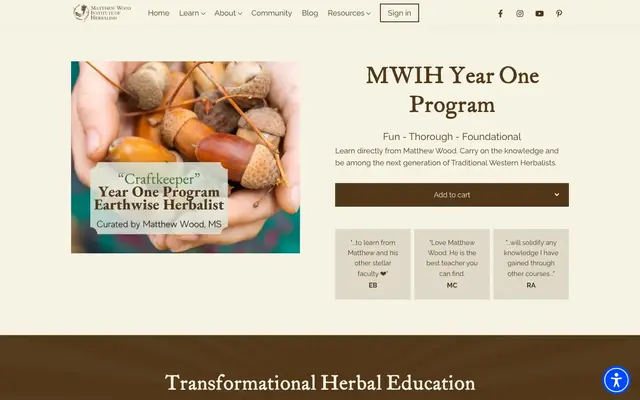
Matthew Wood Institute’s Year One is a yearlong foundation listed on the official affiliate page at $2,995, with about $200 extra for supplies. Separate memberships begin at $25 monthly for Herbs A-Z and $35 for Home Apothecary. Independent accreditation was not established in the course information.
Serious students interested in a well-known author’s traditional, energetics-based herbal approach may find that route compelling. Budget the $2,995 course and roughly $200 in supplies separately from the memberships, some of which have a 30-day money-back guarantee. See the Herbal Academy–Matthew Wood comparison for more context.
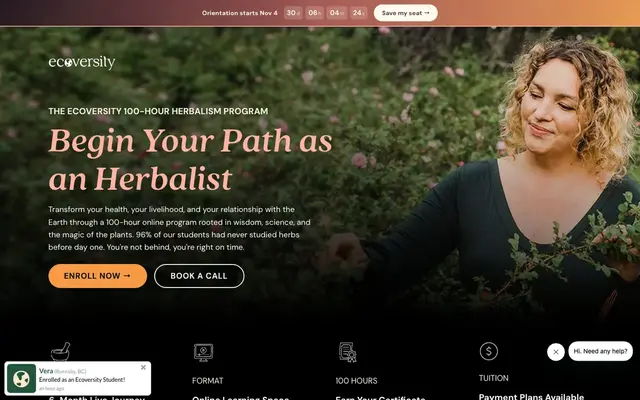
Ecoversity instead runs a live, six-month cohort totaling 100 hours. Tuition is $3,497 in one payment, six payments of $616.20, or ten payments of $370. The available description does not identify independent accreditation.
Beginners wanting mentorship, live sessions, and community may value Ecoversity’s group structure. It costs more than self-paced herbal courses, so compare the actual guidance offered with the degree of independence you already find comfortable.
Within the herbalism category, course level matters as much as duration. A long foundation may repeat subjects you already know, whereas Intermediate assumes some prior learning and organizes the next stage around body systems.
Herbal Academy vs alternatives
How Herbal Academy stacks up against other herbalism programs we reviewed, on the facts published by each provider.
Swipe sideways to compare all 4 programs →
| Criterion | This review | |||
|---|---|---|---|---|
| Our score | 8.6/10 | 8.7/10 | 8.6/10 | 8.1/10 |
| Price | $395 | $3,336 – $4,056 | $25 – $2,995 | $3,497 – $3,700 |
| Format | Self-paced | Self-paced | Self-paced | Live online |
| Duration | Self-paced, 10 units and 59 lessons | 1,200-hour program; full access on enrollment | Year-long foundational program; supplies cost about $200 extra | 6-month live cohort, 100 hours |
| Best for | Home herbalists who want a structured, self-paced course on body systems, energetics and… | Dedicated students who want one of the most comprehensive self-paced online herbalism… | Serious herbal students who want to learn the traditional, energetics-based approach of a… | Beginners who want a mentored, cohort-based introduction to herbalism with live sessions… |
| Read more | You are here | Chestnut School of Herbal Medicine reviewHead-to-head → | Matthew Wood Institute of Herbalism reviewHead-to-head → | Ecoversity review |


“—” means the information was not published or not yet checked. See all 5 herbalism programs.
How to enroll
Choose the Intermediate Herbal Course on the official product page, inspect the curriculum and select the intended online or print package. Confirm the full price, installment count, access period and refund terms before completing registration.
Before enrolling, match your entry knowledge to the syllabus, identify the package contents, and reconcile the payment total. If you want print materials, have those included in the same quote so you are not comparing an online-only figure with a print-and-online installment offer.
Information is based on Herbal Academy’s official website, checked October 5, 2026. Our approach to course reviews considers entry level, support, and the actual package cost.
Score breakdown
59 lessons covering body systems, energetics and formulation.
Established school; no accreditation (herbalism has no US licensing).
$395 for a substantial self-paced course.
Self-paced online with installment options.
Student community; limited one-to-one instruction.
Weighted average of five criteria. Read our methodology.
Key facts
FAQ
Is there a certificate?
Yes. Graduates receive an Intermediate Herbal Course certificate after passing the quizzes.
Can I pay in installments?
Yes. The product page offers 6- and 9-month installment options.
Head-to-head comparisons
Sources
- https://theherbalacademy.com/
- https://theherbalacademy.com/online-herbalism-courses/
- https://theherbalacademy.com/product/intermediate-herbal-course/
- https://theherbalacademy.com/product/introductory-herbal-course/
- https://theherbalacademy.com/affiliate-program
Information checked on October 5, 2026. Prices and offers can change; confirm on the official site.